
Theatres and Halls in Sheffield, South Yorkshire
The Crucible Theatre - Lyceum Theatre - The City Theatre / Stacey's Circus - Library Theatre - Abbeydale Picture House - Unity Picture Palace - Montgomery Theatre - Empire Palace - Adelphi Theatre / Alexandra Music Hall / Theatre - Adelphi Picture Theatre - Electra Palace / Cartoon / News / Classic Cinema - Tankard / Britannia Music Hall - Ecclesfield Cinema House / Essoldo - Grand Theatre / Bijou / New Star Music Hall - Hippodrome / ABC - Palace Theatre / Alhambra Theatre - Theatre Royal / Regal Cinema, Attercliffe - Theatre Royal, Tudor Street - Playhouse - Regent Theatre / Gaumont / Odeon - Royal Casino / Surrey Music Hall / Surrey Theatre - The Albert Hall, Barker's pool - The Phoenix Theatre - The Chapeltown Picture Palace
Also see in this area - Yorkshire Theatres
The Crucible Theatre, Tudor Square, Sheffield, S1 1DA

Above - A Google StreetView Image showing the Crucible and Lyceum Theatres, Tudor Square, Sheffield in October 2016 - Click to Interact.

 The
Crucible Theatre in Sheffield, stands roughly on the site of the former Theatre Royal, Tudor Street, and almost next door to the Lyceum Theatre. It was built at
a time when Sheffield had lost all its major Theatres and had only one
small venue left in operation, namely the Library
Theatre.
The
Crucible Theatre in Sheffield, stands roughly on the site of the former Theatre Royal, Tudor Street, and almost next door to the Lyceum Theatre. It was built at
a time when Sheffield had lost all its major Theatres and had only one
small venue left in operation, namely the Library
Theatre.
Right - An early Postcard for the Crucible Theatre, Sheffield.
In 1969 work began on a new Theatre for the City, the Crucible Theatre, designed by Renton, Howard and Wood Associates, with a thrust stage and a steeply raked auditorium, with a capacity of 900. The Theatre opened with a production of 'Fanfare' in November 1971, and today also has a small Studio Theatre attached with a capacity of 400.
 The Theatre was the subject of a £15 million refurbishment during 2007 to 2009 during which it remained closed, apart from the staging of the World Snooker Championships in 2008 and 2009.
Left - The Crucible Theatre, Sheffield in August 2011 - Courtesy Allan Hailstone.
The Theatre reopened on the 11th of February 2010 with a production of 'An Enemy of the People' and was followed by an official reopening by the Earl of Wessex on the 18th of November 2010. The Sheffield Crucible is today one of Britain's major touring venues and a Producing House in its own right, and is also famous for being the home of the World Snooker Championship, screened on TVs all over the world every year.
You may like to visit the Theatre's own website here.
If you have any more information or images for this Theatre that you are willing to share please Contact me.
The Lyceum Theatre, Tudor Square, Sheffield
Previously on the site - Stacey's Circus / The City Theatre

Above - A Google StreetView Image showing the Lyceum and Crucible Theatres in Tudor Square, Sheffield in October 2016 - Click to Interact.
 The Lyceum Theatre, Sheffield was designed by
the well known Theatre Architect W. G. R. Sprague in 1897 and is today the only complete Sprague Theatre still surviving in the Provinces.
The Lyceum Theatre, Sheffield was designed by
the well known Theatre Architect W. G. R. Sprague in 1897 and is today the only complete Sprague Theatre still surviving in the Provinces.
The Lyceum was built on the site of Stacey's Circus which was destroyed by fire in May 1893, and its successor, Walter Emden's City Theatre which had opened on Boxing Day 1893 but closed in 1897.
Right - A Programme Cover for the Lyceum Theatre, Sheffield for the D'Oyly Carte Principle Repertoire Opera Company performing 'Patience' and 'The Mikado' on March the 13th 1905 - Courtesy Ron Knee.
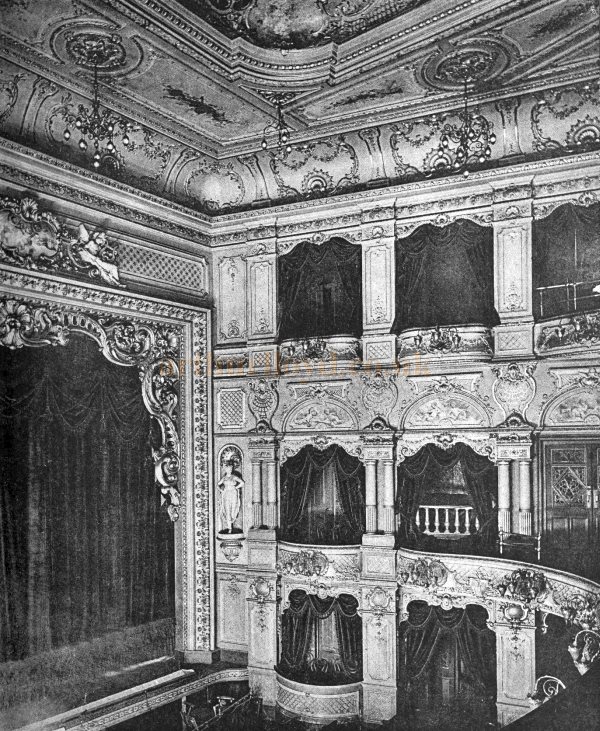 The Lyceum
used the City Theatre's stage house but the stage
itself was rebuilt along with the rest of the Theatre, including a wonderful
new auditorium constructed on three levels, Stalls, Circle, and Balcony
which was reported at the time to be able to accommodate some 3,000
people.
The Lyceum
used the City Theatre's stage house but the stage
itself was rebuilt along with the rest of the Theatre, including a wonderful
new auditorium constructed on three levels, Stalls, Circle, and Balcony
which was reported at the time to be able to accommodate some 3,000
people.
The Lyceum Theatre opened on Monday the 11th of October 1897 with a production of Bizet's 'Carmen' by the Carla Rosa Opera Company.
Left - An early photograph of the Auditorium of W. G. R. Sprague's 1897 Sheffield Lyceum Theatre - From The Architect, 29th of May 1903.
The ERA reported on the new Theatre in their 9th of October 1897 edition saying:- 'This palatial temple of the drama, which has taken the place of the City Theatre, will undoubtedly rank high in the list of beautiful new playhouses which are beginning to adorn the main streets of the principal provincial towns.
The new theatre externally presents a most commanding and ornate appearance, occupying, as it does, an entirely isolated position, with exits into three important thoroughfares, viz., Tudor-street, Arundel-street, and Tudor-place. Mr W. R. Sprague has certainly had a difficult task, but a look at the building shows at once that he has triumphantly succeeded, for in place of the flat, uninteresting elevation of the old City Theatre, the eye of the artistic beholder is gladdened by a bold, classic frontage, with imposing Ionic columns and ornamental designs, symbolical of the high and honourable purpose for which the structure has been erected.
 The main architectural feature at the corner of Arundel and Tudor-streets
is a lofty circular tower, surmounted by a copper dome, at the top of
which, in heroic size, is poised on one foot a fine figure of Fame,
who holds aloft a torch. In this will be placed an arc lamp of 500 candle
power. The principal entrances are placed at this corner, and an iron
and glass awning of artistic designs gives a comfortable and pleasing
appearance to the whole. The upper circle, amphitheatre, and gallery
exits are in Arundel-street, and there are emergency exits (in case
of fire) on to the flat roots of the dressing-rooms, which flank each
side of the main building.
The main architectural feature at the corner of Arundel and Tudor-streets
is a lofty circular tower, surmounted by a copper dome, at the top of
which, in heroic size, is poised on one foot a fine figure of Fame,
who holds aloft a torch. In this will be placed an arc lamp of 500 candle
power. The principal entrances are placed at this corner, and an iron
and glass awning of artistic designs gives a comfortable and pleasing
appearance to the whole. The upper circle, amphitheatre, and gallery
exits are in Arundel-street, and there are emergency exits (in case
of fire) on to the flat roots of the dressing-rooms, which flank each
side of the main building.
Right - A Painting by George Richmond depicting the Lyceum Theatre, Sheffield in 1897. George says that the colours were suggested by the restored auditorium photos on this page. The Theatre opened with a production of Carmen given by the Carla Rosa Opera company. The set George has placed on the stage is a faithful recreation of the original act one set for this opera taken from the original drawing and used in the Premier production of Bezet's opera Carmen in 1875. The Carla Rosa set would have of necessity been along the same lines - Click for an Index to all of George Richmond's Paintings on this site.
The house is on the " two-tier " principle, and is arranged to hold 3,000 persons. No columns have been used, and from every seat there is an uninterrupted view of the stage. There are eight private boxes. On the ground floor, level with the street, are the stalls and pit. The first floor consists of grand circle and upper circle, and above is the spacious gallery, part of which is divided off into amphitheatre stalls. The stalls and circle fauteuils are roomy, and are luxuriously upholstered in crimson Utrecht velvet, the curtains, hangings, valances, and portieres being of the same rich material.
The corridors, staircases, lobbies, &c., are of unusual size, and the large space at the disposal of the architect has enabled him to provide a beautiful foyer, with ample accommodation in the shape of retiring-rooms, refreshment buffets, crush-rooms, and all necessary offices.
 The salle and the charming vestibule have
been exquisitely decorated in the style of Louis XIV., the box, circle,
and gallery fronts being picked out with lovely and cunningly devised
electric lamps. The ceiling and dome is a dream of beauty and chaste
colouring, and the proscenium is a fitting frame for the land of fancy,
humour, and romance which lies beyond its white and gold columns.
The salle and the charming vestibule have
been exquisitely decorated in the style of Louis XIV., the box, circle,
and gallery fronts being picked out with lovely and cunningly devised
electric lamps. The ceiling and dome is a dream of beauty and chaste
colouring, and the proscenium is a fitting frame for the land of fancy,
humour, and romance which lies beyond its white and gold columns.
Left - A photograph of the Sheffield Lyceum auditorium after its 1990 refurbishment - Courtesy David Garratt.
The stage and auditorium are lighted entirely by electricity, but gas is also laid on in case of any temporary failure of the electric light. Little alteration has been made in the stage block, but an entirely new stage has been laid with all the latest improvements in the matter of traps, bridges, &c. The stage measures 72ft. from wall to wall, has a grid 50ft. high, and the opening is about 30ft. by 28ft.
 There are large carpenters' shops, property rooms, chorus rooms, and
a spacious scene-dock, and Mr John Hart need have no fear of the Actors'
Association, as there are twelve comfortable dressing-rooms, well furnished
and provided with hot and cold water.
There are large carpenters' shops, property rooms, chorus rooms, and
a spacious scene-dock, and Mr John Hart need have no fear of the Actors'
Association, as there are twelve comfortable dressing-rooms, well furnished
and provided with hot and cold water.
Right - A Variety Poster for the Sheffield Lyceum for Monday August the 9th 1937 - Courtesy Colin Davies.
 In addition to the ordinary act-drop
and tableau curtains, there is a steel curtain, which can be lowered
at a moment's notice at an alarm of fire, and hydrants have been placed
in every part of the theatre. Constructed mainly of steel, stone, and
concrete, the building, practically speaking, is perfectly fireproof.
In addition to the ordinary act-drop
and tableau curtains, there is a steel curtain, which can be lowered
at a moment's notice at an alarm of fire, and hydrants have been placed
in every part of the theatre. Constructed mainly of steel, stone, and
concrete, the building, practically speaking, is perfectly fireproof.
Left - A Programme for 'Charley's Aunt' at the Lyceum Theatre, Sheffield for the week beginning Monday the 14th of November 1921.
The theatre is the property of the Lyceum Theatre (Sheffield), Limited, and will be directed by Mr John Hart, who so successfully guides the destinies of the Grand, Leeds; the Royal, Bradford; and other leading provincial playhouses. Mr Hart's local representative is Mr T. Hopcutt, who is here well known and highly-respected, and whose duties will be pleasantly arduous on Monday evening, when the first artists to tread the new stage will be her Majesty's servants, the Royal Carl Rosa opera company.

Above - A photograph of the Sheffield Lyceum Proscenium after its 1990 refurbishment - Courtesy David Garratt.

Above - A photograph of the Sheffield Lyceum Auditorium after its 1990 refurbishment - Courtesy David Garratt.
 The theatre has been reconstructed from the designs of Mr
W. R. Sprague, of Fitzalan House, Strand,
London. The building contractors were Messrs Geo. Longden and Sons,
of Sheffield. The plastic work has been supplied and the whole of the
decorations have been designed and carried out by Messrs De Jong and
Co, of London.
The theatre has been reconstructed from the designs of Mr
W. R. Sprague, of Fitzalan House, Strand,
London. The building contractors were Messrs Geo. Longden and Sons,
of Sheffield. The plastic work has been supplied and the whole of the
decorations have been designed and carried out by Messrs De Jong and
Co, of London.
Right - A Programme cover for the Sheffield Lyceum, the standard cover used for many different productions over the years - Courtesy Roger Fox.
The furnishing, &c., has been done by Cranston and Elliott, of Edinburgh. The stage has been stocked with excellent new scenery by Messrs E. G. Banks and A. G. Betts, and the beautiful and artistic act-drop reflects credit on the good taste and executive ability of Mr Henry Emden, the well-known scenic artist.'
The above text in quotes was first published in the ERA, 9th of October 1897.

Above - The Lyceum Theatre, Sheffield in August 2011 - Courtesy Allan Hailstone.
 The
Lyceum Theatre had first opened on Monday the 11th of October 1897 with a production of Bizet's 'Carmen' by the Carla Rosa Opera Company.
A serious fire a few years later in November 1899 partially destroyed the Theatre however, helped by the fact that the
fire curtain failed to work correctly and fell onto the stage when its
supporting ropes failed.
The
Lyceum Theatre had first opened on Monday the 11th of October 1897 with a production of Bizet's 'Carmen' by the Carla Rosa Opera Company.
A serious fire a few years later in November 1899 partially destroyed the Theatre however, helped by the fact that the
fire curtain failed to work correctly and fell onto the stage when its
supporting ropes failed.
Right - A Matchbox Model Van with a Lyceum Theatre, Sheffield banner.
 Despite the fire though the Theatre was restored and went on to become
one of Sheffield's major Theatres until 1968 when, like so many others
at the time, it was converted for Bingo use. This was not a success
however, and in 1972 the owners submitted a planning application for
demolition of the building. This thankfully was refused and the Theatre
was put up for sale but there was little interest, partly because of
the new Crucible Theatre which had been built
next door. The Lyceum remained dark for many years and its future looked
bleak. Some work was done on the building however, in order to preserve
its structure from dry rot.
Despite the fire though the Theatre was restored and went on to become
one of Sheffield's major Theatres until 1968 when, like so many others
at the time, it was converted for Bingo use. This was not a success
however, and in 1972 the owners submitted a planning application for
demolition of the building. This thankfully was refused and the Theatre
was put up for sale but there was little interest, partly because of
the new Crucible Theatre which had been built
next door. The Lyceum remained dark for many years and its future looked
bleak. Some work was done on the building however, in order to preserve
its structure from dry rot.
Left - A Commemorative Glass produced for the reopening of the Lyceum Theatre, Sheffield in 1990.
In 1990 the Lyceum was given a reprieve when Sheffield became home to the World Student Games. The stage house was rebuilt, the main entrance was moved, dressing rooms were improved, and the auditorium was completely restored so that the Lyceum was finally back in business again after two decades of neglect. The Theatre reopened in December 1990. A Commemorative Glass was produced for the opening in 1990 which can be seen above left. Also see the before and after restoration photographs below.


Above - Photographs of the Lyceum Theatre, Sheffield before its 1990 restoration - Photos: Richard Brett - Courtesy Roger Fox.

Above - The auditorium of the Lyceum Theatre, Sheffield after its 1990 restoration - Photo: Richard Brett - Courtesy Roger Fox.
The Lyceum Theatre today is Sheffield's major touring house as well as being host to the City's home grown productions. You may like to visit the Theatre's own website here.
If you have any more information or images for this Theatre that you are willing to share please Contact me.
The City Theatre, Tudor Place, Sheffield
Formerly - Stacey's Circus - Later - The Lyceum Theatre
The City Theatre was built on the site of the former Stacey's Circus which had been destroyed by fire on May the 30th 1893 during the run of the Hardie Von Leer Company's production of the military drama 'On The Frontier'. The replacement City Theatre was designed by Walter Emden for Alexander Stacey and opened with a production of 'A Royal Divorce' on Boxing Day 1893.
The ERA reported on the new City Theatre in their 23rd of December 1893 edition saying:- 'The new City Theatre, erected for Mr Alexander Stacey on the site of the old circus in Tudor-street, is rapidly approaching completion, and the house will be opened to the public on Boxing Day. The foundation-stone was laid on July 28th by Sir Augustus Harris, who highly complimented Mr Stacey on his enterprise in providing for Sheffield a playhouse which, judging by the plans prepared by the eminent theatrical architect Mr Walter Emden, would be second to none for size and elegance in the provinces. The hopes then held out have been more than realised, and Sheffield can now boast a theatre perfect in every detail and about as fire-proof as human ingenuity and forethought can make it.
The building, occupying a large area, is entirely isolated, there being no less than eighteen exits 8ft. 6in. wide. A large scene door opens on to the stage from Tudor-place, and through this a coach-and-four could be driven to the footlights. The main architectural feature is a cupola tower at the corner of Tudor-street, where the broad and convenient main entrances to the circle, stalls, and pit are situated. The amphitheatre and gallery entrances and exits are placed in Arundel-street and Tudor-place, and there are also exits for the gallery occupants on to the flat roofs of the dressing-rooms and storerooms, which flank each side of the main building.
The theatre is a two-tier house. On the ground floor is the pit, seating 600 persons, and pit-stalls for 400. The first floor, divided into dress-circle and side boxes, seats is all 550 persons. Above this is the spacious gallery, which will hold 1,000. In the front of the house there are large and elegantly furnished coffee and smoke rooms for each division of the audience, ladies' retiring-rooms, and all necessary offices, with the latest sanitary appliances. The handsomely designed proscenium, 30ft. in height, measures from pillar to pillar 3l ft. At each side are three prettily decorated private boxes, and an exquisitely designed railing separates the orchestra from the stalls.
The stage, which is 72ft. in width by 34ft. in depth, has a grid 50ft. high. It has been laid by Mr Kewley, and is replete with the latest improvements. The mention of Mr Tollerton in connection with the gas arrangements will be sufficient guarantee as to the efficiency of the lighting.
There are twelve dressing-rooms, with special rooms for ballet, supers, and chorus; and all are large, and fitted with every comfort. Mr Stacey need, therefore, have no fear of the Actors' Association in this respect. There are two property rooms, a spacious scene-dock, and a joiner's-shop, 70ft. by l2ft. Hydrants are placed at convenient positions, and Mr Tollerton's patent sprinklers are also provided.
The auditorium has been lavishly decorated by Messrs De Jong and Co., of London, and nothing finer has been seen in Sheffield than the ceiling and dome. The latter is composed of twelve panels, with exquisitely coloured pictures, in high relief, of children in idealised costumes and attitudes, playing on musical instruments. The borders of the panels and the cornices are all richly coloured and gilded; and in the centre of the dome is a brilliant sunlight. The box fronts are beautifully designed, cherubs and flowers playing the chief part in the decorative scheme. The gallery front is divided into panels with festoons of flowers. Over the proscenium arch are also five panels with beautiful pictures in colours, emblematic of Poetry, Art, Music, Comedy, and Tragedy, with ornamental devices in harmony with the general design of the building. The whole of the furniture and draperies have been provided by Mr A. R. Dean, of Birmingham, and fixed under the personal direction of Mr Windebank, manager. The seats in the circle boxes and stalls are of the latest design in tip-up chairs, being upholstered in rich ruby plush. The draperies of the boxes are in a correspondingly warm tint, and harmonise well with the tone of the surrounding decorations. The pit and gallery seats are comfortable, and the gangways are wide enough to allow of easy locomotion. The entire house is heated by Messrs Newton Chambers and Co., and the asbestos curtain has been fixed by Mr Holt, of Bradford. Messrs George Webster and Tomlinson are the contractors, and the work has been carefully superintended by Mr W. H. May, the indefatigable clerk of the works.
On Monday Mr Stacey applied for a twelve months' licence, and, after an inspection of the theatre, this was unanimously granted, the members of the City Council expressing their unqualified delight at the safety and beauty of the building. The opening attraction will be A Royal Divorce.'
The above text in quotes was first published in the ERA, 23rd December 1893.
The City Theatre opened with a production of 'A Royal Divorce' on Boxing Day 1893. The Theatre would not last long however, as it closed in 1897 and was then rebuilt to the designs of the well known Theatre Architect W. G. R. Sprague and reopened as the Lyceum Theatre on Monday the 11th of October 1897 with a production of Bizet's 'Carmen' by the Carla Rosa Opera Company. More details on the Lyceum Theatre can be seen above.
If you have any more information or images for this Theatre that you are willing to share please Contact me.
The Library Theatre, Tudor Place, Sheffield

Above - The Library Theatre, Sheffield in August 2011 - Courtesy Allan Hailstone.
The Library Theatre, Sheffield was built as a Lecture Theatre inside an existing building next door to Sheffield's Lyceum Theatre (See above). The Theatre was used as an air rade shelter during the war but in 1947 some dressing rooms were included so that the hall could become a legitimate Theatre. Due to its small stage and less than adequate sight lines however the Theatre was redesigned in 1961 when a proscenium arch was added, the stage enlarged, foyer spaces were added, and the auditorium raked.
If you have any more information or images for this Theatre that you are willing to share please Contact me.
The Classic Cinema, Fitzalan Square, Sheffield
Formerly - The Electra Palace / News Theatre / Cartoon Cinema

Above - The Cartoon Cinema, Fitzalan Square, Sheffield in 1959, later to become the Classic Cinema - Courtesy Allan Hailstone.
The Fitzalan Square Classic Cinema originally opened as the Electra Palace on the 10th of February 1911 and was built by George Longden and Sons Ltd., for Sheffield & District Cinematograph Theatres Ltd. The Theatre was designed by J. H. Hickton and H. E. Farmer and was constructed on the site of a former wooden building called Wonderland.
The Electra could seat 670 people on two levels, stalls and one curved balcony, and also had a tea lounge on the balcony level and a restaurant in the basement. The Theatre was the first cinema in Sheffield to show continuous film performances, from 3 in the afternoon to 10.30 at night.
The Theatre was altered in 1945 and reopened as the News Theatre. In 1959 it was renamed The Cartoon Cinema, see image above, showing continuos cartoon films and also news films. In 1962 the Theatre was bought by the Classic chain who covered the exterior with metal cladding and removed all the internal decorative plasterwork, the Theatre reopened as a Classic Cinema.
The Theatre was closed on the 24th of November 1982 and after a fire in 1984 the building was demolished to make way for a retail store.
Some of the above information on the Electra Palace was gleaned from the excellent Cinema Treasures Website.
If you have any more information or images for this Theatre that you are willing to share please Contact me.
The Abbeydale Picture House, 383 Abbeydale Road, Sheffield

Above - A Google StreetView image of the Abbeydale Picture House, Sheffield - Click to Interact
The Abbeydale Picture House, Sheffield was built as a Cinema with stage facilities and was opened by the Lord Mayor of Sheffield on the 20th December 1920 with a capacity of 1,500. From 1928 the Theatre was used as a Cine Variety house and in 1930 it was converted for Talkies.
The Theatre closed in 1975 and became an office furniture showroom and warehouse but it was awarded a Grade II listing in 1989 because so much of the Theatre was still intact.
For some years the Abbeydale was home to the Bar Abbey and the Abbey Snooker Club but in 2003 the Friends of Abbeydale Picture House was formed and the Theatre's future began to look a little brighter. They restored the auditorium and built a new stage, and reopened the Theatre in September 2008.
However, the community group's finances eventually failed and the building was repossessed by the bank and in late 2012 it was sold at auction for £150,000. A spokesman for the buyer said that the building 'was not financially viable' to be used as a Theatre again but added 'It's a lovely facility. The intention is to bring it back into public use.'
If you have any more information or images for this Theatre that you are willing to share please Contact me.
The Unity Picture Palace, Langsett Road, Sheffield

Above - The Exterior of the Unity Picture Palace, Sheffield - From the Academy Architecture and Architectural review of 1921.
The Unity Picture Palace was situated on Langsett Road, near Wood Street, and was first opened by its Manager Harry Bramwell on the 8th of November 1913. The Theatre was built for Upperthorpe Picture Palace Sheffield Ltd., and was designed by the Architects Gibbs Flockton & Teather of St. James Row, Sheffield. The Theatre was built primarily as a Cinema with seating for 990 people, although it did also have stage facilities, and dressing rooms for its artistes, see plans below. Early Variety shows however, were not very successful and they were soon abandoned. The Theatre closed in March 1959 and it was then converted into a furniture showroom.

Above - Plans of the Unity Picture Palace, Sheffield - From the Academy Architecture and Architectural review of 1921.
If you have any more information or images for this Theatre that you are willing to share please Contact me.
The Montgomery Theatre, Surrey Street, Sheffield
Formerly - The Montgomery Hall

Above - A Google StreetView Image of the Montgomery Hall and Theatre, Sheffield in October 2021 - Click to Interact.
 The Montgomery Theatre in Surrey
Street Sheffield was originally built as a meeting hall for the Sheffield Sunday
Schools Union (now known as the Sheffield Christian Education Council)
in memory of James Montgomery in 1886.
The Montgomery Theatre in Surrey
Street Sheffield was originally built as a meeting hall for the Sheffield Sunday
Schools Union (now known as the Sheffield Christian Education Council)
in memory of James Montgomery in 1886.
Right - An early Sketch of the Montgomery Hall - Courtesy The Sheffield Christian Education Council.
It was used as a Theatre apart from a break during the war when it was used by the government. Following a fire in 1971 it was refurbished as a traditional style Theatre. It is a small friendly Theatre with 427 seats on two levels. Many Amateur Dramatic Societies and Dancing Schools still consider Montgomery Theatre as their home and the Theatre hosts several amateur operatic and dancing school shows each year as well as a couple of pantomimes and several end of year shows for some of the Sheffield Schools.

Above - The Davey-United sports Club amateur Operatic society performing 'Irene' at the Montgomery Theatre, Sheffield in 1953 - Courtesy Erica Ford whose mother Jean Barratt played the leading role and is shown centre in the photo.
You may like to visit the Theatre's own website here.
If you have any more information or images for this Theatre that you are willing to share please Contact me.
The Empire Palace Theatre, Charles Street and Union Street, Sheffield
Later - The Empire Theatre
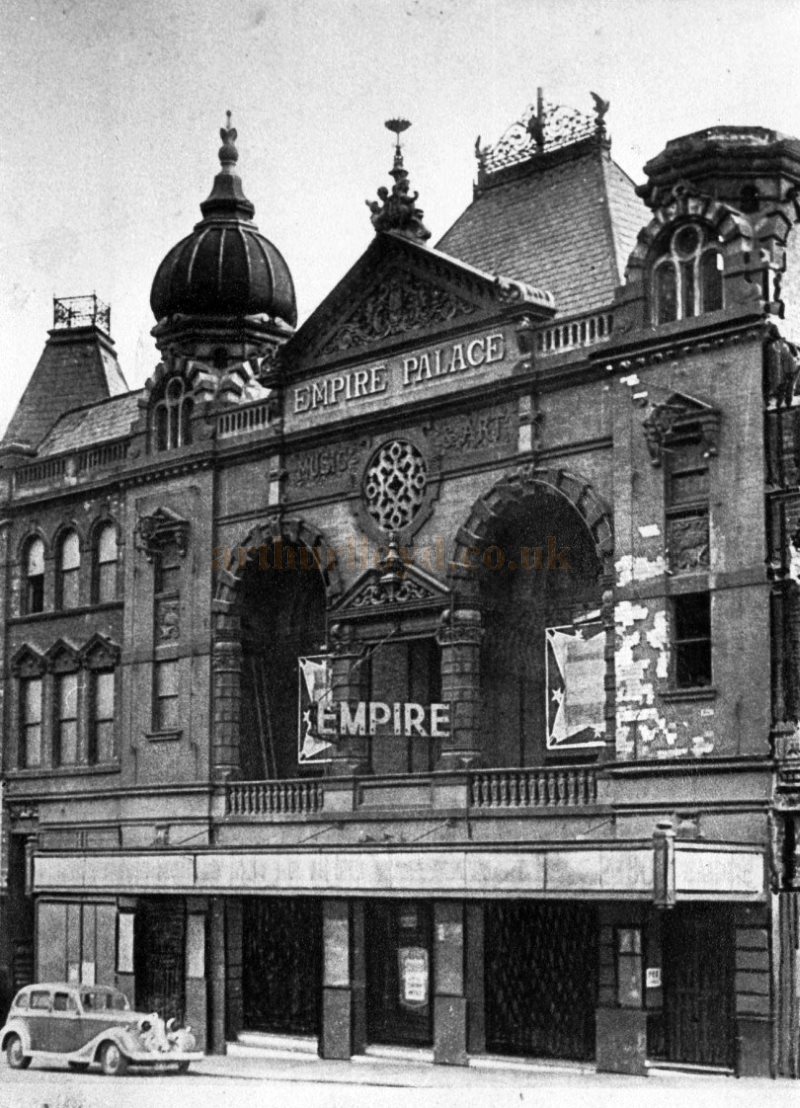
Above - The Exterior of the Empire Theatre, Sheffield after its closure in 1959 - From Sheffield History, no copyright apparent.
 The
Empire Theatre, Sheffield was designed by the renowned Theatre
architect Frank Matcham and opened on
Monday November the 4th 1895.
Shortly before the Theatre opened the ERA carried
a report on the building in their 26th of October 1895 edition saying:-
'This handsome block of buildings is now rapidly nearing completion,
and will be opened to the public on Nov. 4th. It is one of the latest
of the series of theatres of varieties that have been founded by the
energetic Mr. H. E. Moss, of Edinburgh. It is situated in Charles-street
and Union-street, and the group of buildings includes large corner shops
and premises on each side of the theatre frontage, and six shops, with
offices over, facing Pinstone -street, forming altogether a most important
addition to the buildings of Sheffield.
The
Empire Theatre, Sheffield was designed by the renowned Theatre
architect Frank Matcham and opened on
Monday November the 4th 1895.
Shortly before the Theatre opened the ERA carried
a report on the building in their 26th of October 1895 edition saying:-
'This handsome block of buildings is now rapidly nearing completion,
and will be opened to the public on Nov. 4th. It is one of the latest
of the series of theatres of varieties that have been founded by the
energetic Mr. H. E. Moss, of Edinburgh. It is situated in Charles-street
and Union-street, and the group of buildings includes large corner shops
and premises on each side of the theatre frontage, and six shops, with
offices over, facing Pinstone -street, forming altogether a most important
addition to the buildings of Sheffield.
Right - A Programme for the New Sheffield Empire Palace - Courtesy Peter Charlton.
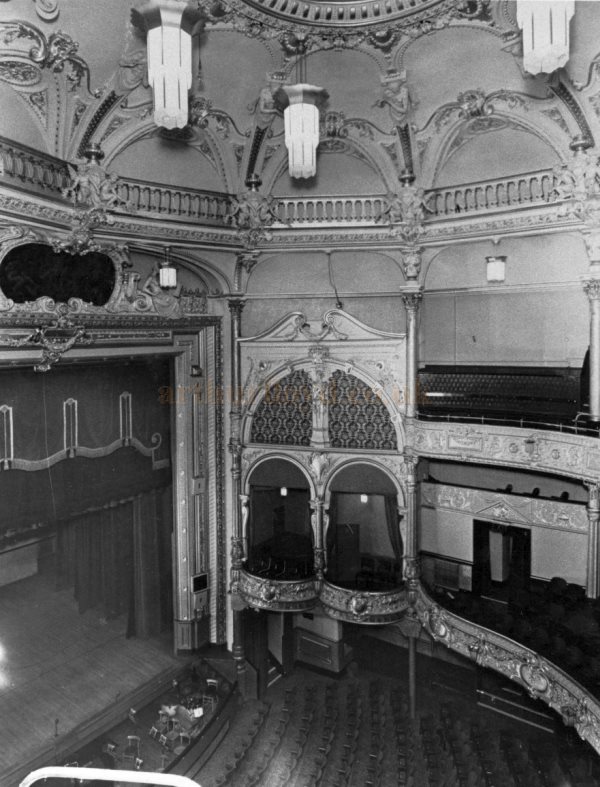 The New Empire Palace is the third of those magnificent buildings that
have been designed by Mr Frank Matcham, who
is the architect for the
companies founded by Mr Moss, the other
two being the New Empires at Birmingham and at Edinburgh. We are informed
that Mr Matcham has in hand plans for two
other Empires, one at Cardiff and one
at Glasgow. The latter is to be erected
on the old Gaiety site in Sauchiehall-street, and is expected to eclipse
all similar buildings in the kingdom.
The New Empire Palace is the third of those magnificent buildings that
have been designed by Mr Frank Matcham, who
is the architect for the
companies founded by Mr Moss, the other
two being the New Empires at Birmingham and at Edinburgh. We are informed
that Mr Matcham has in hand plans for two
other Empires, one at Cardiff and one
at Glasgow. The latter is to be erected
on the old Gaiety site in Sauchiehall-street, and is expected to eclipse
all similar buildings in the kingdom.
Left - The Auditorium of the Sheffield Empire Circa 1940-1959 - With Permission from Picture Sheffield Ref No s01635.
The position of the New Empire at Sheffield is a very important one, being in the centre of the city, and close to the new Municipal Buildings. The front elevation towards Charles-street is of Italian Renaissance in design, and is of stone relieved by red brick. The centre facade consists of three arched openings, with a balcony on the first floor in connection with the smoking lounge. This building has above it a massive pediment with panels, introducing the title "Empire Palace," and emblems of the arts and music. Above this are figures holding a flambeau, which will be lighted at night.
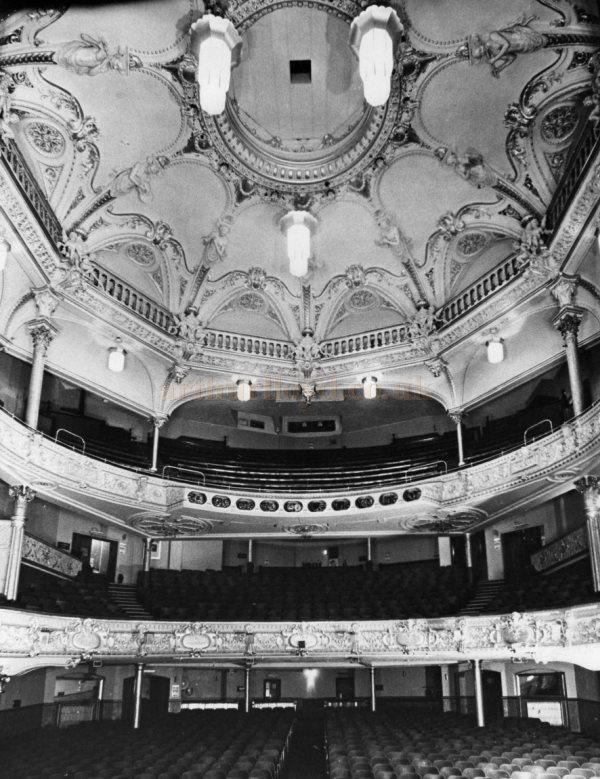 The
central façade is flanked by two square towers carried up above
the centre pediment and terminating in handsome minarets covered with
copper, the whole forming an elegant and imposing building well worthy
to rank with the other large buildings of Sheffield. The front entrance
has an ornamental iron and glass shelter over the pavement, brilliantly
illuminated with the electric light. The entrances in Union-street have
a similar shelter, and the whole frontages are lighted with powerful
arc lamps suspended from ornamental brackets. The principal entrance
is from Charles-street. Here archways are formed fitted with ornamental
iron gates. Polished wood swing doors open into a vestibule which is
designed in Arabesque. The ceiling is of rich design decorated in gold
and colours.
The
central façade is flanked by two square towers carried up above
the centre pediment and terminating in handsome minarets covered with
copper, the whole forming an elegant and imposing building well worthy
to rank with the other large buildings of Sheffield. The front entrance
has an ornamental iron and glass shelter over the pavement, brilliantly
illuminated with the electric light. The entrances in Union-street have
a similar shelter, and the whole frontages are lighted with powerful
arc lamps suspended from ornamental brackets. The principal entrance
is from Charles-street. Here archways are formed fitted with ornamental
iron gates. Polished wood swing doors open into a vestibule which is
designed in Arabesque. The ceiling is of rich design decorated in gold
and colours.
Right - The Auditorium of the Sheffield Empire Circa 1940-1959 - With Permission from Picture Sheffield Ref No s01633.
From the centre of this ceiling is suspended a handsome electrioneer, formed with drops and coloured lights. The vestibule floor is of rich marble mosaic, and marble steps lead up to the doors of the inner vestibule. The walls are covered with rich leather paper, with an Indian painted frieze. To the left of the entrance vestibule above described is the pay office, of polished wood and coloured glass; and a similar office opposite contains the telephones, switches for the electric lights, &c. The formation of the site is such that the patrons of the grand circle and the pit enter almost on levels with their respective seats. A crush-room is provided, from which wide corridors lead to each side of the grand circle and to the private boxes; and wide stone staircases on either side conduct the visitors to the fauteuils.
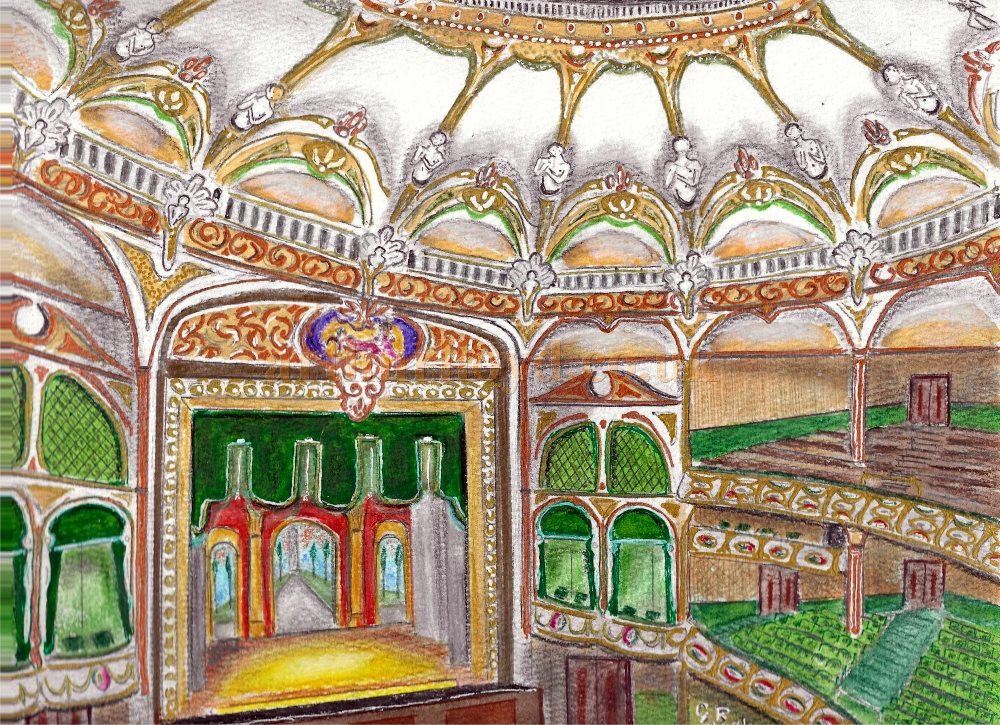
Above - A Painting by George Richmond depicting the Auditorium and Stage of the Sheffield Empire when it first opened in 1895. Colours were suggested by the contemporary report shown on this page - Click for an Index to all of George Richmond's Paintings on this site.
 A suite of offices to the left of the entrance is conveniently situated
for the management, and a private staircase is arranged so as to enable
the manager to get to all parts of the house in a few seconds. The upper
circle, which contains about six rows of seats at the back of the grand
circle, is approached by means of a separate staircase to the right
of the entrance, and this part of the house is well arranged, and the
sight lines are perfect. There is a wide passage way at the back of
the top row of upper circle seats, which is continued at the same level
along the sides into large open-arched lounges over the private boxes.
A suite of offices to the left of the entrance is conveniently situated
for the management, and a private staircase is arranged so as to enable
the manager to get to all parts of the house in a few seconds. The upper
circle, which contains about six rows of seats at the back of the grand
circle, is approached by means of a separate staircase to the right
of the entrance, and this part of the house is well arranged, and the
sight lines are perfect. There is a wide passage way at the back of
the top row of upper circle seats, which is continued at the same level
along the sides into large open-arched lounges over the private boxes.
Right - A Variety Programme for the Sheffield Empire in 1911 - Click to see the entire Programme.
 At the rear of the upper circle is a raised lounge with an ornamental
balcony front, and from this lounge, through a wide opening, flanked
with columns with ornamental pediment over, may be reached the grand
smoking saloon, which is lofty and of magnificent proportions. Through
the casement windows of this may be approached the outer balcony, looking
on to Charles-street, already alluded to. The pit is entered from Union-street.
This part of the building is lofty and well ventilated, and is fitted
up with comfortable seats. At the back is a raised lounge, and in front
pit-stalls are placed with raised promenades at the sides. The seats
are upholstered in rich velvet, and the floors carpeted.
At the rear of the upper circle is a raised lounge with an ornamental
balcony front, and from this lounge, through a wide opening, flanked
with columns with ornamental pediment over, may be reached the grand
smoking saloon, which is lofty and of magnificent proportions. Through
the casement windows of this may be approached the outer balcony, looking
on to Charles-street, already alluded to. The pit is entered from Union-street.
This part of the building is lofty and well ventilated, and is fitted
up with comfortable seats. At the back is a raised lounge, and in front
pit-stalls are placed with raised promenades at the sides. The seats
are upholstered in rich velvet, and the floors carpeted.
Left - A Page from a rare book of vouchers from 1927 entitling the displayer of Theatre Bills to a free seat once a month - Courtesy Roger Fox.
The fauteuils occupy the space in front of the orchestra. There are six rows of luxuriously fitted up tip-up chairs, and at the sides are raised lounges and alcoves with fountains and rockeries, with palms and ferns. The whole of this part of the house is carpeted and fitted with tip-up seats. A large smoking saloon is provided at the side of the fauteuils, richly upholstered and fitted with settees, the whole being beautifully decorated. There are no less than seven exits on the ground level - five from the grand circle and upper circle and four from the gallery. These are all direct, and the passages and staircases are fire-proof, while the doors are fitted with Briggs' panic bolts. The auditorium has been designed on the cantilever principle, a clear and uninterrupted view of the stage being obtained from all parts. The safety of the public has been well considered, and every preventative against accident by fire has been provided in the shape of hydrants, iron doors, and an asbestos fireproof curtain, which entirely divides the stage from the auditorium.
 The ventilation has received more than ordinary attention, the fresh
air being conveyed into the building by tubes and inlet ventilators.
The vitiated air is extracted by shafts formed in the ceilings; and,
in addition to this, the architect has provided a large sliding-roof in the centre of the auditorium domed
ceiling, which can be worked off on tram lines when required.
The ventilation has received more than ordinary attention, the fresh
air being conveyed into the building by tubes and inlet ventilators.
The vitiated air is extracted by shafts formed in the ceilings; and,
in addition to this, the architect has provided a large sliding-roof in the centre of the auditorium domed
ceiling, which can be worked off on tram lines when required.
Right - A Postcard View of the Sheffield Empire in its early years.
The stage is a large one, being 33ft. deep and 64ft. wide, with property-rooms and scene-docks in conjunction. It is fitted up with the necessary traps and bridges, and the usual stage machinery. The grid is placed high enough to take up all scenery. The dressing-rooms are numerous, and fitted with hot and cold water. They are contained in a block of buildings at the rear of the stage, being divided from the same by brick walls, and the only openings are fitted with iron doors.
The entrances to the auditorium, the stage, and the dressing-rooms are heated by hot-water pipes and coils, and the whole building is lighted by electricity. The whole of the raised plaster decorations have been carried out from the architect's designs, and Mr Matcham has certainly excelled himself. He has adopted a bold Flemish treatment, involving much grandeur of design.
The ceiling is divided up by life-size figures playing different musical instruments. They are artistically modelled, and from them spring arches forming a series of panels, over which is a boldly-moulded and enriched cornice surrounding the sliding-roof. From this a series of twenty polished brass electric light pendants is suspended with loops between, and around the outer circle of the ceiling similar pendants occur, throwing a beautiful soft light on the chaste enrichments. The lower part of the centre ceiling is formed into coffered arches with panels running up and forming a base for the figures. These are richly panelled, and the background is painted with sky and birds. In front of the whole a balcony is continued round the entire ceiling, with pedestals containing vases and forms supported by cupids. The ceiling is artistically painted in accordance with Mr Matcham's design, "A Dream of a Carnival," introducing sprites, pierrots, demons, and dancers.
Over the stage opening is a painted panel representing "Music and Dancing," and the coves along the sides of the ceiling are very artistically treated with shaded scroll design. The remainder of the decorations, including the boxes and gallery fronts, are carried out in the same bold, artistic way. The ceiling is supported by eight finely designed and decorated columns, the lower parts being of marble. The proscenium opening is flanked with similar material, and a raised decoration is carried around the whole proscenium and along the front of the stage, giving the appearance of a picture frame. The building is luxurious in its upholstery, the floors of the best parts of the house being laid with thick carpet, and the boxes and stage opening being fitted with embossed green bronzed plush draperies.'
The above text in quotes was first published in the ERA, 26th of October 1895.
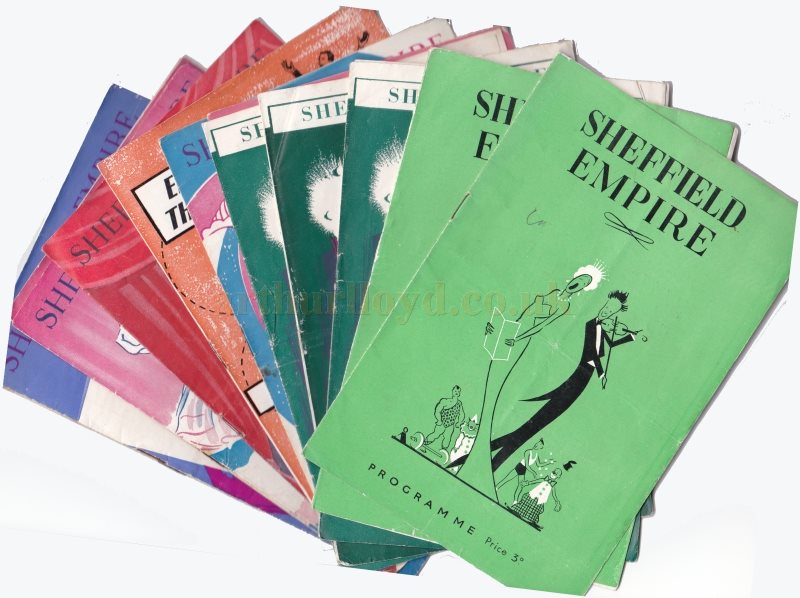 A Selection of Programmes for the Sheffield Empire from 1949 to the 1956 - Kindly donated from the Estate of the late Joan Grice.
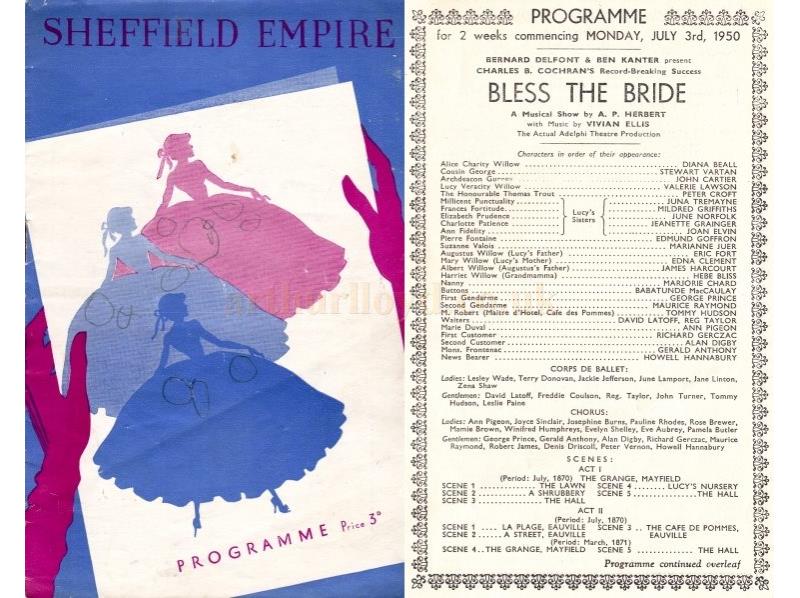 Bless the Bride - July 3rd 1950.
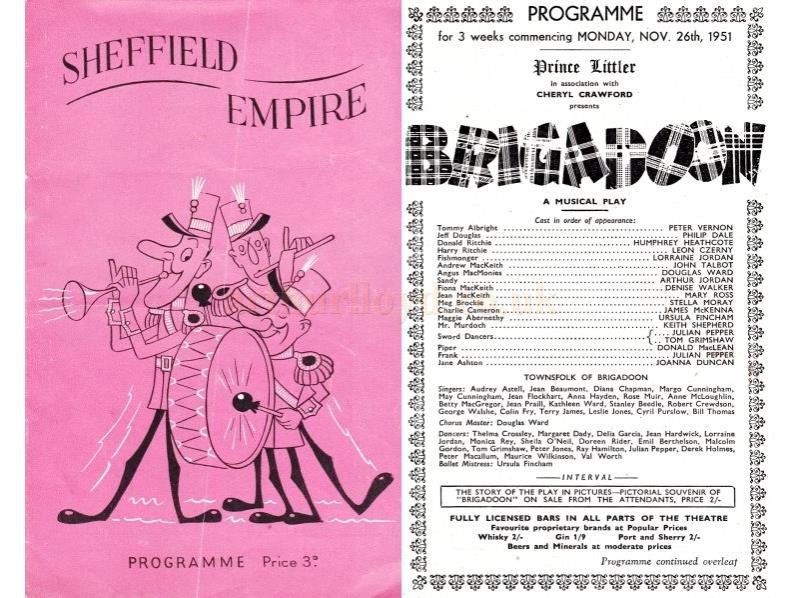 Brigadoon - November 26th 1951
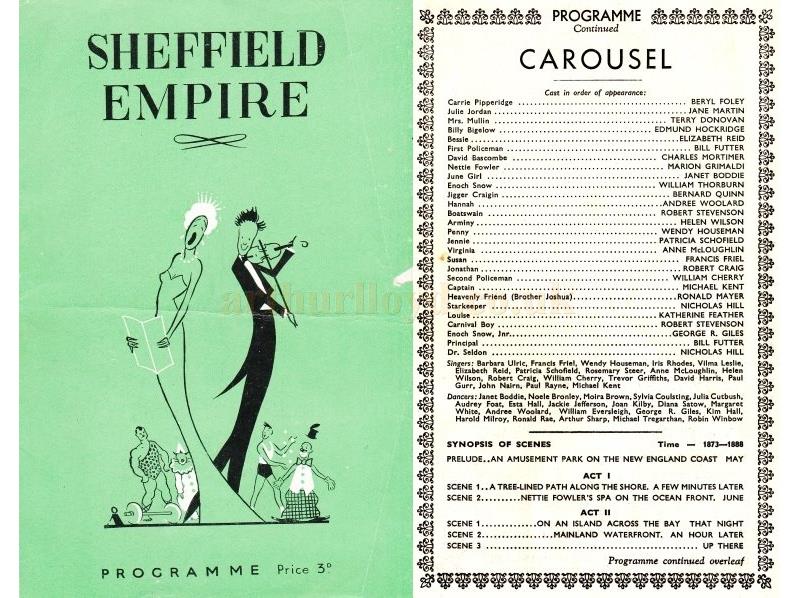 Carousel - November 3rd 1952.
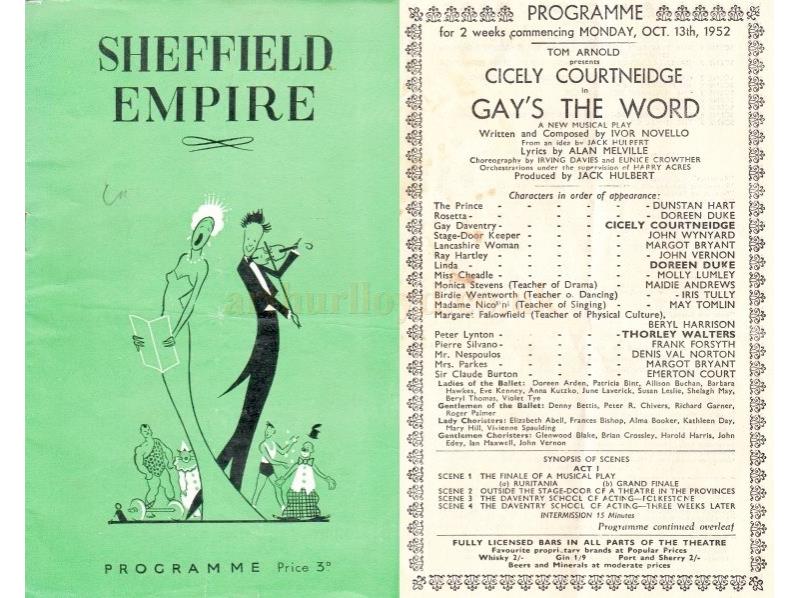 Gay's the Word - October 13th 1952.
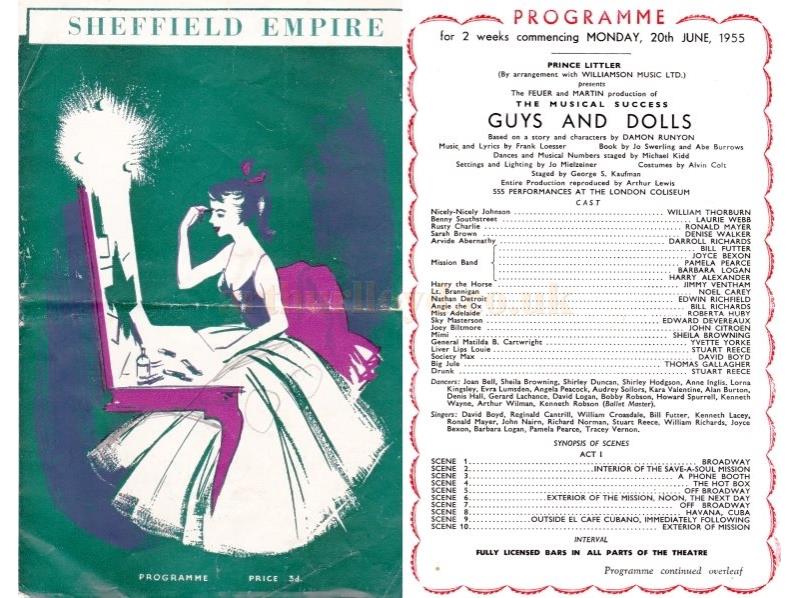 Guys and Dolls - June 20th 1955.
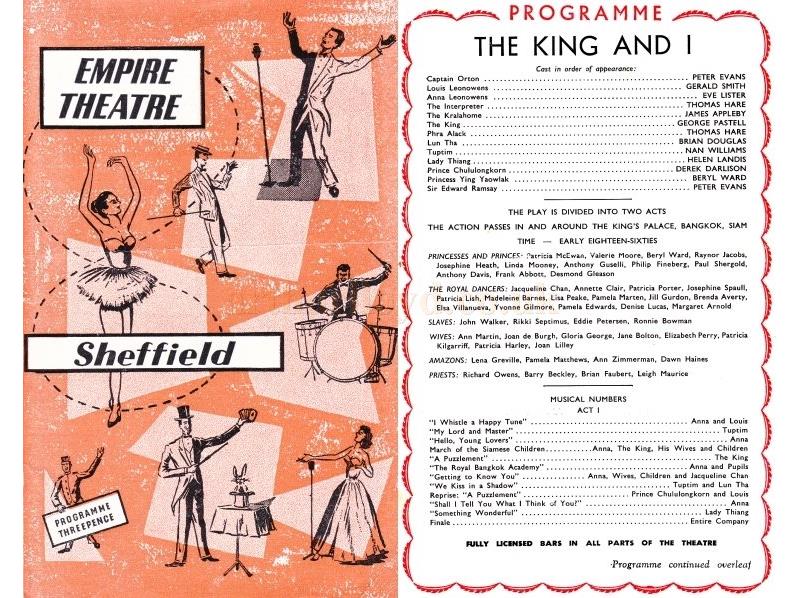 The King and I - October 22nd 1956.
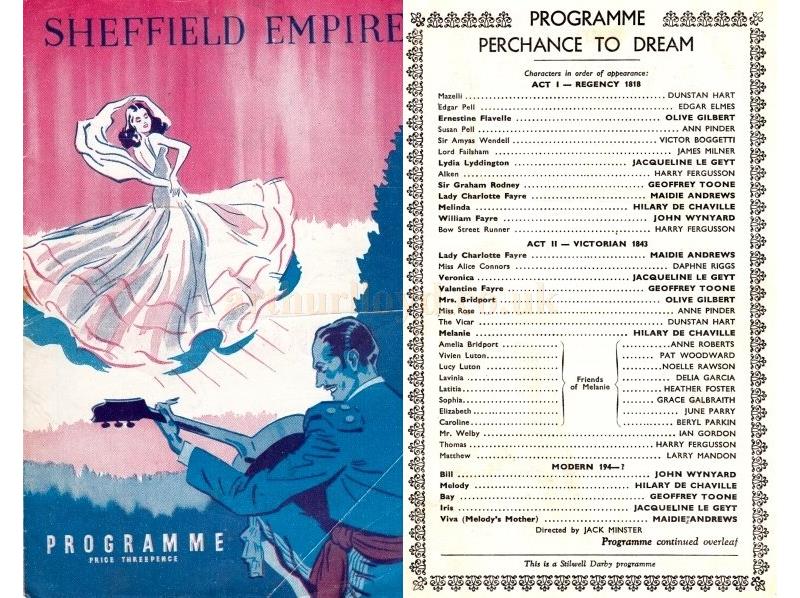 Perchance to Dream - June 20th 1949.
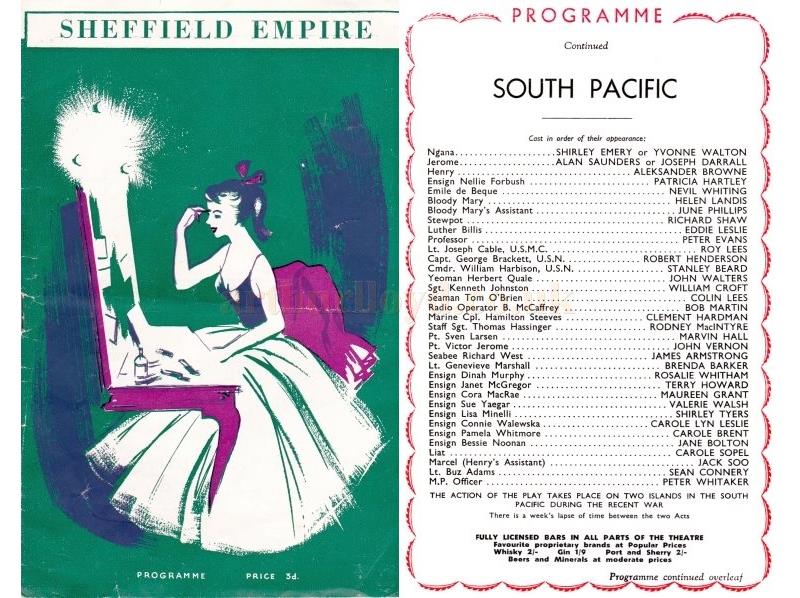 South Pacific - November 16th 1954.
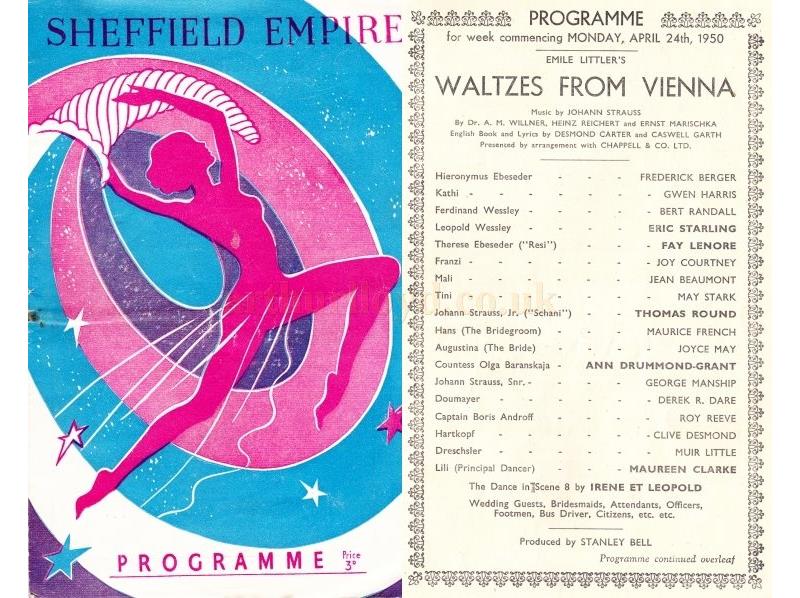 Waltzes from Vienna - Apil 24th 1950.
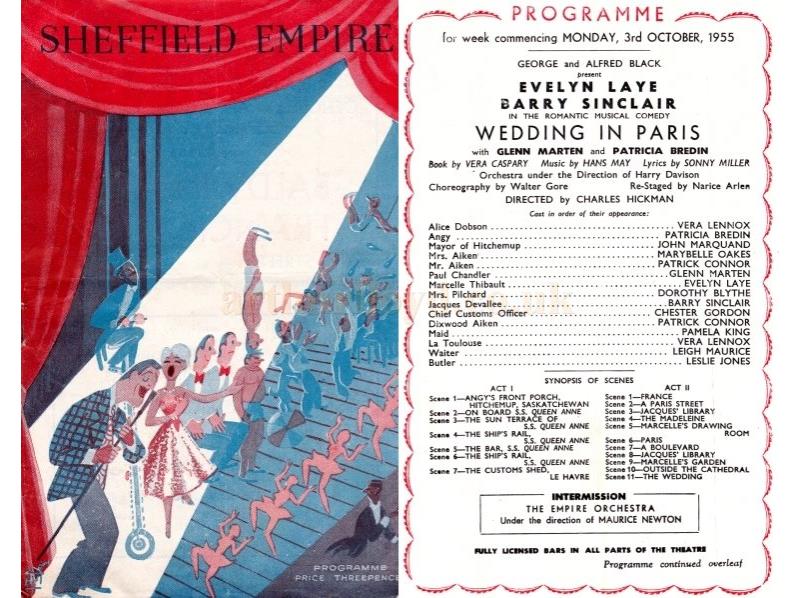 Wedding in Paris - October 3rd 1955.
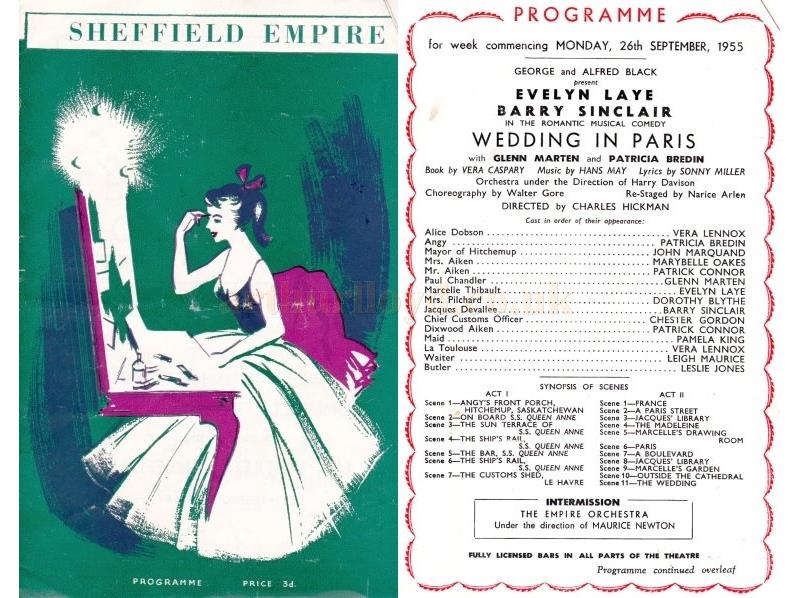 Wedding in Paris - September 26th 1955.
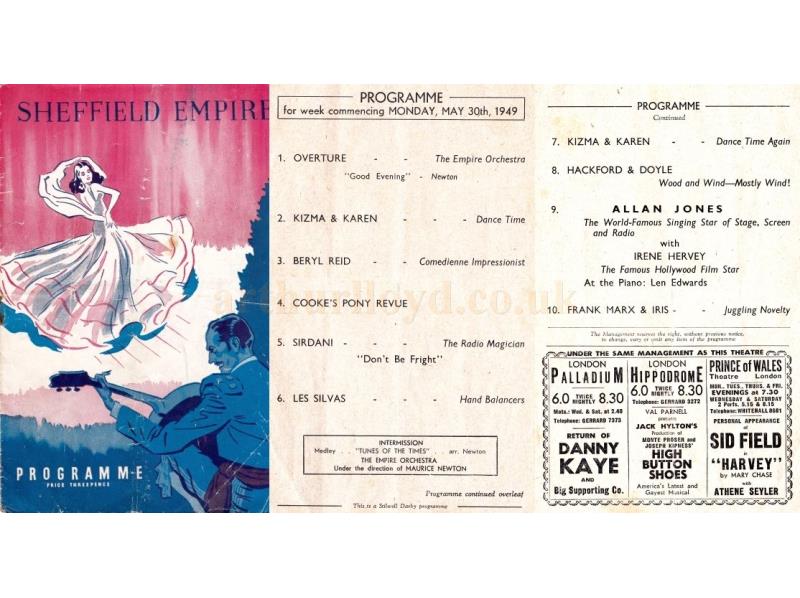 A Variety Show - May 30th 1949.
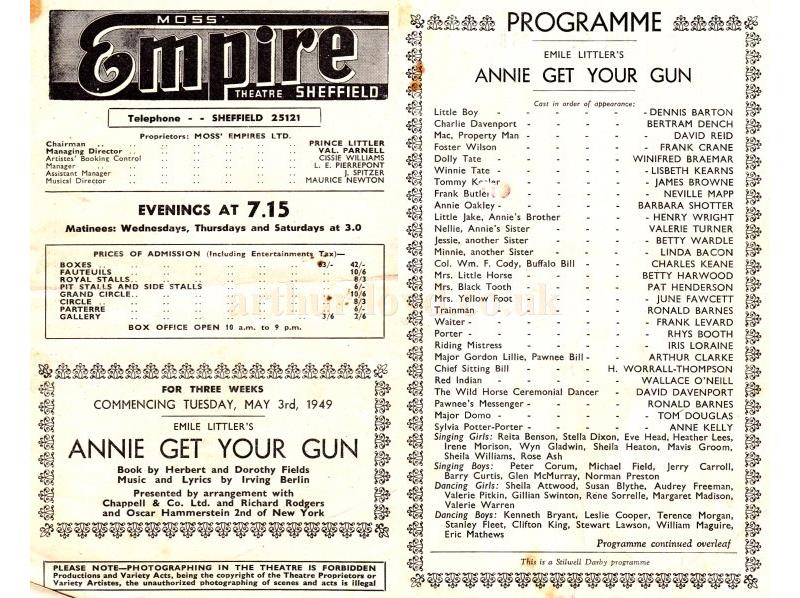 Annie Get Your Gun - May 3rd 1949.


Above - A Selection of Programmes for the Sheffield Empire from 1949 to the 1956 - Kindly donated from the Estate of the late Joan Grice.
 The Empire Palace Theatre had first opened on Monday November
the 4th 1895 as a Variety Theatre
and was built for Moss Empires with a vast auditorium capable of seating
2,500 people in great comfort. The Theatre would later drop the 'Palace' part of its name and be known
simply as the Sheffield Empire.
The Empire Palace Theatre had first opened on Monday November
the 4th 1895 as a Variety Theatre
and was built for Moss Empires with a vast auditorium capable of seating
2,500 people in great comfort. The Theatre would later drop the 'Palace' part of its name and be known
simply as the Sheffield Empire.
Despite being a variety Theatre it was already showing so called 'animated pictures' as part of the entertainment as early as 1896. The Theatre was closed in June 1927 for a six week redecoration, and then in July 1933 it was closed again for alterations and redecoration, and a new Bio Box was constructed at roof level for Follow Spots and film projection.
Right - A May 1913 Sheffield Empire Poster Advertising a twice nightly variety production including the musical comedy 'The Eternal Waltz' from the London Hippodrome - Courtesy Colin Charman whose Grandmother Ena Dayne featured on the Bill.
In 1937 the Theatre was closed for 5 weeks for modernisation involving changes to the Stage and Auditorium, new carpets and seating were installed and the Auditorium was redecorated in shades of rose pink and gold, box drapings were replaced with rose pelmets, and gangways were widened, reducing the seating capacity but giving more comfort to patrons. Toilet provision was also improved at this time, and the bars were redecorated.
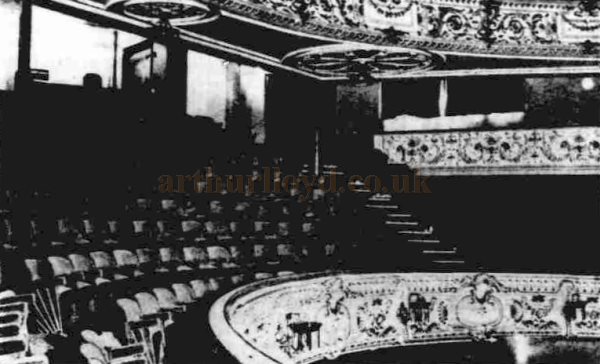 The stage was fitted with a run out platform from the orchestra pit and new lighting and electrical equipment was installed including a new lighting board. Ventilation was also updated. The alterations were carried out in part by the original builders of the Theatre; George Longdon and Son of Sheffield.
Left - The Auditorium of the Sheffield Empire after modernisation in 1937 - From The Daily Independent, 31st of July 1937.
On the 3rd of August 1942 a major fire destroyed the Empire's stage and was only prevented from destroying the rest of the Theatre by its safety curtain which was down at the time. The Theatre then remained closed for rebuilding the stage and refurbishment for more than a year but reopened on the 6th of September 1943. During the war the Theatre lost one of its two turrets which capped the towers on either side of the facade, and the buildings which had previously been situated either side of the Theatre were also destroyed.

Above - The Auditorium of the Sheffield Empire - From the Moss Empires Jubilee Brochure of 1949.
The Empire Theatre was closed on the 2nd of May 1959 after being sold to a developer and was demolished just two months later in July 1959. The site was used for the construction of shops which are still there today.
If you have any more information or images for this Theatre that you are willing to share please Contact me.
The Empire Theatre, Sheffield by Donald Auty
 This
theatre was a big one, a Matcham house with
over two thousand seats and on a prime city centre site. The stage area
was bombed during the war whilst a performance was taking place and
some of Henry Hall's band who were topping the bill that week were killed
and injured.
This
theatre was a big one, a Matcham house with
over two thousand seats and on a prime city centre site. The stage area
was bombed during the war whilst a performance was taking place and
some of Henry Hall's band who were topping the bill that week were killed
and injured.
The manager during the fifties was Johnny Spitzer an enormous man. He lived at the Grand Hotel where he had a special deal. He used to have numerous large meals sent over from the hotel during the day and would sit in his office in front of the television set on his desk that was switched on all the time and eat them. The staff wondered what would happen if ever Val Parnell the managing director walked in. He did one day and the assistant manager went into the office to find both Val and Johnny sitting in front of the television and both eating enormous meals.
Maurice Dixon (See note) was musical director and presided over an excellent thirteen piece orchestra. The stage manager was Ernie Fenton and his son the first dayman, they were both smashing people and I had many a lovely week there. (See note)
Right - A caricature sketch of Mr Leo Matthew Stewart, one time Acting Manager of the Sheffield Empire - Courtesy Chris Bond whose wife is Stewart's Great Grandaughter, Chris says that Stewart moved to Sheffield sometime after 1901 and died in 1918.
One week I was getting the show out on Saturday night. The bill toppers were Donald Peers and Jimmy James. Jimmy came down onto the stage and called me over to the prompt corner. He asked me to lend him a tenner for his train fare to the next town.
What did you do with the £250 I paid you yesterday I asked him, this was a lot of money in the mid fifties. I owed it all at the bookies Jimmy replied. He was a great gambler and went bankrupt through it. He suffered a stroke whilst on a summer season in Skegness and could not work any more. He had no money so a benefit performance was organised for him at the Prince of Wales theatre in London but the proceeds had to be put into a trust that Jimmy did not have personal access to because he would have gambled it away. He was however one of the nicest comics I ever worked with.
The Empire was sold for its prime site value and closed in the late fifties and demolished. Johnny Sptizer was promoted to head of publicity for Moss Empires but still continued to live at the Grand Hotel and eat enormous meals.
Above Text from Moss Empires Theatres in the fifties written for this site by Donald Auty.
Note: The Last Musical Director at the Sheffield Empire was Maurice Newton ( Not Dixon) He was loved by visiting artistes and was always willing to rewrite their band parts which were often almost unplayable. - Alan Chudley.
Note: Ernie Fenton was Stage Manager, as mentioned in the article, but the dayman referred to was not his son by probably Wally Parsons. Ernie Fenton's son Ian Fenton says that he did however, work back stage when he was a teenager in the 50's. One week with the ''King and I'' and another week with ''South Pacific''.
The Adelphi Picture Theatre, Vicarage Road, Attercliffe, Sheffield

Above - The Adelphi Theatre, Sheffield - Courtesy Lavonne Wiencek
 The
Adelphi Picture Theatre, in Vicarage Road, Sheffield was designed by
the architect W. C. Fenton and opened for business on the 18th of October
1920.
The
Adelphi Picture Theatre, in Vicarage Road, Sheffield was designed by
the architect W. C. Fenton and opened for business on the 18th of October
1920.
The exterior was built from red brick with terra-cotta enhancements to the main facade. The auditorium was built on two levels, stalls and one circle, with a seating capacity of 1,350, and a projection room at the back of the stalls.
Right - A Poster for the Adelphi Picture Theatre, Sheffield for the week of Monday the 7th of July, 1941 - Courtesy Ian Cowell. Films showing were 'Slightly Honorable'; the Laurel & Hardy film 'Them Thar Hills'; and Bing Crosby in 'Rhythm on the River'.
The Theatre was the subject of some restoration and redecoration in the late 1930s but after bomb damage during the second world war, and a brief closure of one month, the building was further renovated in 1946.
The last film presentation at the Adelphi, which had always been an independent Cinema, was a showing of 'The Karate Killers' and 'The Rounders' on the 28th of October 1976.
The Adelphi then became a Bingo Club for many years until it closed in the mid 1990s. It was then converted into a nightclub where live bands also performed on occasions, but closed down in late 2006.
The Adelphi is a Grade II Listed building and still stands today. However this building should not be confused with the former Adelphi Theatre in Furnival Road and Blonk Street, later the Alexandra Music Hall.
If you have any more information or images for this Theatre that you are willing to share please Contact me.

Above - The former Adelphi Picture Theatre, Sheffield in a photograph taken in October 2009. The photo also shows the original Burton's menswear premises next door to the Theatre - Courtesy Rob Cordon.
The Hippodrome Theatre of Varieties, Cambridge Street, Sheffield
Later - The Hippodrome Theatre / Hippodrome Cinema / ABC Cinema

Above - A Google StreetView Image of the Grosvenor House Hotel, which was built on the site of the former Hippodrome Theatre in 1963 - Click to Interact. Cambridge Street is to the left of the picture and Wellington Street to the right. The front of the Hippodrome was on Cambridge Street, and several exit doors were on Wellington Street. A visitor to the site, Brenda Murray, says:- 'As teenagers, my friends and I used to go up in 'the gods' as the gallery was known. I think it was 10d, the stalls was 1/6d, and the circle cost 2 shillings.'
The Sheffield Hippodrome was built in 1907 and designed by Bertie Crewe. The Theatre, the largest in Sheffield, with a capacity of 2,730, opened as the Hippodrome Theatre of Varieties on the 23rd of December 1907. The Hippodrome's auditorium was constructed on three levels, stalls, circle, and gallery, and at the time its cantilevered circle is said to have used the longest girder that had been utilised in the construction of a Theatre. Either side of the proscenium arch were four boxes, and the auditorium roof could be slid open for ventilation.
The Theatre was one of several large Hippodromes opened by Tom Barrasford in direct opposition to Oswald Stoll, then managing director of Moss empires, and his own Stoll Tour, and was in direct competition with Moss's nearby Empire Theatre. Barrasford died in 1910 and the Sheffield Hippodrome became part of Walter De Frece's "Variety Theatre's Controlling Company", which in 1921 became part of the London Variety Theatres, they went bankrupt in 1928 and were taken over in 1929 by General Theatres Corporation, part of Gaumont British Cinemas.
The Theatre closed in 1931 and it was leased to Associated British Cinemas who installed a projection box at the back of the circle and redecorated the auditorium. The Theatre reopened on the 20th of June the following year, 1932, as the Hippodrome Cinema. It was used primarily for Film showings from then onwards although the occasional live show was still staged on its still intact stage.
In 1938 the Theatre was closed again for redecoration and improvements which were carried out over three weeks, and it was damaged by bombs during the war in December 1940, necessitating closure for repairs, but it reopened in January the following year.
The Theatre's lease came up again in 1948 and whilst ABC vacillated about renewing it, a separate exhibitor who had been running the Tivoli Cinema in Norfolk Street, which had been bombed out in the Sheffield Blitz, jumped in and took over the Hippodrome's lease. They refurbished the Theatre and reopened it on the 26th of July 1948. ABC went on to build a new ABC Cinema on the Stadium plan on Angel Street.
In 1954 Cinemascope was installed in the Theatre and it was also the first Cinema in Sheffield to show 3d Films and one of the first to open on Sundays. In 1959 the Theatre's old Gallery was closed and a few years later so was the whole Theatre. It had been compulsory purchased by Sheffield City Council, along with adjoining properties, and on the 2nd of March 1963 the Theatre's last showing of 'Gone With The Wind' ended the Theatre's career. It was demolished later that year and the Grosvenor House Hotel was built on the site.
Some of the above information on the Hippodrome Theatre was sent in by Alan Chudley and Christopher Wade, some other information was gleaned from the excellent Cinema Treasures website where there is also a very nice photograph of the Hippodrome here.
If you have any more information or images for this Theatre that you are willing to share please Contact me.
The Britannia Music Hall, 121 West Bar, Sheffield
Formerly The Tankard Music Hall
The Britannia Music Hall originally started out as a Concert Hall above the Tankard Inn on West Bar, Sheffield in the mid 1800s. Eventually a new hall was built to the rear of the pub which was run by the Richdale family who often appeared on its stage too. Dan Leno, the famous Drury Lane Pantomimist appeared here as a child. Later renamed the Britannia Music Hall in the 1880s it could seat around 1,000 people mostly around tables for eating and drinking and watching the entertainment on its stage at one end.

Above - A Notice in the Illustrated Sporting News and Theatrical and Musical Review from Saturday the 2nd of January 1869 advertising the Bellini Family at the Tankard Music Hall, Sheffield.
In 1883 the Britannia was closed suddenly for repairs and alterations, a notice in the Era on the 7th of July 1883 stated:- 'In consequence of extensive alterations. Mr POGSON is reluctantly compelled to close the above popular Hall from July 14th to September 3d. Artistes holding Engagements for end of July and August can be rebooked for later dates. During the recess there will be made a New Moveable Roof and Elaborate Ceiling, extra Exits, extra Stalls, to supply the increasing demand for best seats: Handsome Decorations, &c. See future announcements. Stars and Novelties of every description may write for reopening.' - The Era, 7th of July 1883.
Despite the earlier alterations by 1895 the Britannia had lost it's entertainment licence due to the introduction of fire regulations. It was forced to close down, and never reopened for entertainment again. Instead the building went through many incarnations, including alterations for use as a warehouse for Greene and Co., and later it was even in use as a car sales showroom.
Decades after its closure as a live theatre, whilst investigations of the building were being carried out before the property's sale by auction in July 1978, it was discovered that the dimensions of the outer walls and the inner space didn't match. Further investigations discovered a false wall, behind which was the Theatre's original stage with a proscenium arch nineteen feet wide and 14 feet high, a stage 40 feet wide, and many of its back cloth rollers still in situ, along with trapeze bars and ladders.
By 1987 the building was being occupied by a firm called Harmony Wedding World who reported that most of the building, which was hidden behind temporary walls, was in a terrible state but that the circle and gallery tiers were still visible if you looked hard enough.
The end came for this building however when it was gutted by fire and subsequently demolished in 1992.
Some of the above information for the Tankard / Britannia Music Hall was gleaned from the excellent little book 'The Lost Theatre of Sheffield' by Bryen D. Hillerby.
If you have any more information or images for this Theatre that you are willing to share please Contact me.
A visitor to the website, Keith Giles, has contacted me to say:- 'Just passing on some information about the Old Tankard that may or may not be of use to you. One of my photographers, William Henry Reed (c1835-1878) performed at the Old Tankard Concert Hall for four months in 1859 (The Era 4 Sept 1859, p1). He subsequently immigrated to NZ where he worked as a photographer and performed (also in Australia) initially under the name of W H Mackney. He married the singer Annie Leaf (who later became an internationally known opera star) shortly before his death - Keith Giles.
The Ecclesfield Cinema House /Essoldo, Sheffield
The Ecclesfield Cinema House opened on the 1st of January 1921.
The Cinema closed on the 7th of February 1959 and was totally emptied within a month.
The Cinema was demolished in June 1970.
This information Courtesy Nigel Womersley.
If you have any more information or images for this Theatre that you are willing to share please Contact me.
The Grand Theatre of Varieties, West Bar and Snig Hill, Sheffield
Formerly - The New Star Music Hall / Bijou Theatre
 This Theatre, situated at the junction of West Bar and Snig Hill, Sheffield, was originally opened as the New Star Music Hall in the 1860s. It had quite a long life as a Music Hall and was run by Alfred Milner in its final years. He would sell up in 1887, probably due to ill health as he died in December that year. When the Theatre was sold an auction was held for the 80 'Fine Oil Paintings' which had been displayed in the Theatre's Gallery for some years previously. The last production at the Star Music Hall seems to have been on the 10th of September 1887 when Tom Fallan, 'the great variety artiste', and Dora Fleming, a lady serio comic, took to the stage for a final night of music hall entertainment.
Right - The Silk Opening night Variety Programme for the Grand Theatre of Varieties, Sheffield in March 1893 - Courtesy Justine Spencer.
Shortly after the Star Music Hall closed it was reopened as the Grand Theatre of Varieties. The success of this venture led to a programme of alterations for a another and grander reopening in March 1893, see the opening programme shown right. The Music Hall and Theatre Review reoprted briefly on this in their 24th of March 1893 edition saying:- 'The Grand Theatre of Varieties has been thoroughly re-built, renovated, and upholstered throughout, fitted with electric light, and is, in fact, an entirely new place. The present management, who have superintended these alterations, will shortly open with a first class array of talent.'
 The Grand Theatre was taken over by the Frank MacNaghten Vaudeville Circuit in August 1896 and run as a twice nightly variety house, at this time occasional early film showings became a part of the variety bill. In 1908 the Theatre began showing films on a more regular basis. It was renovated in 1914 under the new ownership of Mr. S. Grant, Thomas Ryan became the Theatre's Manager for the reopening.
Left - The Sisters Poulton who appeared in the Opening Night Production at the Grand Theatre of Varieties, Sheffield in March 1893 - Courtesy Justine Spencer whose grandmother met them in her youth.
The Theatre eventually went over to full time cinema use and was renamed the Bijou Theatre for a short while before returning to the Grand Theatre name again. A visitor to this site, Robert Wainman, writes 'I've just come across your most interesting site, after entering 'Bijou Theatre, Sheffield, into Google. My Mother, born 1917, would whenever returning home on a wintry day often shout: "Cold out, Warm in, - Come to The Bijou!" Apparently it was a regular cry she heard as a little girl when walking past 'The Bijou'. I seem to remember her telling me an elderly lady was employed to encourage patrons into the Theatre. One of the many characters of those times.' - Robert Wainman.
The Grand Theatre closed in 1920 when plans were arranged for a much larger super cinema to be built on the site but the plans never came to fruition. Instead the Theatre became a home for Film Trade Shows with no public admittance for some years. Eventually even this ceased and it was was closed up and lay derelict until its demolition in 1938, see newspaper article below.
A very nice image of the Grand Theatre exterior can be seen here.

Above - An Article and Image on the demolition of the former Grand Theatre, Sheffield in 1938 - From The Daily Independent, 13th of August 1938.
If you have any more information or images for this Theatre that you are willing to share please Contact me.
The Palace Theatre, Attercliffe Road, Sheffield
Formerly - The Alhambra Theatre of Varieties

Above - The Alhambra Theatre, Attercliffe, Sheffield - From the Building News and Engineering Journal, 1st of April 1898.
 The
Palace Theatre in Attercliffe, Sheffield was designed by the architects
G. D. Martin and A. Blomfield Jackson, and constructed by G. Longden
and Sons, of Sheffield. The Theatre originally opened as the Alhambra
Theatre of Varieties on the 3rd of January 1898.
The
Palace Theatre in Attercliffe, Sheffield was designed by the architects
G. D. Martin and A. Blomfield Jackson, and constructed by G. Longden
and Sons, of Sheffield. The Theatre originally opened as the Alhambra
Theatre of Varieties on the 3rd of January 1898.
The Theatre had a small stage, just 21 feet deep, and was equipped with six dressing rooms for its artistes. The auditorium could accommodate some 1,200 people.
Right - A Plan of the Alhambra Theatre, Attercliffe, Sheffield - From the Building News and Engineering Journal, 1st of April 1898.
The Building News and Engineering Journal reported briefly on the Theatre's opening in their 1st of April 1898 edition, along with the accompanying image shown above and right, saying:- 'This theatre was opened last January. The front elevation faces the Attercliffe-road. The lower portion of the front is of stone, resting on a base of coloured glazed bricks. The upper part of the two sides of the building is of red brick, the centre being of stucco with carved heads to the windows. The flanking portions on either side, which are devoted to staircases, are carried up to form towers, and these are terminated by lead cupolas and flagstaffs. Arc lamps are suspended over the main portion of the building, and the windows being of stained glass with electric lights behind them, light up the building.
The interior of the house is decorated with Moorish designs, and all the fittings are in keeping. The seating accommodation consists of ground-floor area, with a gallery over. There are four direct means of entrance or exit to the ground-floor seats, and two to the gallery. There is also a pass stair between the two parts.
The stage has a separate entrance at the back of the building, and in close proximity are dressing-rooms and the manager's office. The building is of fireproof construction, and hydrants are provided in case of emergency.
The lighting throughout consists of a duplicate system of electric light and gas, the former being supplied by an engine and plant laid down for the purpose; the gas is only provided in case the electric light should at any time unexpectedly not be available.
The theatre has been erected for the Attercliffe Alhambra Company from the designs and under the superintendence of Messrs. G. D. Martin and A. Blomfield Jackson, architects, both of London. The contractors are Mesers. G. Longden and Sons, of Sheffield.'
The above text in quotes was first published in the Building News and Engineering Journal, 1st of April 1898.
The Theatre closed in 1930 and was then redesigned in the 'Atmospheric' style by Fred A. Foster, reopening on the 13th of October 1930 mainly as a Cinema, although it did still show variety shows occasionally on its small stage. In July 1937 the Theatre returned to exclusively live performances, giving up its use as a Cinema, but it was closed completely in July 1955 after the final performance of 'Strip, Sauce and Spice', and subsequently demolished in 1962.
Some personal information on the Palace Theatre by Alan Chudley and Ken Joy can be read below.
If you have any more information or images for this Theatre that you are willing to share please Contact me.

Above - An early Photograph of Attercliffe Road, Sheffield - Courtesy Lavonne Wiencek
 The
following information on the Attercliffe Palace was kindly sent in by Alan
Chudley who says:- ''The Palace Theatre Attercliffe was in the Attercliffe
road about 300 yards down from Burton's Corner, this was the variety
house, which closed on 27th June 1955 with a revue; "Strip, Sauce
and Spice" Both this and the Theatre Royal were at one time Mc Naughton Theatres.
The
following information on the Attercliffe Palace was kindly sent in by Alan
Chudley who says:- ''The Palace Theatre Attercliffe was in the Attercliffe
road about 300 yards down from Burton's Corner, this was the variety
house, which closed on 27th June 1955 with a revue; "Strip, Sauce
and Spice" Both this and the Theatre Royal were at one time Mc Naughton Theatres.
Right - The Palace Theatre, Attercliffe, Sheffield - Courtesy Maurice Friedman, British Music hall Society
The Palace Attercliffe was opened by Frank McNaughton on 3rd January 1898, as The Alhambra. The theatre was not sucessful under Mc Naughton and was later renamed the Palace and was sold off to J.Allan Edwards of Derby in 1907. The Theatre was sold off again to the Roberto Brothers and converted into a cinema in 1913 .
Much later ( Possibly late 1920 or early 1930s) it was sold to a local architect, Mr Walker, whose sons Speed and Jack reopened it as a Variety house. The architect of the Palace was A Bloomfield Jackson and the Theatre had a seating capacity of 1,600.
I knew it as a number two variety house with many strip shows. Frankly the Palace left much to be desired. It was the bain of touring stage managers; the stage was only 16 feet deep and very badly equiped, the dressing rooms were very poor, however on the plus side the audiences were great from a performers point of view which had an atmosphere like the Met in the Edgware Road and the Glasgow Pavillion, and the eight piece Palace orchestra was renowed for its excellence. The top price in the 1940s was only two shillings. The Palace had many characters on its staff.'
The text above in quotes was kindly sent in by Alan Chudley.
A visitor to the site, Ken Joy, has sent me some anecdotes about his father's experiences working at the Theatre, Ken say:- 'My Father (real name Richard Hill) was, for a number of years, First Violinist in the orchestra that played at the Attercliffe Palace Theatre. I used to sit with my Father in the Orchestra 'Pit' and one thing, which always puzzled me, was the fact that the Musical Director wore white gloves when conducting the band. Remember, this was a number 2 theatre date and seeing a Musical Director wearing white gloves, whilst conducting the Orchestra, seemed a little out of the ordinary and when I asked my Dad why the M.D. wore white gloves he said, 'Wait till the interval and then you'll see why". As soon as the interval came and the Orchestra stopped playing, the Conductor jumped over the rail that separated the Musicians from the audience, rushed up the centre aisle and disappeared into a little room at the back of the theatre auditorium. A few seconds later he re-appeared and slowly walked down the centre aisle, still wearing his white gloves but now, also wearing a white apron and carrying an ice cream and drinks tray, and shouting "Ices, ices, get your lovely ices". Not only was he the theatres Orchestra Conductor but, to make a little extra money, he also doubled as the theatres Ice Cream Seller!' - Ken Joy, July 2018.
Ken Joy also says:- 'If I remember rightly, the Attercliffe Palace Theatre did not have any 'Dock' doors. These are the big doors that are at the back of the theatre to enable scenery and props to be loaded into the back stage of the theatre. Because the Palace did not have any 'Dock' doors, scenery and props had to come in through front of house and my Dad told me of one mishap concerning a Speciality Lion Animal Act. The act comprised of a youngish lady and an old, toothless, lion, 'Mosha the Lion" I believe the act was called. The lion was kept in a cage and, as the big finale to her act, she would put her head into the lion's toothless mouth. Because the Attercliffe Palace did not have any 'Dock' doors, the lions cage had to be manhandled thorough the front of the theatre and down the centre aisle. Unfortunately, during its transit the lion's cage, complete with lion, got stuck in the aisle, half way down the auditorium. The only way to get the cage free would have been to take out a large number of theatre seats but, because the theatre management didn't want to lose any ticket money, they refused to take out the offending seats and so the 'Mosha the Lion' Act had to do the whole week, performing in the middle of the audience!' - Ken Joy, July 2018.
The Theatre Royal, Pinfold Lane, Attercliffe, Sheffield
Later - The Regal Cinema

Above - The Theatre Royal, Attercliffe is shown to the right of this photograph of Staniforth Road looking towards Attercliffe Road. The premises on the left include Brightside and Carbook Co-op buildings - Courtesy Paul Davy.
The Theatre Royal Attercliffe was about 100 yards from Burton's Corner in Staniforth Road. This later became the Regal Cinema. This Theatre and the Palace Theatre at one time were both Mc Naughton Theatres.
The Theatre Royal, Attercliffe opened on the 26th of July 1897 with; "No Cross, No Crown" as the Peoples Palace and became the Regal cinema in the 1920s. The Theatre was in Pinfold Lane ( now know as Staniford Road) and was just around the corner from the Palace. Both Theatres have been demolished.
The Theatre Royal was at one time a Mc Naughton House. This became the Regal and when I saw it in the 1950s it had a neon sign Regal on it.
This information was kindly sent in by Alan Chudley.
If you have any more information or images for this Theatre that you are willing to share please Contact me.
The Theatre Royal, Tudor Street, Sheffield

Above - A Sketch showing the Theatre Royal, Tudor Street - From a 1904 Programme for the Theatre - Courtesy Ron Knee.
 The ERA carried a report on the history of the Theatre
Royal, Tudor Street, Sheffield in their 30th of July 1898 edition saying:- 'The historic playhouse, situated on classic ground
at the junction of Norfolk and Arundel-streets, Sheffield, has seen
many changes and vicissitudes since it was opened to the public in the
year of grace 1773.
The ERA carried a report on the history of the Theatre
Royal, Tudor Street, Sheffield in their 30th of July 1898 edition saying:- 'The historic playhouse, situated on classic ground
at the junction of Norfolk and Arundel-streets, Sheffield, has seen
many changes and vicissitudes since it was opened to the public in the
year of grace 1773.
Right - A Programme Cover for the Theatre Royal, Sheffield from the 21st of November 1904 whilst under the Management of F. W. Purcell - Courtesy Ron Knee.
The theatre was erected by a small company of subscribers, who each possessed an equal share in the property, and the right of entrée. At that time the theatre stood entirely isolated, and it was undoubtedly one of the largest playhouses out of London. The elevations of the building were enriched with a medallion of Shakespeare and other work, sculptured by the famous Sir Francis Chantry, and the house appears to have reflected great credit on the enterprise, energy, and intellectual activity of a town which at that period had only a population of some 20,000.
Two of the earliest lessees were Taylor and Robertson, who were succeeded by Macready, who reigned from 1799 to 1808. Macready's wife, who was held in loving esteem by her son, who was afterwards to win immortal renown as the manager of old Drury, lies buried in the churchyard of St. Paul's, in Norfolk-street. After Macready the elder came Manley and Robertson (1808-17), Fitzgerald (1817-21), De Camp (1821 - 5), Mansell (1825), De Camp (1825 -7), Samuel Butler (1827 - 30), Beverley (1830), S. Butler (1831), W. G. Hammond (1832 - 9), Gedge and Lacy (1839 - 42), Ternan (1842), W. Robertson (1843), F. P. Mude (1844), W. Robertson (1845), J. Swan (1845), Chas. Dillon (1846 - 7), F. Glaville (1848 - 50), Charles Dillon (1850 - 1), J. Caple (1852), John Coleman (1853 - 4), Charles Dillon (1855 - 6), C. Webb (1857), Woffenden and Melbourne (1857), C. Webb (1858), Alfred Davis (1859 - 60), Charles Pitt (1861 - 6), Mrs Charles Pitt (1866 - 8), William Gomersal (1869 - 72), Joseph Eldred (1872 - 4), L. J. Sefton (1874 - 6), Richard W. Younge (1876 - 9), W. Younge (1879), E. Romaine Callender (1880 - 4), W. H. Dawe (1884 - 9), Edmund Tearle (1889 - 93). Mr Wallace Revill (who is now sole proprietor of the house) became lessee in 1893, and by a lavish outlay on repairs, refurnishing, and decorations, with many needed reforms in the administrative department, he saved a grand old temple of the drama from sinking into decay.
 Last year Mr Revill purchased the entire property, and Mr
Frank Matcham was consulted as to several alterations that would
further conduce to the comfort of the public. The roof of the theatre
was raised 20ft., and the auditorium was entirely remodelled in 1880,
at a cost of £8,000. The architect was Mr C. J. Phipps, and the shape of the
interior (on the three-tier principle), with its graceful curves and
harmonious proportions, is altogether so admirable and well designed,
that it would have been the height of folly to alter a comfortable and
charming smile simply to fall in line with the present style of theatre
construction.
Last year Mr Revill purchased the entire property, and Mr
Frank Matcham was consulted as to several alterations that would
further conduce to the comfort of the public. The roof of the theatre
was raised 20ft., and the auditorium was entirely remodelled in 1880,
at a cost of £8,000. The architect was Mr C. J. Phipps, and the shape of the
interior (on the three-tier principle), with its graceful curves and
harmonious proportions, is altogether so admirable and well designed,
that it would have been the height of folly to alter a comfortable and
charming smile simply to fall in line with the present style of theatre
construction.
Left - A Bill advertising a production of 'Othello' and 'Turnpike Gate' at the Theatre, Sheffield on the 10th of April 1805 - Courtesy Stephen Cavanagh.
The needful alterations, such as new entrances, staircases, corridors, refreshment-rooms, &c., have been executed under the direction of Mr Matcham, an enduring monument of whose skill and taste Sheffielders possess in the shape of the palatial Empire. White and gold is the prevailing scheme of decoration used for the box, circle, upper circle, and gallery fronts, and the proscenium has also been enriched with symbolical plastic work, and painted to correspond.
 The elegantly designed ceiling, dome, and
proscenium arch have all received careful treatment. The design is chaste,
and the rich and harmonious colouring is quite in unison with the other
decorations. The six private boxes have been elegantly refurnished,
and the circles and stalls have been fitted with the latest and most
luxurious tip-up chairs. A new stage has been laid, and many little
improvements made " behind " that will add to the comfort
and convenience of touring companies. The entire theatre is now fitted
with the electric light, which is also utilised with good effect in
the scheme of decoration.
The elegantly designed ceiling, dome, and
proscenium arch have all received careful treatment. The design is chaste,
and the rich and harmonious colouring is quite in unison with the other
decorations. The six private boxes have been elegantly refurnished,
and the circles and stalls have been fitted with the latest and most
luxurious tip-up chairs. A new stage has been laid, and many little
improvements made " behind " that will add to the comfort
and convenience of touring companies. The entire theatre is now fitted
with the electric light, which is also utilised with good effect in
the scheme of decoration.
Right - A Programme for the Kendals at the Theatre Royal, Sheffield in March 1889 - Courtesy Simon Moss, stagememories. Note the image of the Theatre's exterior before its canopy was added and the Theatre altered by Frank Matcham in 1897.
The front of the theatre, in Tudor - street, has been restored and important additions made, including new and improved entrances to all parts of the house. A beautifully designed glass and iron awning has been placed round two sides of the building capable of affording shelter to several hundreds of persons. Taking it altogether, the New Theatre Royal, Sheffield, will compare favourably with any playhouse in the kingdom, and it is to be hoped that with Mr Wallace Revill as its skipper this gallant craft, "repaired, overhauled, and painted," will start on a fresh career of usefulness on Monday, when, where once on a time "Kean stormed and Siddons wept," Miss Loue Freear will appear in Julia.'
The above text in quotes was first published in the ERA 30th of July 1898.
 In 1900 Frederick William Purcell took over the Theatre Royal, Sheffield from his sister in law whose late husband Wallace Revill had been running the Theatre since 1893. F. W. Purcell was also the owner of the Grand Theatre, Derby, and the Marlborough and Alexandra Theatres in London at the time. Whilst he was running the Theatre Royal he made a feature of bringing his London Pantomimes up to the Sheffield Theatre which were always very popular, the first being 'Puss in Boots' in 1901. Purcell also spent a lot of money enlarging the Theatre's stage and installing electricity whilst he was proprietor. He ran the Theatre Royal until 1905, and died on the 3rd of April 1927 at the age of 78.
Right - The remains of the Sheffield Theatre Royal after the fire which destroyed it - From the Yorkshire Post, 31st December 1935.
Sadly the Theatre Royal was destroyed by fire on the 30th of December 1935. A few days later the Stage Newspaper reported on the fire in their 2nd of January edition saying:- 'SHEFFIELD FIRE - Royal Burnt Down - At about three o'clock on the morning of Monday it was noticed that the upper part of the Theatre Royal, Sheffield, was on fire. The Fire Brigade was immediately called and serious risks were taken in the attempt to check the flames; but these spread rapidly.
The blazing gallery fell upon the upper circle, and the two together crashed down upon the dress-circle and to the ground floor. Nothing could now save the theatre, and there was serious alarm about buildings in the neighbourhood for the air was full of burning embers. A fire did actually start at the Lyceum Theatre opposite but was soon extinguished. By four o'clock the Royal was ablaze from end to end, and the roof fell in. Only the outer walls of the theatre now remain, and one of these is thought to be so unsafe that all traffic has been stopped in the street below it. A cordon has been drawn round the theatre and nobody is admitted within it.
The theatre was to have been occupied this week by a variety company, the members of a which have lost all their stage properties and costumes. The most serious loss has been that of Castelli and his Accordion band, all of whose instruments, of a value of £500, have been destroyed. A subscription is being raised locally on behalf of the artists. The instruments of the theatre's orchestra were also destroyed. There is no way of accounting for the outbreak.
 The Sheffield Royal is one of the oldest theatres in the provinces. It was built in 1763, and reconstructed ten years later. Its interior was remodelled in 1854-5. Mrs. Sidons, the Kembles, Kean, Irving and Ellen Terry, the Kendals, Tree, Sir Johnston Forbes-Robertson, and many other famous actors and actresses appeared on its boards.
Left - An Advertisement for 'Sherlock Holmes' at the Theatre Royal, Sheffield in November 1921 - From a Lyceum Theatre Sheffield Programme.
A year and a-half ago the theatre was converted into a variety house. It was renovated and reseated during the summer vacation.' - The Stage Newspaper, 2nd January 1936.
After the fire in December 1935 the Theatre Royal was deemed unrecoverable and it was subsequently demolished the following year. There are some images of the Theatre before and after the fire by doing a search here. The Crucible Theatre, built in 1969, stands roughly on the site of the former Theatre Royal today.
If you have any more information or images for this Theatre that you are willing to share please Contact me.
The Playhouse Theatre, Townhead Street, Sheffield
The Playhouse was a small Music Hall style Theatre situated on Townhead Street in Sheffield. The Theatre was home to a great many well known names over the years and is said to have had an excellent theatre in education outreach team modelled on Joan Littlewood's Theatre Royal Stratford East Company.
The Playhouse Theatre's final production was 'The Stirrings in Sheffield on Saturday Night' and it was then demolished in 1970 and its Company were relocated to the nearby Crucible Theatre when it opened in 1971. Some images of the Playhouse Theatre can be found here.
If you have any more information or images for this Theatre that you are willing to share please Contact me.
The Albert Hall, Barker's Pool, Sheffield
Formerly - Quaglen's Circus

Above - The Albert Hall, Barker's Pool, Sheffield shown here with a creative commons licence from Granola of the Cinema Treasures Website.
 The Albert Hall Was situated in Barker's Pool at the corner of Burgess Street in Sheffield and was designed by Flocton and Abbott, opening on the 15th of December 1873.
Right - A report on the opening of the Albert Hall, Sheffield - from the Greenock Advertiser, 18th of December 1873.
The Hall was built on the site of a former Circus building called Quaglen's Circus and originally opened as a Concert Hall with its auditorium on the first floor of the building and a Chapel and a smaller Hall and dressing rooms situated below it. The auditorium consisted of stalls and a surrounding balcony on three sides with a balcony and gallery above. There was also a small but wide stage with a proscenium arch.
The Builder of December 1873 reported on a new Music Hall for Sheffield, situated in Barker's Pool, and designed by Flockton & Abbott, saying:- 'The opening of this new Music-hall is to take place on the 15th instant. The architecture of the building is Italian in character, treated very simply. There is consequently an almost entire absence of external decoration; but the otherwise dreary monotony of the brick work is broken up by a number of grey granite pillars and by carved stone headings to the windows. The principal entrances are in Barker-pool [sic]. It is intended to cover the whole of the pavement in front and on either side of these entrances with a roof of glass. There is a waiting-room on each side of the hall, and there are two saloons which may be used for refreshments.
From the entrance-hall, broad flights of steps lead up to the principal part of the building — the great hall. At the top of the staircase leading to the floor of the hall there are two spacious corridors, one extending along the whole front of the building and the other running down the western side. In these there are four or five doors, so that there are plenty of means of ingress and egress. The balcony-stalls are approached by a separate staircase, and corridor, and the balcony or gallery at the back has also means of entrance of its own.
Like the exterior of the building, the interior of the large hall is Italian in character. In consequence of the immense size of the organ, and the depth of the gallery at the other end, the length of the hall is deceptive. The length is 125 ft., the width 60 ft., and the height from floor to ceiling 50 ft. The hall will very comfortably accommodate 2,200 persons, and this number could be increased to 2,500 at a meeting, if the seats in the body of the hall were removed!
The ceiling was originally intended to be of "coved" wood in the form of a segment, but this intention was abandoned upon the suggestion of M. Cavaille-Coll, the builder of the organ, probably because he thought such a roof would somewhat militate against the effects of his instrument. The main portion of the roof from end to end is now flat, with a division into four panels. The sides of the roof are sloping. The walls are broken up by a number of pilasters, and by recesses at the back of the balcony-stalls. The pilasters have an enriched string at the base, and capitols at the top. These support an entablature, which runs round the entire hall. The panels in the ceiling are decorated. There are seven windows on either side, each being 13½ ft. high, by 6 ft. wide.
At night, the hall is lighted by four sunlights in the ceiling, one in each of the four panels. They are not sunlights of the character common in some churches, chapels, and public buildings, but are covered with a kind of double network of glass. The hall is heated by hot water, the principle adopted being what is known as Perkins' high-pressure system. The architects have placed a number of wood pipes above the ceiling, into which the vitiated air is conveyed by means of ornamental gratings. It then passes on to a ventilating shaft in a tower, to which it is drawn by a coil of heated pipes, and will thus pass, it is hoped, into the open air.
The site and the building have entailed a cost of 20,000l - perhaps a little more than that sum - and the organ 5,000l. more. But by the time everything is completed, it will very likely be found that the total expenditure is not far short of 26,000l. or 27,000l. The architects are Messrs. Flockton & Abbott; and the contractors Messrs. Longdon & Son, masons and bricklayers; Messrs. Badger & Holmes, carpenters and joiners; Messrs. Harrison & Chadwick, and Mr. Staniforth, plasterers; and Mr. Bassett, plumber and painter.'
The above text in quotes was first published in the Builder, December 1873.


Above - A Programme for the Annual Festival at the Albert Hall, Sheffield in March 1905 Featuring Gilbert & Sullivan's 'Gondoliers' - Courtesy Barbara Cuckson whose Grandmother Marie Elizabeth Bradshaw (Later Cuckson) worked in the hat department of the Graves store, Sheffield, and was in several Gilbert and Sullivan shows, Merrie England, Gondoliers and Pirates of Penzance.
 By 1896 early animated pictures had begun to be shown at the Albert Hall and this sowed a seed that would eventually lead to the bulding being converted into a Cinema in 1918 by New Century Pictures. In 1927 after New Century pictures had become part of Gaumont British Pictures the Cinema was refurbished and redecorated by the Architects Chadwick & Watson who also added a new canopy at the front and sides of the building, the Cinema reopened on the 25th of July 1927. At this time the new Regent Theatre was being built next door to the Cinema so the old Hall found itself in direct competition with this new and opulent Theatre.
Right - A Flyer for the Annual Festival at the Albert Hall, Sheffield in March 1905 Featuring Gilbert & Sullivan's 'Gondoliers' - Courtesy Barbara Cuckson.
 The Albert Hall struggled on regardless for ten years but on the night of the 14th of July 1937 a fire broke out in the building and the Cinema was completely gutted. It was never rebuilt and stood derelict for several years before being demolished. The site of the Albert Hall was later used for the construction of a department store for Cole Brothers in 1963.
Left - Elizabeth Cuckson, nee Bradshaw, who performed in the Gondoliers at the Albert Hall, Sheffield in March 1905 and several other productions - Courtesy her Granddaughter Barbara Cuckson.
Some of the later information for this Theatre was gleaned from the excellent Cinema Treasures Website which also has some very nice photos of the Hall here.

Above - A Photograph from the Annual Festival at the Albert Hall, Sheffield in March 1905 Featuring Gilbert & Sullivan's 'Gondoliers' - Courtesy Barbara Cuckson whose Grandmother Marie Elizabeth Bradshaw (Later Cuckson) worked in the hat department of the Graves store, Sheffield, and was in several Gilbert and Sullivan shows, Merrie England, Gondoliers and Pirates of Penzance.
If you have any more information or images for this Theatre that you are willing to share please Contact me.
The Regent Theatre, Barker's Pool, Sheffield
Later - The Gaumont Theatre / Odeon

Above - A photograph showing the Gaumont Theatre, Sheffield at night, formerly the Regent Theatre - Courtesy Mark West
The Regent Theatre was built primarily as a Cinema but with stage facilities, and constructed next to the Albert Hall, and opposite the City Hall on Barker's Pool, Sheffield in 1927 for the Provincial Cinematograph Theatres Circuit. The Theatre was designed by William Edward Trent in the Italian Renaissance Style and opened on the 26th of December 1927 with seating for 2,300 people on two levels, stalls and one balcony. The Theatre was also equipped with a Wurlitzer Theatre Organ and a 150 seat cafe.
 The
Theatre was taken over by Gaumont British in 1929 but the name wasn't
changed until the 27th of July 1946 when it was renamed the Gaumont Theatre.
Although mainly in use as a Cinema it was still staging live concerts
into the 1960s but in October 1968 the Theatre was closed for major
alterations, this involved twinning the building with one Cinema in
the former Balcony, and another in the former stalls. Live shows ceased
after this naturally. In 1979 a third screen was added in the Theatre's
former cafe.
The
Theatre was taken over by Gaumont British in 1929 but the name wasn't
changed until the 27th of July 1946 when it was renamed the Gaumont Theatre.
Although mainly in use as a Cinema it was still staging live concerts
into the 1960s but in October 1968 the Theatre was closed for major
alterations, this involved twinning the building with one Cinema in
the former Balcony, and another in the former stalls. Live shows ceased
after this naturally. In 1979 a third screen was added in the Theatre's
former cafe.
Right -A Google StreetView Image of the site of the former Regent / Gaumont Theatre, Sheffield - Click to Interact.
The end came for this Theatre when it was closed on the 7th of November 1985 and demolished soon afterwards for the building of shops and offices on the site, although a new twin Odeon Cinema was also included in the new building. This too closed in 1994 and is now a nightclub.
If you have any more information or images for this Theatre that you are willing to share please Contact me.
The Surrey Theatre, 66 Westbar, Sheffield
Formerly - Youdan's Royal Casino / The Surrey Music Hall

Above - The Surrey Theatre on fire - From The Illustrated London News of 1865.
 There
was a place of entertainment on Westbar, Sheffield in 1849 called the Royal Casino, whose proprietor was Thomas Youdan. The Casino
was not actually a casino but a Music Hall putting on a variety of acts nightly, except Sundays. Youdan had spent
a great deal of money on improving the original premises when he took
it over and the place soon became very popular with Sheffield's public.
The Royal Casino opened on Saturday March the 17th 1849.
There
was a place of entertainment on Westbar, Sheffield in 1849 called the Royal Casino, whose proprietor was Thomas Youdan. The Casino
was not actually a casino but a Music Hall putting on a variety of acts nightly, except Sundays. Youdan had spent
a great deal of money on improving the original premises when he took
it over and the place soon became very popular with Sheffield's public.
The Royal Casino opened on Saturday March the 17th 1849.
Right and Below Left - An Entrance Token for Thomas Youdan's Royal Casino, Sheffield, sometimes referred to by Youdan himself as a 'Promenade Concert Hall' - Kindly sent in by Paul Withers of Galata Print.
In 1850 the building was redecorated and altered again to include a tier of boxes in the auditorium, and the name was changed to the Surrey Music Hall for its reopening on Monday September the 9th 1850, still under the management of Thomas Youdan. However it wasn't long before Youdan changed the name again, this time to the Surrey Theatre. Sadly the Theatre was destroyed by fire on April the 1st 1865.
 The
Illustrated London News printed a report on the fire with a brief history
of the building in their April 1st 1865 edition saying:- '[It] is rather curious that the destruction by fire
of the well-known original Surrey Theatre, in the
Blackfriars-road, should have been followed so soon by that of its
namesake at Sheffield.
The
Illustrated London News printed a report on the fire with a brief history
of the building in their April 1st 1865 edition saying:- '[It] is rather curious that the destruction by fire
of the well-known original Surrey Theatre, in the
Blackfriars-road, should have been followed so soon by that of its
namesake at Sheffield.
This building, or cluster of buildings, called a music-hall when it was first opened about fifteen years ago, had been greatly enlarged by Mr. Youdan, the proprietor, and fitted up for theatrical entertainments. Extensive alterations were made last year; the stage was widened, and extended backwards a clear space of sixty feet, while the gallery was made to accommodate 1500 persons. This gallery was of immense strength; and an additional tier of boxes was built, resting upon ranges of hollow iron columns; but, unfortunately, from the very nature of the case, the employment of a vast quantity of wood was inevitable. Scarcely anything more inflammable in the way of buildings can be conceived than the Surrey Theatre was at its re-opening. Row upon row of wooden seats in the pit; tier upon tier of wooden "boxes," covered with light curtains and drapery of various kinds; and the spacious galleries, all of wood, with innumerable jets of gas and great chandeliers, rendered it a matter of certainty that if a fire did break out it would set every effort to extinguish it at defiance.
Beneath the stage was a "mezzanine" floor, and here again was an amazing accumulation of inflammable material; and above the stage, in the "flies," were the usual mechanical appliances for working the scenes. Mr Youdan had added to the other attractions of the place a museum, which was in the basement story near the theatre, and was well stocked with a collection of curious and valuable articles. On the same floor was a large and handsome room for dancing. The entrance-hall, when it ceased to be used as a bar for the sale of beer, was converted into a picture gallery, and was lighted by several very handsome glass chandeliers of the same description as the much larger one that was suspended from the centre of the roof of the main building.
The alterations completed, the theatre was confessedly one of the largest and handsomest in the country, and its reopening drew immense audiences for a time. The fire broke out last Saturday morning at half-past two o'clock. The performance of Friday evening had finished about eleven, and at midnight all the gaslights were extinguished, but it is surmised that some part of the woodwork, probably in the "flies," had been ignited during the performance of the grand fire scene in the play of "The Streets of London," which had been performed there every night for a fortnight past. In less than five minutes the flames burst out of the roof at the rear of the building, and began to spread with such rapidity that the neighbouring houses in Westbar, Spring-street, and Rick's-lane were in great danger. Many of the people living in these houses fled in haste, without even staying to put on their clothes or attempting to save any portion of their furniture. The police and fire-engines were promptly at hand; but, though the fire was prevented from extending beyond the theatre itself, it was impossible to do more. The external walls being solidly built, no such disaster as that which cost the life of Mr. Lorimer at Edinburgh, is to be recorded on this occasion. The fire burnt itself out between four and five o clock, leaving a mere carcass of the building. Our Illustration, from a sketch taken at the bottom of Westbar-green, will give some idea of the scene at the time of the conflagration.'
The above text in quotes was first published in the Illustrated London News April 1st 1865.
Thomas Youdan went on to reopen the old Adelphi Theatre in Furnival Road as a replacement for the destroyed Surrey Theatre, it reopened as the Alexandra Music Hall on the 13th of October 1865, more details below.
If you have any more information or images for this Theatre that you are willing to share please Contact me.
The Alexandra Music Hall, Furnival Road and Blonk Street, Sheffield
Formerly - The Adelphi Theatre - Later - The Alexandra Theatre

Above - A Postcard showing the Alexandra Theatre, Sheffield after it had been closed in 1914 and shortly before it was demolished for road widening - Courtesy John Mounsey.
After the fire which destroyed the Surrey Theatre in 1865 Thomas Youdan went on to purchase the former Adelphi Theatre in Furnival Road and Blonk Street, Sheffield and reopen it as a music hall called the Alexandra Music Hall. It opened on the 13th of October the same year.
The Adelphi Theatre had been built in 1837 and was designed by Egan, and is said to have been based on Astley's ampitheatre, capable of staging circus acts. The Adelphi had been closed for some time however when Youdan took it over, and he had to do a substantial amount of work on the building to make it habitable for his eager public, and at great expense too. It was reported in the press of the time that the Alexandra Music Hall could accommodate 3,000 to 4,000 people when it reopened.
The Theatre was unusual in that the stage house was constructed on girders over the outflow from the Rivers Don and Sheaf which ran behind and under the rear of the Theatre (see image above). There are also some early photographs of the Theatre here.
The ERA reported on the imminent opening of the Alexandra Music Hall in their 24th of September 1865 edition saying:- 'In a Week or two Sheffield will be again able to boast of having one of the finest Concert Halls in the kingdom. Mr. Thos. Youdan, late Proprietor of the ill-fated Surrey Music Hall, has at considerable expense purchased the old Adelphi Theatre, which for some time has been closed, in fact, buried in oblivion. The building outside has a most noble appearance, although being very black, it being entirely surrounded by grinding wheels, furnaces, coal pits, &c., &c., and everything else having an unavoidable tendency to put a removable colour on stone, of which this place is constructed.
The internal fittings have been entirely removed, even to a plank, and very much enlarged. Nothing is to be seen but bricklayers and carpenters, with their continual clatter of trowels and hammers, and may be occasionally seen the worthy Proprietor walking amongst the workmen, with the usual anxious and good-natured look.
The place when finished will have one of the finest prosceniums of any place in or out of town. The gallery will be very capacious, having two splendid promenades extending the whole circle of the place; and the pit will be seventy feet wide, capable of comfortably seating 2,000 spectators, crinoline no object. The scenery is painted by the well-known artist, Mr. Lenox, and the decorations under the immediate superintendence of Mr. H. Bickerstaff, of the Theatre Royal, Manchester. The opening will take place the commencement of October, with a star company such has never appeared before the Sheffield public.'
The above text in quotes was first published in the ERA, 24th of September 1865.
A visitor to this site, David Buffrey, says:- 'The owner of the Alexandra in the 1860's, Thomas Youdan, had the first ever English football competition named after him - The Youdan Cup. The manager of the Alexander Theatre, Oliver Cromwell (not the famous Lord Protector) in the same period, had the second ever English football competition named after him - The Cromwell Cup. Sheffield Wednesday won the Youdan Cup. The final was held at Bramall Lane, Sheffield and was won by the world's first ever Golden Goal. The trophy is still held in the Sheffield Wednesday trophy cabinet.' - David Buffrey.
In February 1872 a serious incident took place at the Alexandra Music Hall when the Hall's night watchman, Thomas Bradshaw, attempted to kill his wife, who was a cleaner at the Theatre. They were both staying at the Theatre overnight, using the wardrobe room as a bedroom, when the incident took place. When an Official, Charles Mosley, entered the building through a window in the morning he found Mrs. Bradshaw lying on the wardrobe floor, surrounded by blood, with wounds to her head, and nearby a hatchet and a poker, and some of her husband's clothing. The police then searched the building and found Thomas Bradshaw hanging from a rope in the flies above the stage, having committed suicide.
 In
the 1890s William David Forsdike
became proprietor of the Alexandra, which by this time was being referred
to as the Alexandra Theatre rather than a Music Hall.
In
the 1890s William David Forsdike
became proprietor of the Alexandra, which by this time was being referred
to as the Alexandra Theatre rather than a Music Hall.
A visitor to the site, Kevin Woodward, has recently sent in some photographs of a Silver Dance Purse or Necessaire with an engraved inscription on the front which reads:-
To Mrs W. D. Forsdike - As a token of good fellowship from the principals and members of the orchestra - Cinderella Pantomime 1898-9.
The Purse is hallmarked for Sheffield in 1898.
The pantomime Cinderella appears to have been produced at the Alexandra Theatre in 1897 and was probably revived for the following year under the Forsdike's Management.
Right - A Silver Dance Purse or Necessaire with an engraved inscription to Mrs W. D. Forsdike, wife of William David Forsdike, proprietor of the Alexandra Theatre, Sheffield in the 1890s - Courtesy Kevin Woodward.
If you have any more information on William David Forsdyke and his wife or their time at the Alexandra Theatre please Contact me.


Above - A Silver Dance Purse or Necessaire with an engraved inscription to Mrs W. D. Forsdike, wife of William David Forsdike, proprietor of the Alexandra Theatre, Sheffield in the 1890s - Courtesy Kevin Woodward.
The Alexandra Theatre was in business for many years but finally closed in 1914 and was subsequently demolished for road widening.
The Adelphi Theatre / Alexandra Music Hall / Alexandra Theatre, should not be confused with the later Adelphi Picture Theatre in Vicarage Road which opened in 1920.
If you have any more information or images for this Theatre that you are willing to share please Contact me.
The Phoenix Theatre, Hillsborough, Sheffield

Above - The Phoenix Theatre, Sheffield when it first opened in 1911 - From the Sheffield Daily Telegraph, 27th of March 1911.
 The Phoenix Theatre was situated on Langsett Road in Sheffield, opposite the Hillsborough barracks, and constructed by the Sheffield firm of G. Longden & Son, Ltd., in just over four months, for its owner Frederick Phoenix, all to to the designs of the architect J. B. Mitchell Withers.
The Theatre was Managed by Frederick's son Harold Phoenix from its opening on Monday the 27th of March 1911. Harold Phoenix had produced the very first animated pictures ever taken in Sheffield and was a keen enthusiast from the early days of moving pictures.
The Phoenix was designed as a Twice Nightly Cine Variety Theatre and showed early Films right from the beginning, along with Variety Turns on its stage, which had a Proscenium opening of 40 feet but a shallow depth of only 12 feet. There were three dressing rooms for artists however, and on its opening the Theatre could seat around 700 people.
Right - An Advertisement for the Grand Opening of the Phoenix Theatre, Sheffield in 1911 - From the Sheffield Daily Telegraph, 27th of March 1911.
The Theatre's exterior was of red brick with stucco higher up and its main entrance was on Langsett Road, with a smaller entrance for the Pit on Hatton Road, which ran along the side of the Theatre. The Theatre's Auditorium, which was decorated in tints of green and ivory, was built on two levels, Stalls and one Balcony, although the front few rows of the Balcony were called the Circle. The seats in the Stalls and Balcony were upholstered in Red Plush while the Circle area seats were in Dark Green Plush, the Pit seats were in Satin Walnut, and the auditorium was carpeted throughout.
The opening week of the Phoenix included an educational Film on the 'Birds of Africa' along with 'The Merchant of Venice', and on stage the well known Music Hall artists Nellie Dean accompanied by the humourist Dewson on the Piano. The Two Programmes were at 7pm and 9pm with prices of 3d, 6d, and 1 shilling for the best seats. There was also a Children's Matinee on Saturdays with lower prices.

Above - The Auditorium of the Phoenix Theatre, Sheffield when it first opened in 1911 - From the Sheffield Daily Telegraph, 27th of March 1911.
 The Phoenix Theatre had first opened in March 1911 as a Cine Variety Theatre and continued in this vein until the summer of 1925 when Films were discontinued and the Theatre became a touring house for reviews and plays by repertory companies. A Poster for one of the last of these Reviews can be seen right.
Right - A Poster for a review show called 'Keep Laughing' at the Phoenix Theatre, Sheffield in July 1933 - Courtesy Douglas Ensor whose Grandfather's Brother Dick Ensor was on the Bill. Douglas tells me that the brothers Harry and Dick often performed together as 'The Singing Ensor Brothers' until the 1920s when Harry moved to the USA.
Touring use continued at the Phoenix for almost a decade before it was eventually repurposed and reopened as a full time Cinema in July 1933 with a new Western Electric sound system installed for the showing of 'Talking Pictures'.
Cinema use then continued right up until 1960 when it was closed after a last showing of the Film 'The Trials of Oscar Wilde' on the 10th of September 1960.
 The Theatre was then demolished for the construction of a Petrol Station on its site, which has since been replaced by a Turkish Restaurant.
Left - A Google StreetView Image showing the site of the former Phoenix Theatre, Sheffield in July 2023 - Click to Interact.
Some of the later information for this Theatre was gleaned from the excellent Cinema Treasures Website.
If you have any more information or images for this Theatre that you are willing to share please Contact me.
The Chapeltown Picture Palace, 19 Station Road, Chapeltown
Later - The Star Bingo Club & Palace Casino / Cue Ball Snooker Club
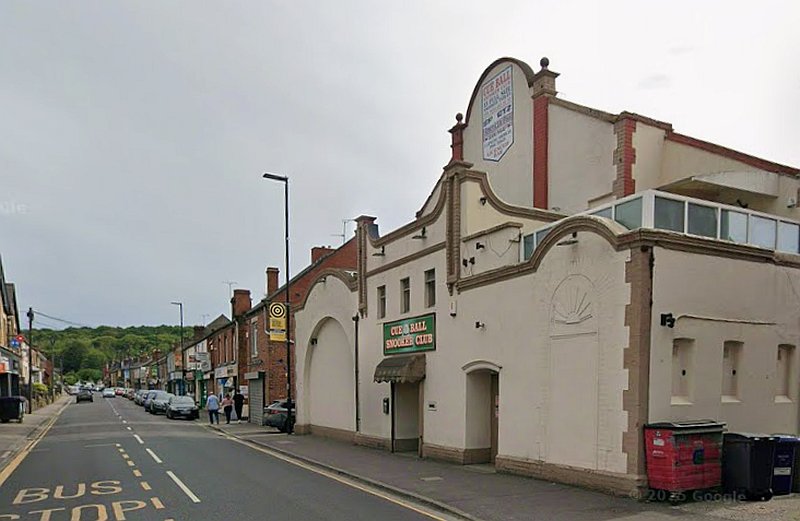
Above - A Google StreetView Image showing the former Chapeltown Picture Palace in July 2025 - Click to Interact.
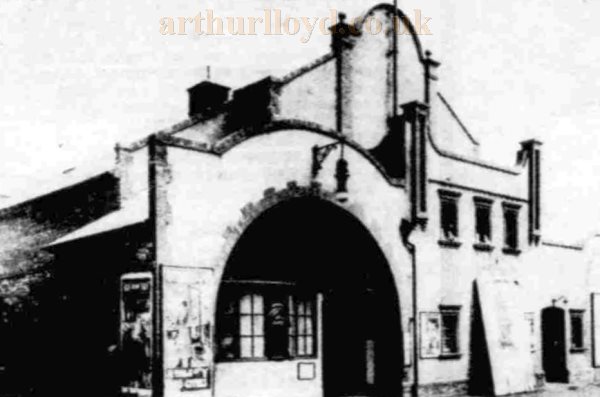 The former Chapeltown Picture Palace is situated on Station Road in Chapeltown, a town to the North of Sheffield. It was designed by the Sheffield Architects Benton and Roberts, and built by Longden and Sons, primarily as a Cinema, but it also had a large stage for live productions and variety shows etc.
Right - The Chapeltown Picture Palace when it first opened in 1912 - From the South Yorkshire Times and Mexborough & Swinton Times, 25th of November 1988. Originally from the Chapeltown High Green Archive.
The Theatre, which had seating for around 700 people on one Stalls level, opened on the 23rd of December 1912, and was managed by J. R. Bagshaw with two shows nightly and four on Saturdays. For its opening the projection room was fitted with an Indomitable Projector, and the films were accompanied by a small orchestra.
The Penistone, Stocksbridge and Hoyland Express reported on the new Picture Palace in their 21st of December 1912 edition saying:- 'Chapeltown may be, and is undoubtably, behind the times in some respects, but not so in the matter of its amusement, for with the opening of the Picture Palace there is displayed a spirit of determination to keep abreast of the times, and it certainly creates a new era in the town's history.
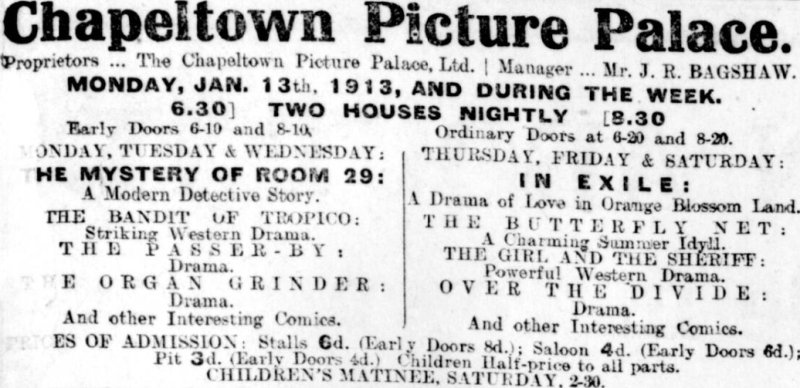
Above - An Advertisement for the Chapeltown Picture Palace in 1913 - From the Penistone, Stocksbridge and Hoyland Express, 11th of January 1913.
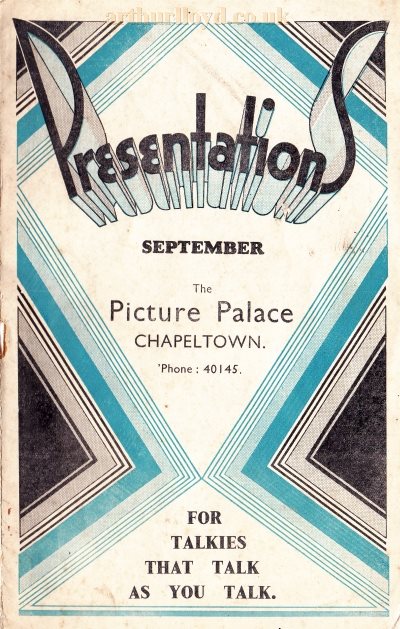 The palace has been erected for the proprietors, the Chapeltown Picture Palace Limited, by the well-known Sheffield contractors, Messrs. Longden, and Sons, and is built on the most up-to-date and scientific principals. It is situated in Chapeltown's most important thoroughfare, namely, Station Road, and is in close proximity to both the Midland and Great Central stations, in addition to being most accessible to the adjoining villages.
Right - A Chapeltown Picture Palace Programme for its September 1935 Film Presentations - Kindly Donated by Julian Cook. See Full Programme Below.
The building itself is substantially built of red brick, and has an imposing white stucco frontage, whilst it is exceptionally well provided for in its appointments. The inside arrangements cannot be surpassed anywhere. The rake of the floor is so arranged that everybody will be able to get a perfect view of the pictures without the least difficulty. The central hall is 50ft. by 50ft, and has a circular roof, supported by steel principals.
Much thought, time, and care has been expended by the promoters with a view in catering for the comfort and convenience of the public, and no fault can be found in this respect. The prices have been fixed to meet the pockets of lovers of this popular kind of entertainment. The sixpenny seats (which is the top price), known as the stalls are entirely upholstered tip-up chairs. The four-penny fare, the saloon, is also upholstered with tip-up seats, and the threepenny seats, the pit, have also the tip up arrangement. There will be an extra charge of twopence for early doors to the stalls, and saloon, and one penny to the pit.
The power for the operating machine and the light will be made on the premises, and with respect to the latter the central hall is fitted with a 300 cp. central, chandelier and six sets of side lights, whilst outside one "?light' arc light will produce a blaze of illumination.
Special attention has been paid to ventilation, Longten's special system being installed, including a 24in electric fan; whilst an ample supply of radiators will prove conducive to cosines and warmth in the winter season.
The risk of fire is practically nil, seeing that the operating room has been built outside the main hall over the front entrance, and is fireproof throughout; in short, the very latest design in operating rooms have been adopted. Fire extinguishers and powerful hydrants have been installed, and the risks form fire have been reduced to vanishing point.
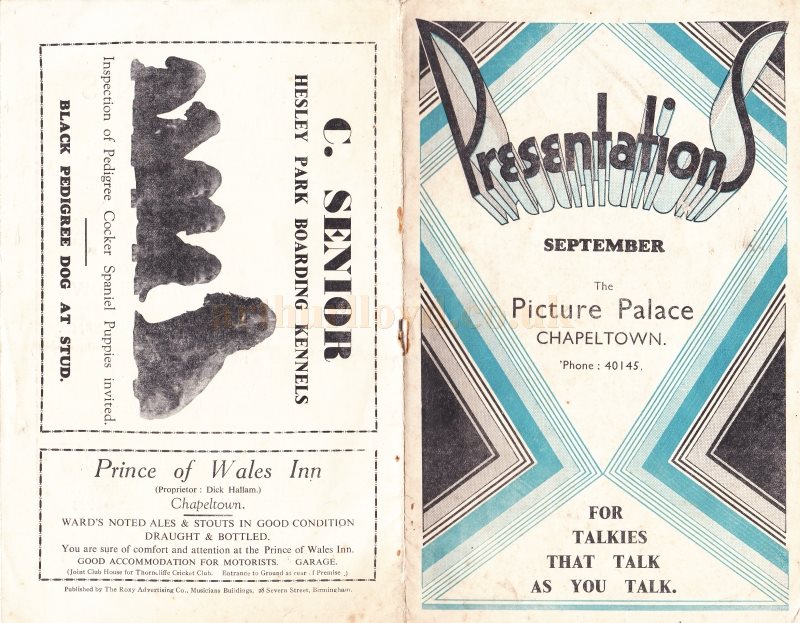
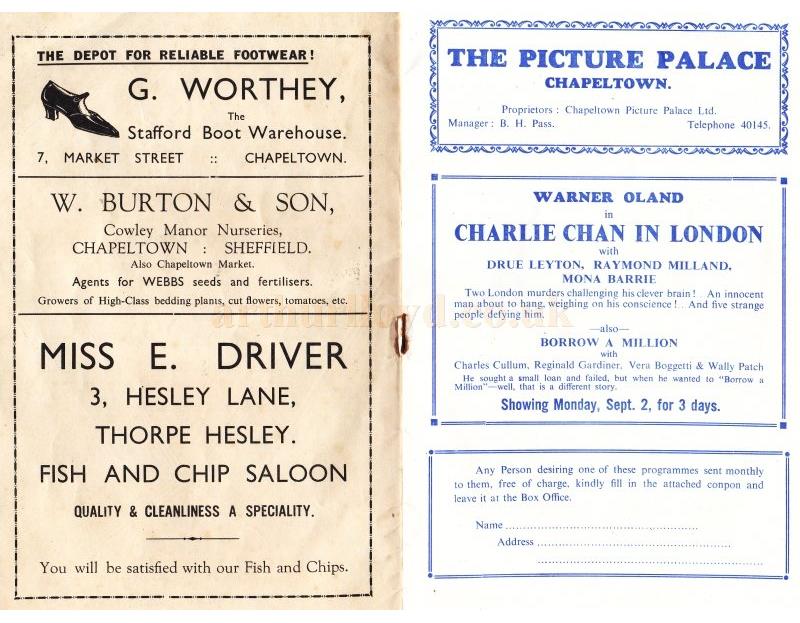
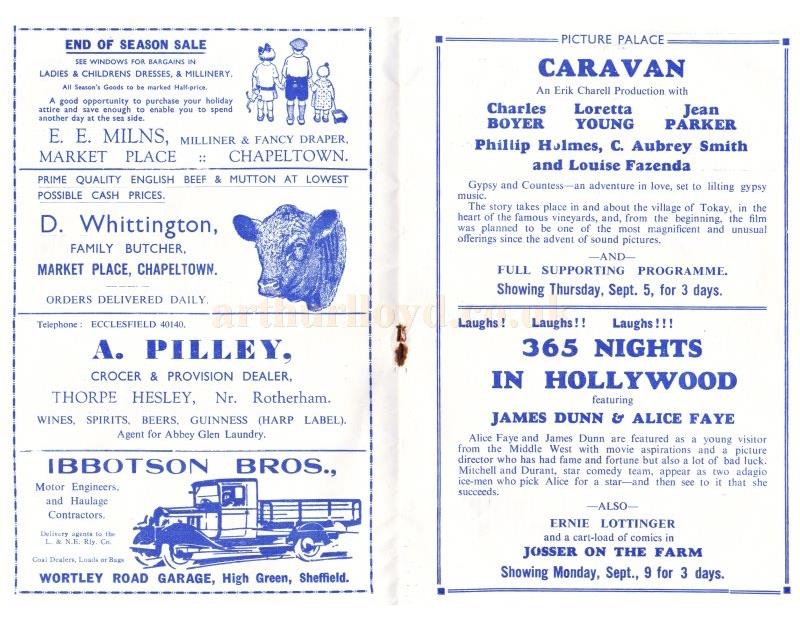
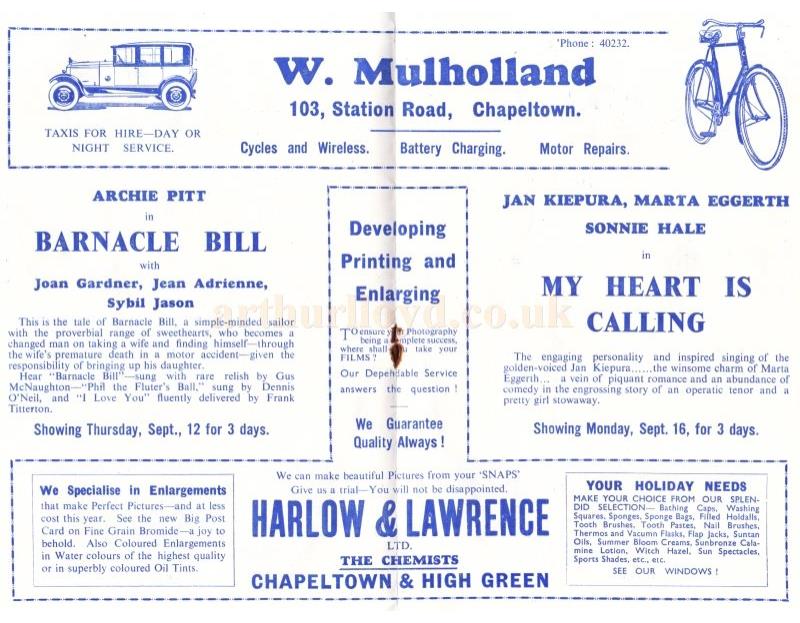
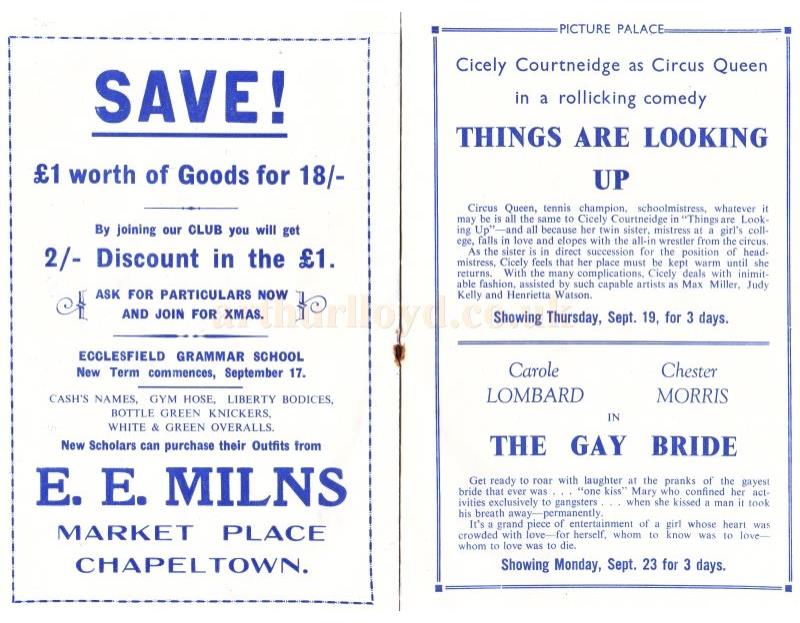
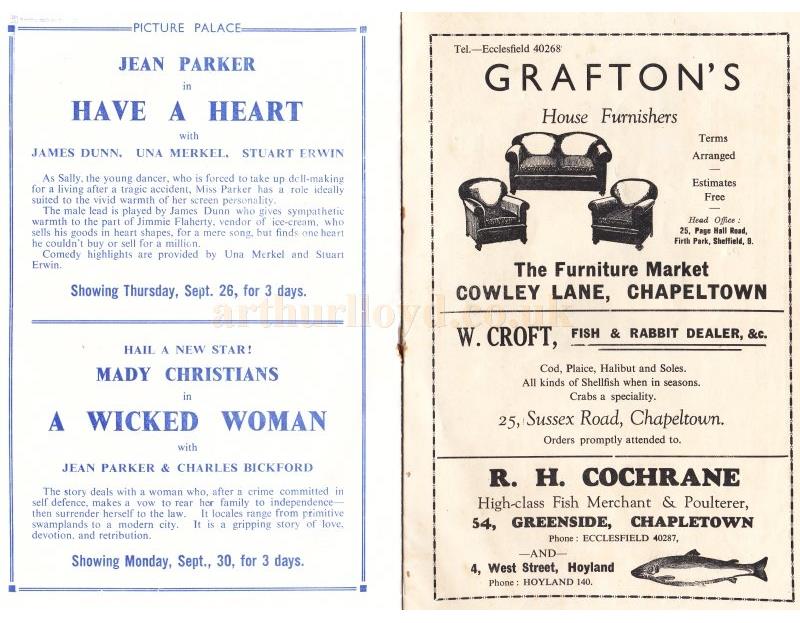


Above - A Chapeltown Picture Palace Programme for its September 1935 Presentations - Kindly Donated by Julian Cook.
The Management, possibly with a view to the future, have also had a spacious stage built, measuring 36ft. by 16ft. so that if it were desired they could include "turns" in the programme. Furthermore it could be used for public meetings, amateur theatricals and such like performances, whereas without the stage it could be utilised for nothing more than a picture palace. This strikes one as a very wise decision on the Company's part.
(Unreadable paragraph)
The public opening has been fixed for Monday night at 6.30pm, and the actual opening will take place during the afternoon, to which have been invited the influential people in this neighbourhood. There will be two programmes nightly, and a change of Pictures will be made twice a week, Monday and Thursday. Every Tuesday morning a performance will be given at 11.30, and on Saturday afternoon there will be a program at 2.30. Nothing but the most splendid films are to be put before the public, who, it is hoped will support the venture as it is for their benefit that the Chapeltown Picture Palace has been built. The architects are Messrs Benton and Roberts, of Sheffield.'
The above text in quotes (edited) was first published in the Penistone, Stocksbridge and Hoyland Express, 21st of December 1912.
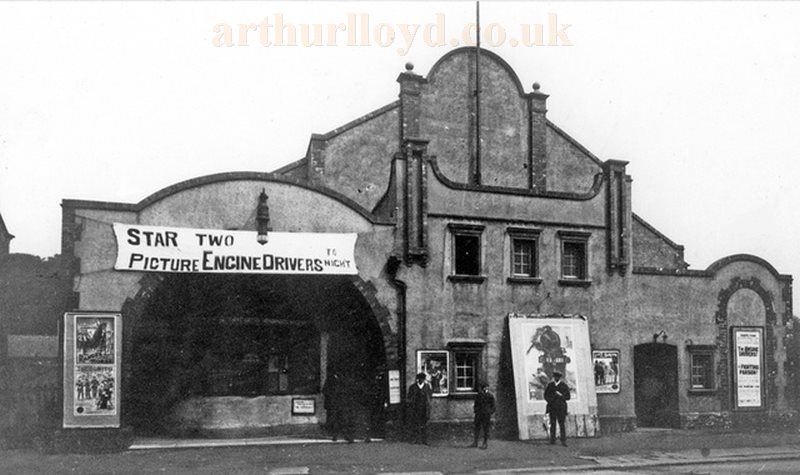
Above - An Early photograph of the Chapeltown Picture Palace shown here with a Creative Commons Licence from Granola at the Cinema Treasures Website.
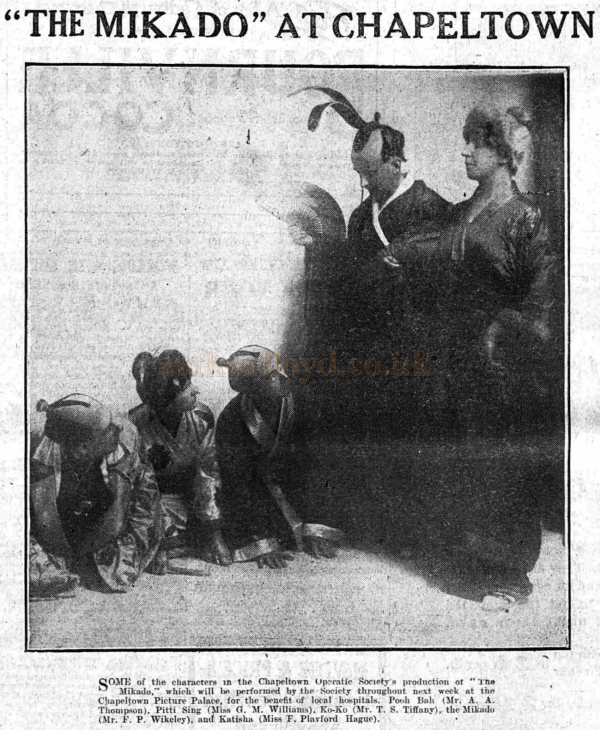 The Chapeltown Picture Palace had first opened on the 23rd of December 1912 and was mostly used for the showing of films although the Chapeltown Operatic Society regularly put on their amateur productions on the Theatre's stage there until the mid 1930s.
Right - The Chapeltown Operatic Society's production of 'The Mikado' at the Chapeltown Picture Palace in 1925 - From the Penistone, Stocksbridge and Hoyland Express, 21st of November 1925.
In 1944 the Picture Palace was taken over by the Star Cinemas chain and would later be equipped for Cinemascope in 1955. By 1962 Bingo was tried as part of the programming for a short while and after a brief closure in March 1963 it reopened for full time Bingo as the Star Bingo Club & Palace Casino which ran there for many years.
The building was threatened with demolition in 1974 whilst still in Bingo use and very popular with the locals. By then it was owned by the Council but had been Leased to Jim Walker since 1970. The Council wanted to demolish the former Picture Palace for a road widening scheme. A lot of local opposition and a Petition by 371 local people seems to have saved the building however, as today the former Cinema is still standing and being used, not for Bingo or Cinema, but as a Snooker Club called Cue Ball.
Some later details for this Theatre were gleaned from the excellent Cinema Treasures Website.
If you have any more information or images for this Theatre that you are willing to share please Contact me.
Some of the details and dates for past Theatres in Sheffield were gleaned from the Theatres Trust Guide.
Some archive newspaper reports on this page were collated and kindly sent in for inclusion by B.F.