
Daly's Theatre, 2 & 8, Cranbourn Street, Leicester Square, London, WC2H 7AL
Later - The Warner Theatre, Cinema / Warner Village / Vue West End
Introduction - Description of the Theatre - Opening - Plans - Later History - The Warner Theatre / Warner Village - Vue West End - Other Leicester Square Theatres and Cinemas

Above - A Postcard showing Daly's Theatre, Leicester Square, and in the distance the Empire Theatre can also be seen.


 Daly's
Theatre in London's Leicester Square was built at a cost of £60,000
by Frank Kirk to the designs of the architect Spencer
Chadwick, who was assisted by C.
J. Phipps. The Theatre was one of the first in London to be built
using the Cantilever system. The foundation stone was laid by Ada Rehan
on October the 30th, 1891 and
the Theatre opened, under the management of Augustin Daly, on the 27th
of June 1893 with Shakespeare's
'The Taming Of The Shrew'. This followed an address by Ada Rehan, who
was part of Daly's American Company; the National Anthem, sung by Lloyd
Daubigny and Chorus; and 'The Star Spangled Banner' which was sung by
Percy Haswell and Lena Loraine and Chorus.
Daly's
Theatre in London's Leicester Square was built at a cost of £60,000
by Frank Kirk to the designs of the architect Spencer
Chadwick, who was assisted by C.
J. Phipps. The Theatre was one of the first in London to be built
using the Cantilever system. The foundation stone was laid by Ada Rehan
on October the 30th, 1891 and
the Theatre opened, under the management of Augustin Daly, on the 27th
of June 1893 with Shakespeare's
'The Taming Of The Shrew'. This followed an address by Ada Rehan, who
was part of Daly's American Company; the National Anthem, sung by Lloyd
Daubigny and Chorus; and 'The Star Spangled Banner' which was sung by
Percy Haswell and Lena Loraine and Chorus.
Augustin Daly was an American Producer who had brought his productions to London many times from 1884 to 1891 with great success. Eventually it was decided that a permanent home for Daly's Company in London would be beneficial and in collaboration with George Edwardes the new Theatre in Leicester Square was built.

Above - A Programme for 'An Artist's Model' at Daly's Theatre in February 1895 - Click to see the entire Programme.
 The
day after Daly's Theatre opened the Daily Graphic printed a description
of the new building in it's June 28th 1893 edition, reprinted in Mander & Mitchenson's 'Lost Theatres Of London'
which said:- 'The facade in Cranbourne Street is a pleasing relief from
the unimposing architecture of most of the London theatres. It has been
designed in the Italian Renaissance style, and executed in Ham Hill
stone.
The
day after Daly's Theatre opened the Daily Graphic printed a description
of the new building in it's June 28th 1893 edition, reprinted in Mander & Mitchenson's 'Lost Theatres Of London'
which said:- 'The facade in Cranbourne Street is a pleasing relief from
the unimposing architecture of most of the London theatres. It has been
designed in the Italian Renaissance style, and executed in Ham Hill
stone.
Right - A Tinted Postcard of Daly's Theatre posted in 1905.
The ground floor is of the rustic order, and from it rises a Doric base with fluted columns. In the centre of the building is a bold pediment over a series of columns, a design which gives a pleasing dignity to the front. At each end of the facade is a graceful tower with carved figure spandrels representing the muses of song. The whole is crowned by a fine example of the Attic order.
The main entrance of the theatre opens into a handsomely furnished hall (Shown Below) , with a mosaic flooring. A feature of the hall is the American logwood stove, which gives to the entrance a warm and cheering effect. From the entrance-hall a spacious staircase leads to the foyer, which arrangement, it is claimed by the architect, is a distinct novelty in theatrical construction. The foyer itself has been carried out in an Italian style, with a treatment of gold and blending tints...

Above - The entrance hall of Daly's Theatre - From a Programme for the Second Edition of 'An Artist's Model' at Theatre in September 1895 - Click to see the entire Programme.

Above - The first floor foyer of Daly's Theatre - From a Programme for the Second Edition of 'An Artist's Model' at Theatre in September 1895 - Click to see the entire Programme.
 ...On entering the auditorium the first thing to impress the spectator
is the bold originality of its outline and decoration. The general scheme
of colour is a blending of red, gold, silver and bronze.
...On entering the auditorium the first thing to impress the spectator
is the bold originality of its outline and decoration. The general scheme
of colour is a blending of red, gold, silver and bronze.
The circle fronts and boxes have been modelled in such a way as to represent boatloads of sea nymphs and Cupids in the act of blowing bubbles, which bubbles have been ingeniously converted into electric lights of many tints.
Right - A Sketch of the auditorium of Daly's Theatre by the Theatre's Architect Spencer Chadwick in 1893 - From The Survey of London, Vol 33/34 St Anne Soho held at British History Online.
 The auditorium will seat upwards of twelve hundred persons, and it
has been so arranged that the public will be able to obtain a good view
of the stage from all parts of the house.'
The auditorium will seat upwards of twelve hundred persons, and it
has been so arranged that the public will be able to obtain a good view
of the stage from all parts of the house.'
Left - A Programme for 'The Dollar Princess' at Daly's Theatre in 1925, but first produced at Daly's in 1909.
The above text in quotes was first published in the Daily Graphic, June 28th 1893, reprinted in Mander & Mitchenson's 'Lost Theatres Of London'.

Above - A Programme for the Second Edition of 'An Artist's Model' at Daly's Theatre in September 1895 - Click to see the entire Programme.
 The ERA printed a review of the building and its opening
production in their 1st of July 1893 edition, reprinted in Mander & Mitchenson's 'Lost Theatres of London'
which said:- 'A brilliant audience, which included many celebrities
in the legal, literary, and dramatic worlds, assembled in Mr. Augustin
Daly's new theatre in Leicester Square on Tuesday last, to admire the
house, and to witness a performance of The Taming of the Shrew, with
Miss Ada Rehan in the part of Katharine.
The ERA printed a review of the building and its opening
production in their 1st of July 1893 edition, reprinted in Mander & Mitchenson's 'Lost Theatres of London'
which said:- 'A brilliant audience, which included many celebrities
in the legal, literary, and dramatic worlds, assembled in Mr. Augustin
Daly's new theatre in Leicester Square on Tuesday last, to admire the
house, and to witness a performance of The Taming of the Shrew, with
Miss Ada Rehan in the part of Katharine.
Right - A Programme for 'That's a Pretty Thing' at Daly's Theatre in 1933.
After the overture, the rose-coloured, gold embroidered curtains separated, and showed a number of ladies and gentlemen in evening dress, who subsequently, led by Mr. Lloyd Daubigny, sang 'God Save the Queen,' the audience, of course, standing, and then Miss Percy Haswell and Miss Lena Loraine sang the solo part of 'The Star Spangled Banner,' in which the chorus heartily joined. Loud and long was the applause which greeted Miss Ada Rehan, who was visibly affected by the cordiality of the welcome, but who preserved sufficient composure to repeat, with exquisite distinctness and deep feeling, the 'Song of Union,' written for the occasion at the Falls of Niagara, by Mr. Clement Scott...

Above - A Painting of the Auditorium and Stage of Daly's Theatre by George Richmond in September 2017. George says:- 'The ERA review of the Theatre on this page states that "The theory that colouring and design in the body of a playhouse should be "kept down" has been entirely abandoned" and then goes on to list the colour scheme of Rose, Ruby Red, Venetian Red, Gold, Silver & Bronze which I have used in the above painting. The bones of the painting have been taken from the contemporary drawing made at the opening of the Theatre, July 1893, also shown on this page.' Click for an Index to all of George Richmond's Paintings on this site.
 ...In
the vestibule, the fine marble floor and the circular gallery above
(Shown Above) are most remarkable. In the auditorium has been
made one of the boldest experiments in theatrical architecture that
we have for some time seen.
...In
the vestibule, the fine marble floor and the circular gallery above
(Shown Above) are most remarkable. In the auditorium has been
made one of the boldest experiments in theatrical architecture that
we have for some time seen.
Right - A Programme for 'Charley's Aunt' at Daly's Theatre in 1934.
The theory that colouring and design in the body of a playhouse should be 'kept down' has been entirely abandoned; and instead of the half-tints and delicate traceries of some theatres, we have great masses of ruby, Venetian red, dull silver and burnished gold. Additional warmth is given to the colour-scheme by the marqueterie panelling with which the walls of the lower part of the auditorium are covered. The general effect of the scheme is powerful and impressive.
 There
is fine freedom in the modelling of the Cupids in boats which adorn
each of the circles; and the nobility of aim is well sustained in the
dome, with its severe scroll around the sunlight, and its immense winged
figures of Fame. The style of most theatres is based on the idea of
a drawing-room; Daly's rather recalls the more solid dining or banqueting
apartment. In somewhat curious contrast to this solidity are the delicacy
and graceful gaiety of the curtain, upon which Miss Ada Rehan is represented
seated studying a part from an open book, whilst a dark haired Cupid
endeavours in vain to distract her from her task -an excellent moral,
by the way, for any actress. It is only fair to the architect to mention
that on Tuesday the impression created by the auditorium, as a whole,
was imperfect.
There
is fine freedom in the modelling of the Cupids in boats which adorn
each of the circles; and the nobility of aim is well sustained in the
dome, with its severe scroll around the sunlight, and its immense winged
figures of Fame. The style of most theatres is based on the idea of
a drawing-room; Daly's rather recalls the more solid dining or banqueting
apartment. In somewhat curious contrast to this solidity are the delicacy
and graceful gaiety of the curtain, upon which Miss Ada Rehan is represented
seated studying a part from an open book, whilst a dark haired Cupid
endeavours in vain to distract her from her task -an excellent moral,
by the way, for any actress. It is only fair to the architect to mention
that on Tuesday the impression created by the auditorium, as a whole,
was imperfect.
Left - Daly's Theatre - From a Programme for the Second Edition of 'An Artist's Model' at Theatre in September 1895 - Click to see the entire Programme.
 Owing to some hitch in the electric lighting apparatus, a great many
of the lamps around the circles were extinguished, and the effect was
not the same as it would have been with the amount of illumination on
which Mr. Spencer Chadwick had relied when he made his plans. Tastes may differ as to the style
best suited for the inside of a playhouse, but there can be no two opinions
about the manner in which the highly original leading idea has been
carried out, or as to the sumptuous style of the upholstery. Daly's
Theatre has certainly one of the most original and artistic interiors
in London.'
Owing to some hitch in the electric lighting apparatus, a great many
of the lamps around the circles were extinguished, and the effect was
not the same as it would have been with the amount of illumination on
which Mr. Spencer Chadwick had relied when he made his plans. Tastes may differ as to the style
best suited for the inside of a playhouse, but there can be no two opinions
about the manner in which the highly original leading idea has been
carried out, or as to the sumptuous style of the upholstery. Daly's
Theatre has certainly one of the most original and artistic interiors
in London.'
Right - A Programme for 'Young England' at Daly's Theatre in 1935 which was a transfer from the Victoria Palace Theatre.
The above text in quotes was first published in the Era July 1893, reprinted in Mander & Mitchenson's 'Lost Theatres Of London'.
An article and many plans and sketches of Daly's Theatre can be found in Edwin O Sachs' 'Modern Opera Houses and Theatres' published between 1896 and 1898. I have transcribed Sachs' rather scathing article on the Theatre below, along with many of its accompanying images:

Above - A Sketch of Daly's Theatre - From 'Modern Opera Houses and Theatres' by Edwin O Sachs, 1896-1898, and held at the Library of the Technical University (TU) in Delft - Kindly sent in by John Otto.
 'Daly's
Theatre calls for notice as an example of a moderate sized London playhouse,
in which the architectural elaboration has had more than ordinary attention,
both on the exterior and the interior. In conception, this building
is noticeable for what I may term clever and intricate arrangement,
allowing the maximum use of space at a minimum expenditure, but at the
same time there is a certain breadth of treatment which gives the block
an air of dignity.
'Daly's
Theatre calls for notice as an example of a moderate sized London playhouse,
in which the architectural elaboration has had more than ordinary attention,
both on the exterior and the interior. In conception, this building
is noticeable for what I may term clever and intricate arrangement,
allowing the maximum use of space at a minimum expenditure, but at the
same time there is a certain breadth of treatment which gives the block
an air of dignity.
Right - The Front Elevation of Daly's Theatre - From 'Modern Opera Houses and Theatres' by Edwin O Sachs, 1896-1898, and held at the Library of the Technical University (TU) in Delft - Kindly sent in by John Otto.
The proprietor, whose experience of theatre management was gained in America, naturally regards the building solely from a commercial point of view; yet it is clear that he had some consideration for the appearance of his block beyond the interests of mere advertisement. Although he had, no doubt, considerable influence personally in matters of detail, it cannot be said that the block, as a whole, has been in any way affected by American models. An important point to bear in mind is that the house was built for a particular company which excels in Comedy, and that hence, compactness was one of the principal requirements.
The preparation and execution of the design were entrusted to Spencer Chadwick, who commenced operations in 1891, and completed the work in 1893. The cost of the block was approximately 40,000l...

Above - A Plan of Daly's Theatre - From 'Modern Opera Houses and Theatres' by Edwin O Sachs, 1896-1898, and held at the Library of the Technical University (TU) in Delft - Kindly sent in by John Otto.
 ...In
some respects the design of the building has been influenced by contemporary
work. As in the D'Oyly Carte Theatre,
the arrangement of the tiers and the cantilever work tend to make the
disposition of the Auditorium the principal feature of the block. Unfortunately, the architect has not been
content to imitate only these features, but in the same manner has placed
his uppermost tier in a well or chute, a contrivance which cannot be
too strongly condemned. It is the more to be regretted that he has resorted
to this method of providing greater accommodation for the audience,
as this makeshift contrasts markedly with the general arrangement of
the Auditorium, especially when it is considered, what successful efforts
have been made to secure good hearing and seeing.
...In
some respects the design of the building has been influenced by contemporary
work. As in the D'Oyly Carte Theatre,
the arrangement of the tiers and the cantilever work tend to make the
disposition of the Auditorium the principal feature of the block. Unfortunately, the architect has not been
content to imitate only these features, but in the same manner has placed
his uppermost tier in a well or chute, a contrivance which cannot be
too strongly condemned. It is the more to be regretted that he has resorted
to this method of providing greater accommodation for the audience,
as this makeshift contrasts markedly with the general arrangement of
the Auditorium, especially when it is considered, what successful efforts
have been made to secure good hearing and seeing.
Right - The Proscenium of Daly's Theatre - From 'Modern Opera Houses and Theatres' by Edwin O Sachs, 1896-1898, and held at the Library of the Technical University (TU) in Delft - Kindly sent in by John Otto.
It will be noticed that while in D'Oyly Carte's Opera House, the back of the area is on the street level, and only the front rows fall slightly below it, in this instance the whole of the area lies lower than the roadway, the back of the first tier being at the same height as the main vestibule...

Above - A Transverse Section of Daly's Theatre - From 'Modern Opera Houses and Theatres' by Edwin O Sachs, 1896-1898, and held at the Library of the Technical University (TU) in Delft - Kindly sent in by John Otto.
 ...I
must here take the opportunity to remark upon the advantages of this
method of planning in adding to the security of the audience, as the
spectators seated in the upper tiers are thus brought nearer to the
open than would otherwise be the case. I would further add that, besides
the fact of the uppermost seats being in this way nearer the road level,
the proportion of the audience having to go downstairs, which is so
dangerous an operation in times of panic, becomes materially reduced;
whereas the necessity for occupants of the area to go upstairs cannot
be considered an increased risk. To my mind, an ascent is even safer
for panic-stricken people than the level, the force of any crush being
reduced, and the chance of stumbling minimised. The sinking of the area
also facilitates approach to the different and essentially distinct
sections of this floor.
...I
must here take the opportunity to remark upon the advantages of this
method of planning in adding to the security of the audience, as the
spectators seated in the upper tiers are thus brought nearer to the
open than would otherwise be the case. I would further add that, besides
the fact of the uppermost seats being in this way nearer the road level,
the proportion of the audience having to go downstairs, which is so
dangerous an operation in times of panic, becomes materially reduced;
whereas the necessity for occupants of the area to go upstairs cannot
be considered an increased risk. To my mind, an ascent is even safer
for panic-stricken people than the level, the force of any crush being
reduced, and the chance of stumbling minimised. The sinking of the area
also facilitates approach to the different and essentially distinct
sections of this floor.
Right - The Auditorium of Daly's Theatre - From 'Modern Opera Houses and Theatres' by Edwin O Sachs, 1896-1898, and held at the Library of the Technical University (TU) in Delft - Kindly sent in by John Otto.
In respect to the division of the area into "stalls" and " pit," the difficulty created for the architect by the latter characteristic feature of the English playhouse must not be left without mention, for it is obvious that the seats in that part being unreserved and the occupants not being allowed to mix with those of the stalls, the manner of arranging their approach and exit requires no little care. The important position of the English "pit" can in no way be compared with the "parterre" of the Continental establishment, where an entirely different object has to be fulfilled.
It is not, however, the arrangement of the Auditorium only that is principally remarkable in this block, but also to a certain extent, its architectural treatment, as compared with other London theatres. Both in the lines of the proscenium opening and the decoration of the tier-fronts, there is a considerable amount of originality, which causes the greater regret that the detail and colour study are so coarsely executed. What promises so well when seen in drawing has, in execution, almost resulted in a failure; and I should add that this is due to the detail having been left to the so-called "plastic decorator" in the manner I have indicated in my Introduction.
The disposition of the staircases, entrances and exits shows intricate planning, combined with great economy of space, though it must be allowed that much clearness has been lost through tricky contrivances. It is fortunate that the Lounge, with its view into the Grand Vestibule, counteracts to a large extent, by its dignity of line as distinct from detail, the effect of these devices. There are no special points of interest in the Stage or offices, and it is needless to remark that what is termed "fire-resisting" material has been largely used.
Taken as a whole, Daly's Theatre affords one of the best examples of the average type of London Comedy House in which the characteristic failings of excessive economy, at the cost of breadth and detail, have been materially lessened. It is regrettable that in a building where there was every opportunity to obtain yet better results, the improvements stopped half-way.'
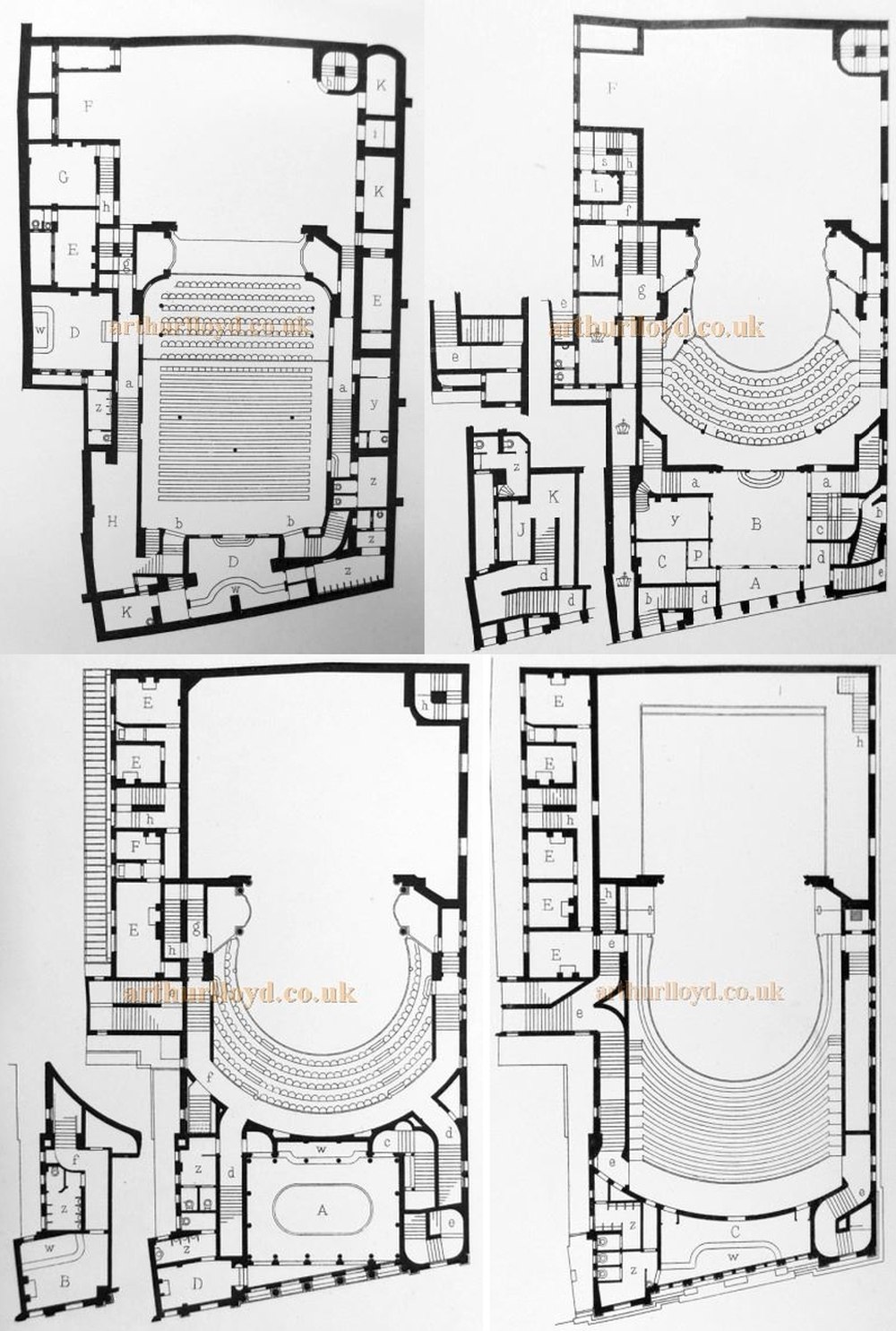
Above - Plans of Daly's Theatre - From 'Modern Opera Houses and Theatres' by Edwin O Sachs, 1896-1898, and held at the Library of the Technical University (TU) in Delft - Kindly sent in by John Otto who says:- 'Unfortunately these drawings do not show all of the Theatre. The back wall did have a kink in it and behind was a scene dock running the width of the stage about 15ft deep. The stage itself was below ground, the dress circle was on street level. If you go into the Warners cinema today, the old site of Daly’s, there is still a below ground level. The scenery ‘get in’ was in Lisle Street with an angled ramp from street level to the stage below. Above the scene dock was the ladies and gents chorus dressing rooms. The floor above was a rehearsal room and above that a roof garden, with a small room for sewing and costume repairs. What is surprising is the intimacy of the auditorium and what looks like what would have been a rather cramped stage. The other musical Theatres the old and new Gaiety Theatres down on the Strand were also the same intimate size with stage to match. You can see the Royal entrance with own entrance on the street level / dress circle plan.'

The above text in quotes, and its accompanying images, were first published in 'Modern Opera Houses and Theatres' by Edwin O Sachs, 1896-1898, and held at the Library of the Technical University (TU) in Delft - Kindly sent in by John Otto.

Above - A Seating Plan for Daly's Theatre - From 'Who's Who in the Theatre' published in 1930 - Courtesy Martin Clark. Click to see more Seating Plans from this publication.
 George Edwardes died in October 1915 leaving £49,780, quite a sum in those days. His daughter Mrs.
Sherbrook and Robert Evett took over the running of the Theatre in George's
absence but continued his successful and well established run of Continental
operettas with a production of 'The Happy Day' in 1916,
followed by 'The Maid of the Mountains' in 1917,
'A Southern Maid in 1920 and 'Sybil' in 1921.
George Edwardes died in October 1915 leaving £49,780, quite a sum in those days. His daughter Mrs.
Sherbrook and Robert Evett took over the running of the Theatre in George's
absence but continued his successful and well established run of Continental
operettas with a production of 'The Happy Day' in 1916,
followed by 'The Maid of the Mountains' in 1917,
'A Southern Maid in 1920 and 'Sybil' in 1921.
Right - A Presentation Souvenir Programme for the 1,000th performance of 'The Maid of the Mountains' at the Dalys Theatre on June the 24th 1919 - Courtesy Laurens Willard.
 The Maid of the Mountains was particularly successful, and introduced Lottie Collins' daughter Jose Collins.
The production had an immense run of 1,352 performances.
The Maid of the Mountains was particularly successful, and introduced Lottie Collins' daughter Jose Collins.
The production had an immense run of 1,352 performances.
Eventually in 1922 the Trustees of George Edwardes' estate sold the Theatre to James White, who was a gambler on the Stock Exchange, for £200,000. Sadly James White was to commit suicide just five years later in 1927.
Left - A Presentation Souvenir Programme for the 1,000th performance of 'The Maid of the Mountains' at the Dalys Theatre on June the 24th 1919 - Courtesy Laurens Willard.
 Daly's was well known as the home of Musical Comedy for most of its life, a programme for 'Yvonne' (shown below) carried a list (shown right) of all the Theatre's successes over the previous 28 years from 1896 to 1926, advertised as 'Daly's Wonderful Record'. The list says that the average Musical Comedy Run was nearly 500 performances, and that only 19 new productions were necessary in 28 years. The longest run was 'The Maid of the Mountains' in 1917 which achieved 1,352 performances.
Right - 'Daly's Wonderful Record' A list of the Nineteen New Musical Comedy Productions at Daly's Theatre from 1896 to 1926 - from a programme for 'Yvonne' at Daly's Theatre in 1926 - Courtesy Maria Andrew, Archivist at the Theatre Royal, Norwich.
 The productions mentioned on the list were: "The Maid of the Mountains", "The Merry Widow", "San Toy", "The Geisha", "The Country Girl",
"The Lady of the Rose",
"Katja", "Madame Pompadour", "The Dollar Princess", "The Marriage Market", "The Little Michus", "An Artist's Model", "Betty", "The Cingalee", "The Greek Slave", "Sybil", "A Southern Maid", "Gipsy Love", "Happy Day", "Les Merveilleuses".
The list does not contain the revivals of "The Gaiety Girl", "The Waltz Dream", "The Geisha", "The Country Girl", and "The Maid of the Mountains".
The productions mentioned on the list were: "The Maid of the Mountains", "The Merry Widow", "San Toy", "The Geisha", "The Country Girl",
"The Lady of the Rose",
"Katja", "Madame Pompadour", "The Dollar Princess", "The Marriage Market", "The Little Michus", "An Artist's Model", "Betty", "The Cingalee", "The Greek Slave", "Sybil", "A Southern Maid", "Gipsy Love", "Happy Day", "Les Merveilleuses".
The list does not contain the revivals of "The Gaiety Girl", "The Waltz Dream", "The Geisha", "The Country Girl", and "The Maid of the Mountains".
Left - 'Daly's Theatre during the run of 'The First Legion' in 1937 and shortly before the Theatre was demolished in September 1937 - From The Survey of London, Vol 33/34 St Anne Soho held at British History Online.
Daly's Theatre carried on in this vein until it was finally closed on the 25th of September 1937 after the last performance of 'The First Legion'. The Theatre had been sold to Warner Brothers who then completely demolished the Theatre and built a new Super Cinema on the site called the Warner Theatre. (See details below).
Four Programmes for Daly's Theatre Productions
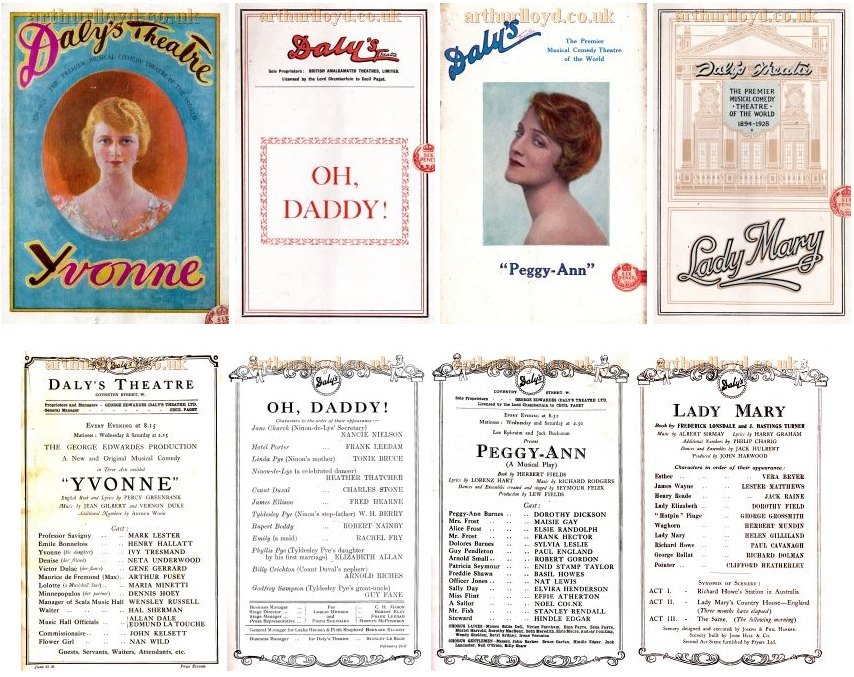
Above - Programmes for the Musical Comedy 'Yvonne', in 1926, the Play 'Oh Daddy! in 1931', the Musical Play 'Peggy Ann' in 1926, and the Musical Play 'Lady Mary' in 1928, at Daly's Theatre - Courtesy Maria Andrew, Archivist at the Theatre Royal, Norwich.
The Warner Theatre, Cinema, Leicester Square
Later - Warner Village / Vue West End
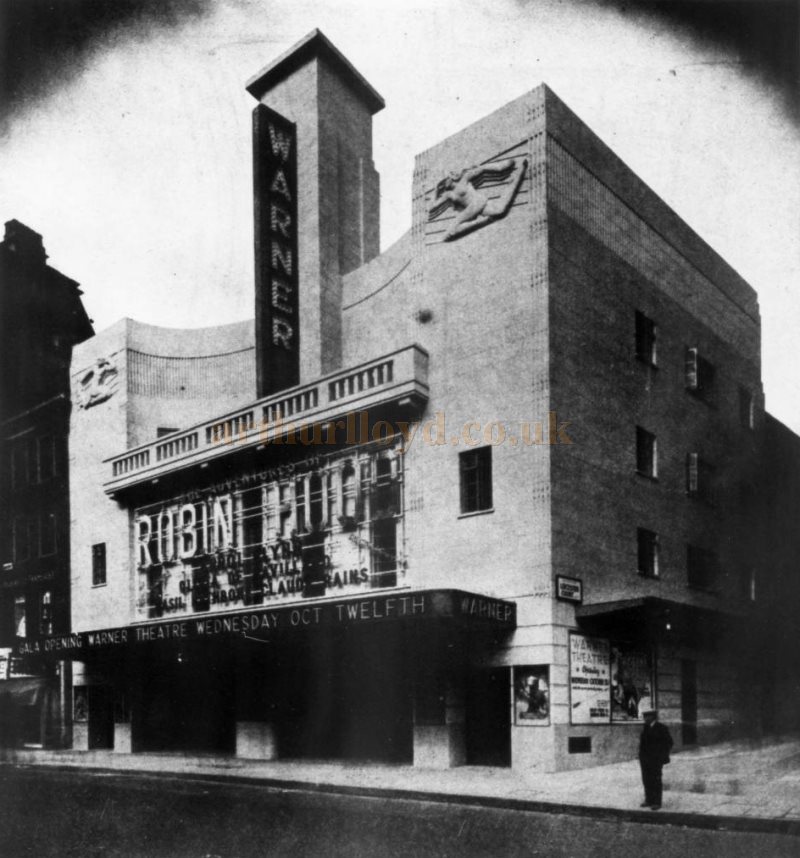
Above - The Warner Theatre just before it opened in 1938 - From The Architects' Journal, 27th of October 1938.
 Daly's Theatre had been closed on the 25th of September
1937 after the last performance of 'The First Legion' having been sold to
Warner Brothers who then demolished the building and rebuilt it as a Super Cinema with Stage Facilities called the Warner Theatre. The new Warner Theatre was designed by E. A. Stone and T. R. Somerford and constructed by Griggs and Son, Ltd., and could accommodate 1,775 people on two levels when it first opened on the 12th of October 1938 with the Film 'The Adventures of
Robin Hood.'
Daly's Theatre had been closed on the 25th of September
1937 after the last performance of 'The First Legion' having been sold to
Warner Brothers who then demolished the building and rebuilt it as a Super Cinema with Stage Facilities called the Warner Theatre. The new Warner Theatre was designed by E. A. Stone and T. R. Somerford and constructed by Griggs and Son, Ltd., and could accommodate 1,775 people on two levels when it first opened on the 12th of October 1938 with the Film 'The Adventures of
Robin Hood.'
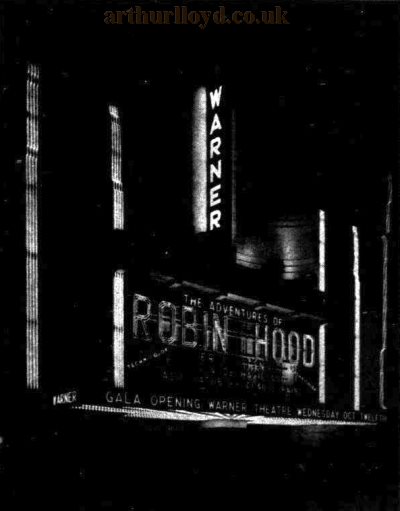
Right - The Warner Theatre at night and just before it opened in 1938 - From The Builder, 14th of October 1938.
The Builder reported on the new Warner Theatre in their 14th of October 1938 edition, along with some of the images shown here, saying:- 'The erection of the Warner Theatre, which stands on the site of Daly's, is an example of the speed of modern construction. The last curtain dropped at Daly's on September 25, 1937, and the new theatre was completed in one year to the day. Its opening was held up until October 12.
A feature of the new theatre, which will show films, is the quilting of the walls with asbestos, covering a 1-in. blanket of acoustic material. A new lighting system is installed, by which concentrated beams from the false ceiling illuminate the seating part.
 The theatre, which will seat 1,775 in stalls and balcony, is faced with reconstructed marble blocks, backed with granite concrete, and chemically treated to preserve the colour of the face. The sculptured panels are by Mr. Bainbridge Copnall.
Left - The Entrance Foyer of the Warner Theatre when it first opened in 1938 - From The Architects' Journal, 27th of October 1938.
The site in Cranbourne-street, Leicester-square, is 68 ft. 6 in., and the depth 182 ft. to Lisle-street, where the frontage is 84 ft. Seating 1,775 persons in stalls and circle, the auditorium has walls covered with acoustic quilting to give maximum results, and is lighted on a new system. The colour scheme is in blue, green and beige.
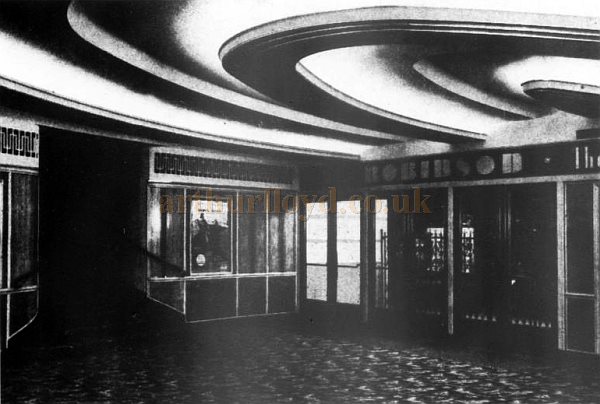
 The entrance foyer is lit by the indirect method. Air-conditioning is installed. Extensive use has been made of Empire timbers. Neon strip lighting in grouped bands is used to articulate the front. The side elevations are in brick.
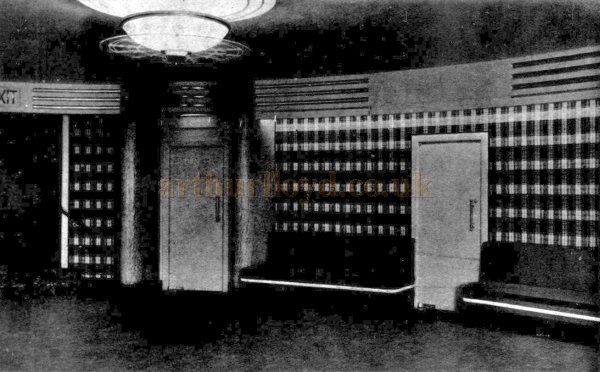
Right - The Stalls Lounge of the Warner Theatre when it first opened in 1938 - From The Builder, 14th of October 1938.
The consulting engineers were Messrs. C. H. Bell and Co., Ltd.; the quantity surveyor Mr. A. C. Pool, F.I.A.S., F.I.Arb.; and mural decorations in tea-room were by Mrs. B. MacDermott.
The general contractors were Messrs. Griggs and Son, Ltd., S.W.1, and sub-contractors were:— Demolition, Goodman-Price, Ltd.; steelwork, Matt. T. Shaw and Co., Ltd.; reinforced concrete work, The Trussed Concrete Steel Co., Ltd.; fire-resisting floors, balcony steppings and staircase, Attoc Blocks, Ltd.; stonework to the front, internal tiling and terrazzo flooring, Ramsden, Ltd.; asphalt, Rock Asphalte Co.; roofing (asbestos), Universal Asbestos Mfg. Co., Ltd.; joinery, Allensor, Ltd., A. E. Lindsey and Son, Ltd., and White, Allom, Ltd.; ironmongery...
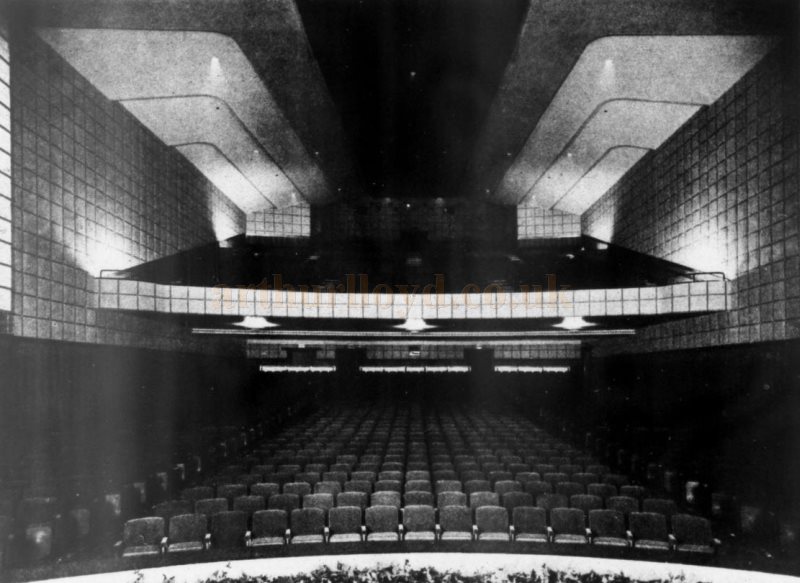 The Auditorium of the Warner Theatre when it first opened in 1938 - The Architects' Journal.
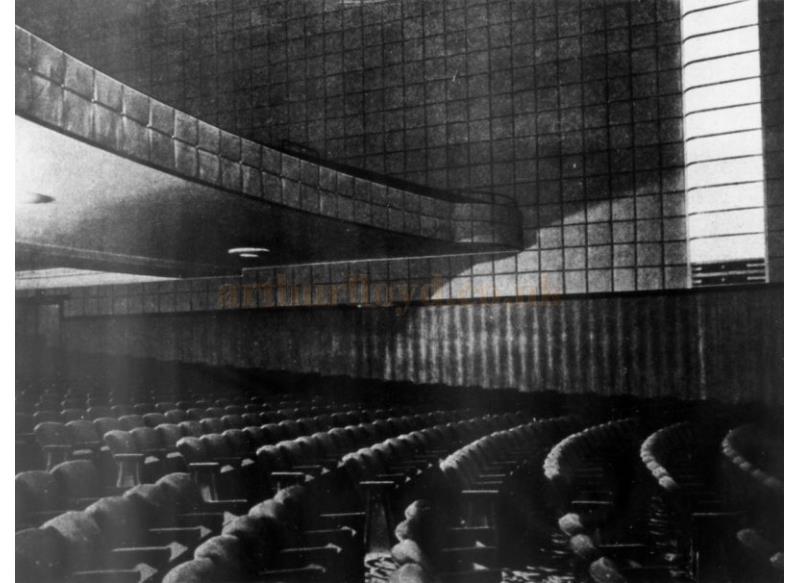 The Auditorium of the Warner Theatre when it first opened in 1938 - The Architects' Journal.
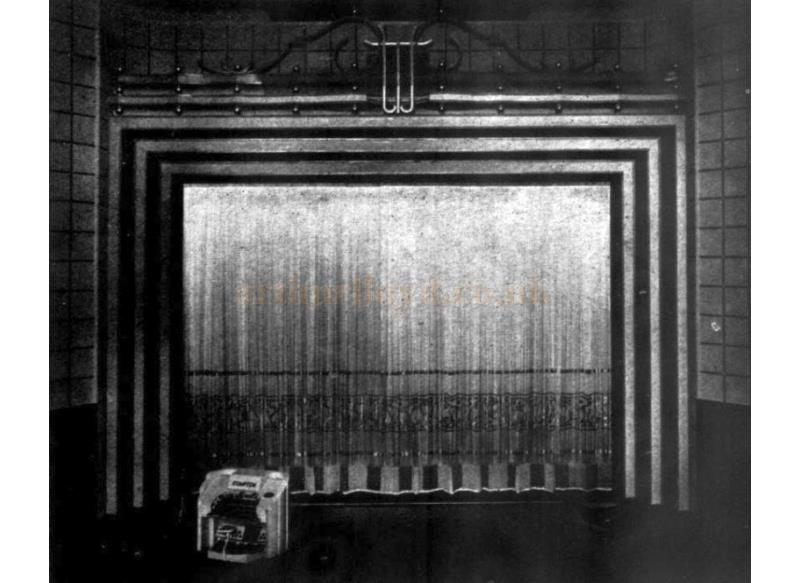 The Auditorium of the Warner Theatre when it first opened in 1938 - The Builder.
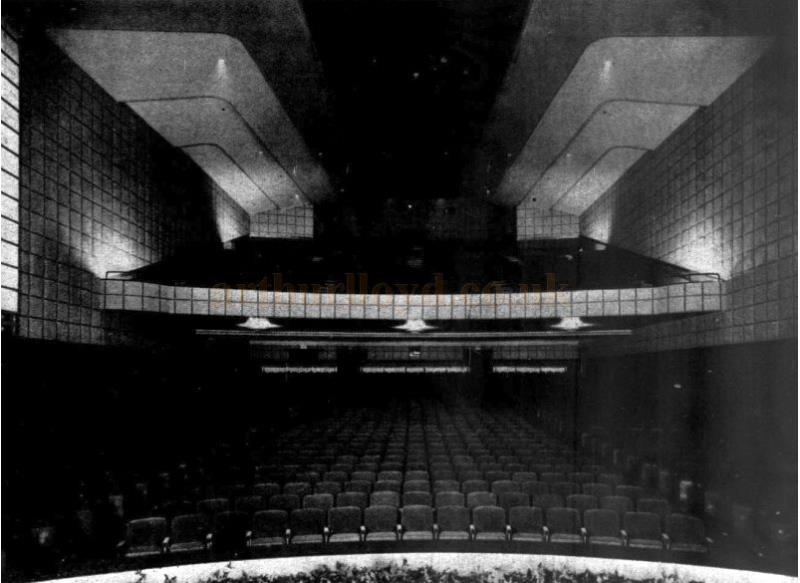 The Auditorium of the Warner Theatre when it first opened in 1938 - The Builder.
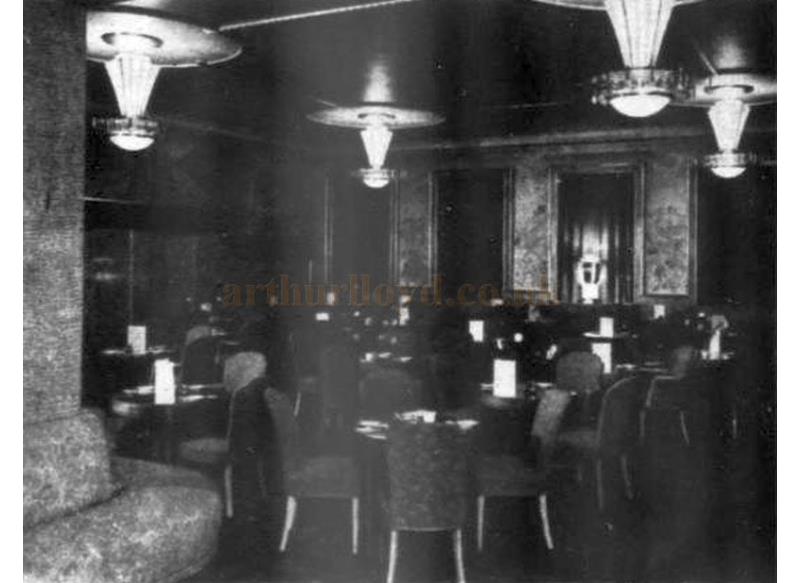 The Cafe of the Warner Theatre when it first opened in 1938 - The Architects' Journal.
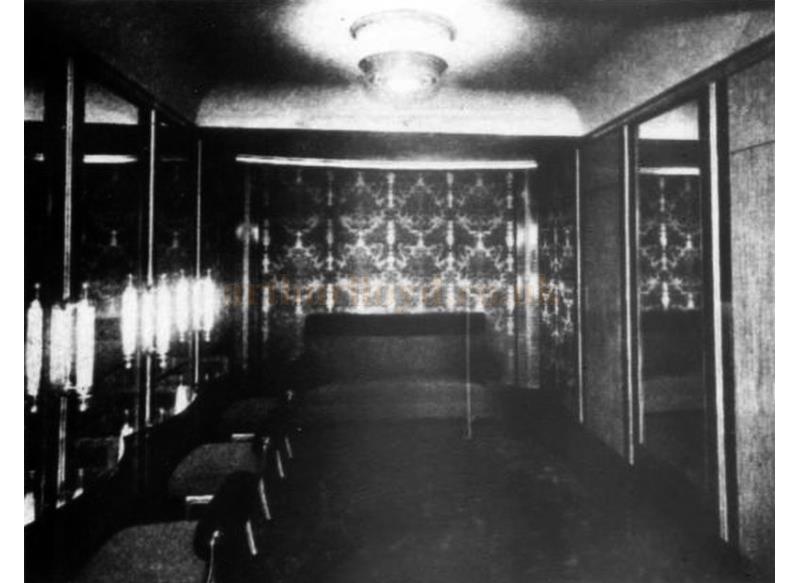 An Artist's Dressing Room at the Warner Theatre when it first opened in 1938 - The Architects' Journal.
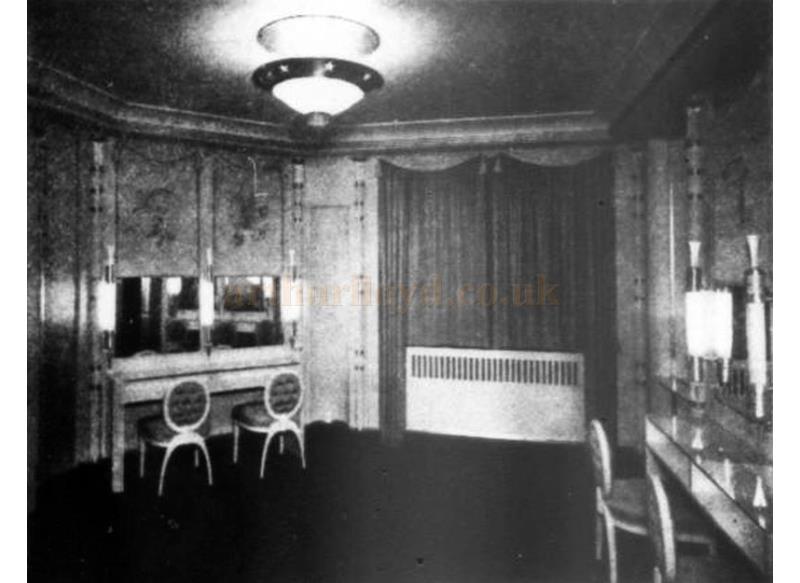 An Artist's Dressing Room at the Warner Theatre when it first opened in 1938 - The Architects' Journal.


Above - Photographs of the Warner Theatre when it first opened in 1938 - From The Architects' Journal, 27th of October 1938, and The Builder, 14th of October 1938.
F. Knight and Co., Ltd.; metal windows, Williams and Williams, Ltd.; lantern lights and queueing canopy, British Challenge Glazing Co.; canopy, vertical sign and poster frames, J. Starkie Gardner, Ltd.; console lift and drop shutters to projection room, Knight and Co. (Engineers), Ltd.; auditorium lighting, Rambusch Decorating Co. (New York City, U.S.A.); glazing, Leay Glazing Services, Ltd.; metal lathing, Universal Metal Furring and Lathing Co.; acoustic linings to auditorium, D. R. Smart and Co.; acoustic linings to booth, Newalls Insulation Co.; plumbing and sewage disposal, Mattw. Hall and Co., Ltd.; sanitary fittings, H. Pontifex and Sons; heating and ventilating, Carrier Engineering Co., Ltd.; fire protecting services, Hoffman Sprinkler Co.; lightning conductors, J. W. Gray and Son, Ltd.; vacuum cleaning, British Vacuum Cleaning Co.; facing bricks,-Dunbrik, Ltd.; " Tunnel " cement, R. Pass-more and Co., Ltd.; bricks (fletton), London Brick Co., Ltd.; bricks (white glazed)...
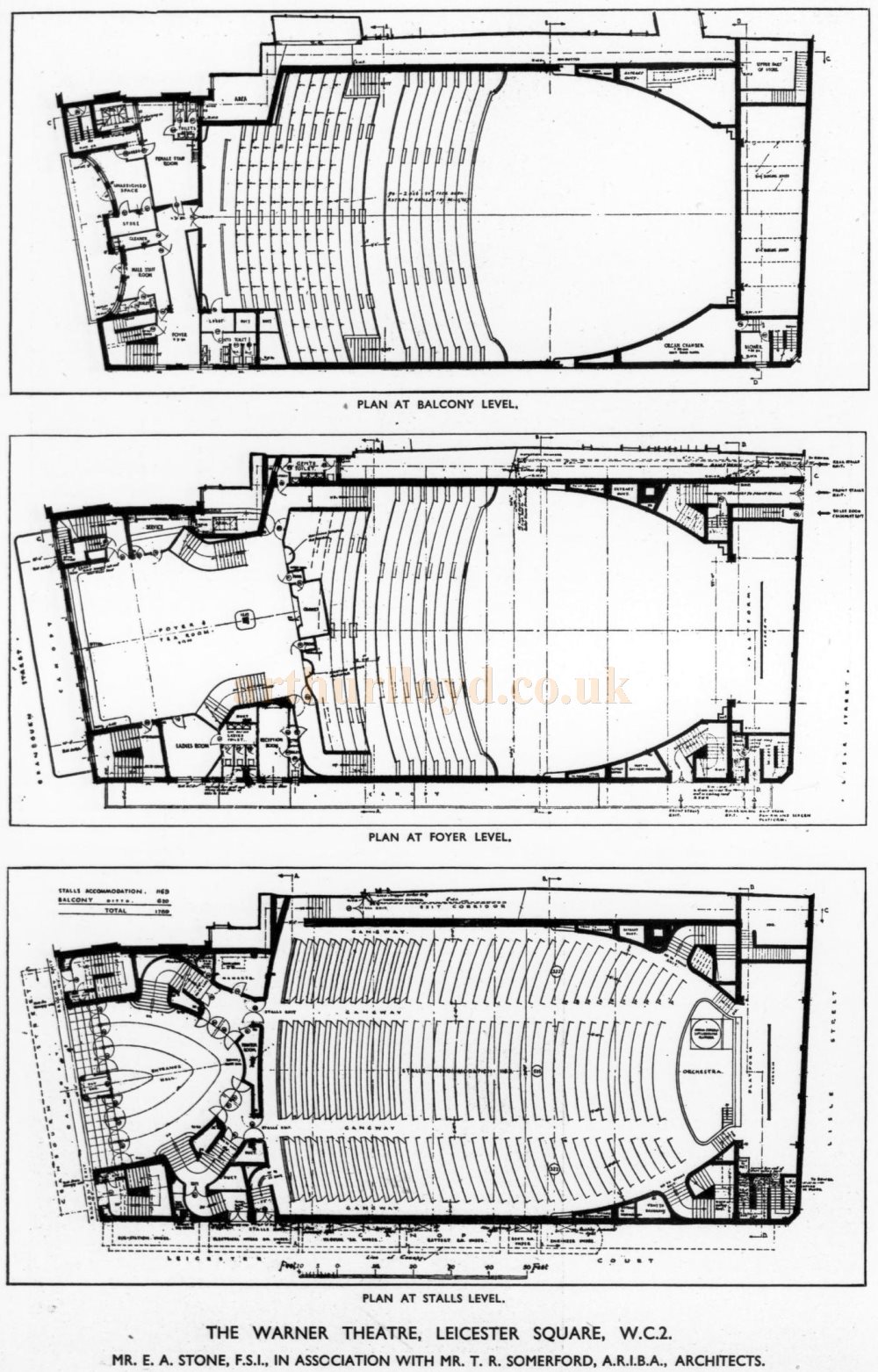
Above - Stone and Somerford's Plans for the Warner Theatre, Leicester Square - From The Builder, 14th of October 1938.
Brookes, Ltd.; decorations, White, Allom, Ltd.; seating, W. Lusty and Son; carpets, T. F. Firth and Sons, Ltd.; asbestos fabric, Michael Ross; roller shutters, Shutter Contractors, Ltd.; lift (service), Marry at and Scott; handrails, Garton and Thorne; W.I. barrel handrails and railing, Clark Hunt and Co., Ltd.; kitchen equipment, Benham and Sons, Ltd.; organ, John Compton Organ Co., Ltd.; electricity, Troughton and Young; woodblock and composition flooring, National Flooring Co.; pavement lights, Thaddeus Hyatt and Co.; teak flooring and stage, Pridays and Snewin, Ltd.; general decorators, C. and T. Painters, Ltd.; partition blocks, G. R. Speaker and Co., Ltd.; screen and projection room equip- ment. J. Frank Brockliss, Ltd.; main sound system and stage amplification, R.C.A. Photophone, Ltd.; outside signs, Strand and Interchangeable Signs, Ltd.; stage lighting equipment, Strand Electric and Engineering Co., Ltd.; secondary lighting battery, Chloride Electrical Storage Co.; main intake switchboard, Drake and Con-ham, Ltd.; signs, category boardf, etc., Lund Signs and Cinema Signs; adjustable steel props for supporting temporary timber shuttering, Acrow Engineers, Ltd.'
The above text in quotes was first published in The Builder, 14th of October 1938.
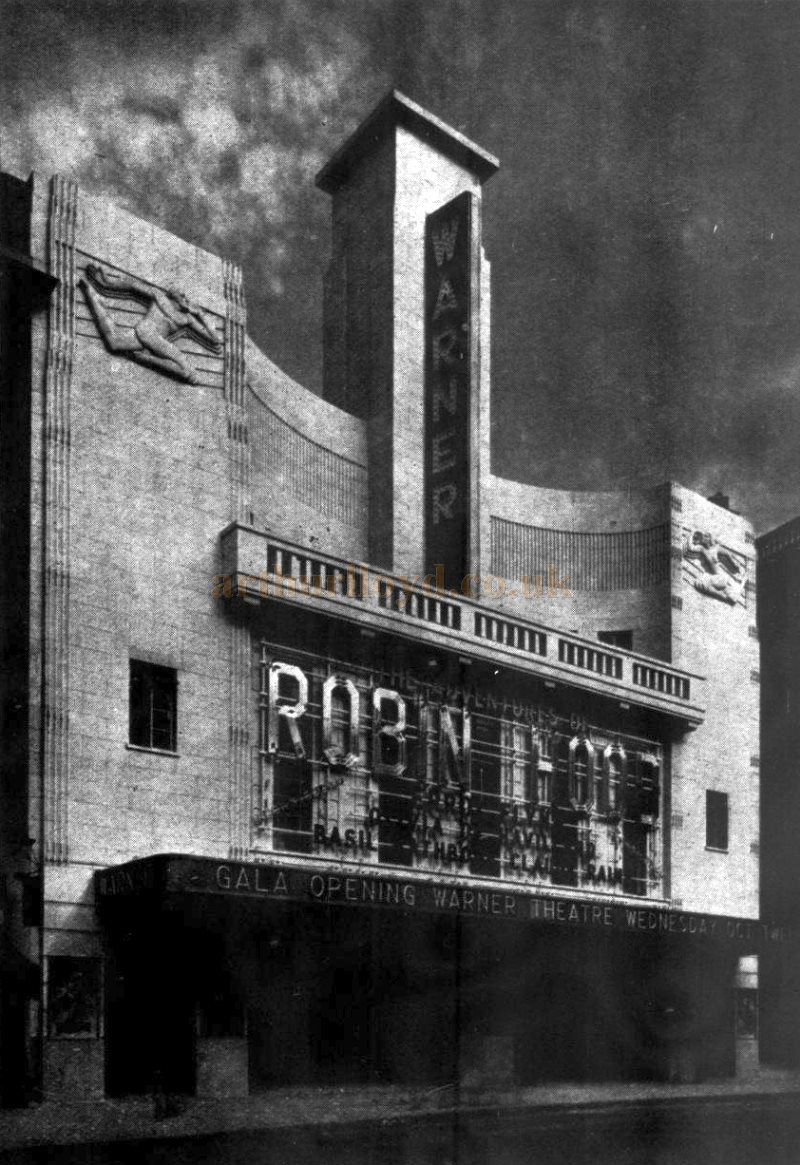
Above - The Warner Theatre shortly before it opened in 1938 - From The Builder, 14th of October 1938.
The Warner Theatre had first opened on the 12th of October 1938 and went on to have a successful career as one of several Leicester Square Theatres and Cinemas, including the Leicester Square Theatre, the Odeon Cinema, and the Empire Theatre, all of which were in close proximity to each other, situated around the Square, and by this time had all been converted for Cinema and Theatre use. Some photographs of the Warner Theatre in the 1950s can be seen below.
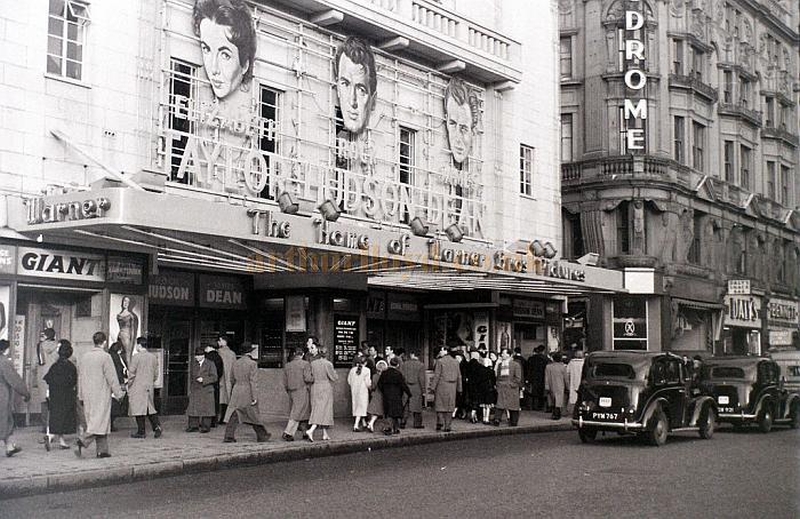 The Warner Theatre during the run of 'Giant' with Elizabeth Taylor, Rock Hudson, and James Dean in a photograph taken on the 3rd of January 1957 - Courtesy Allan Hailstone.
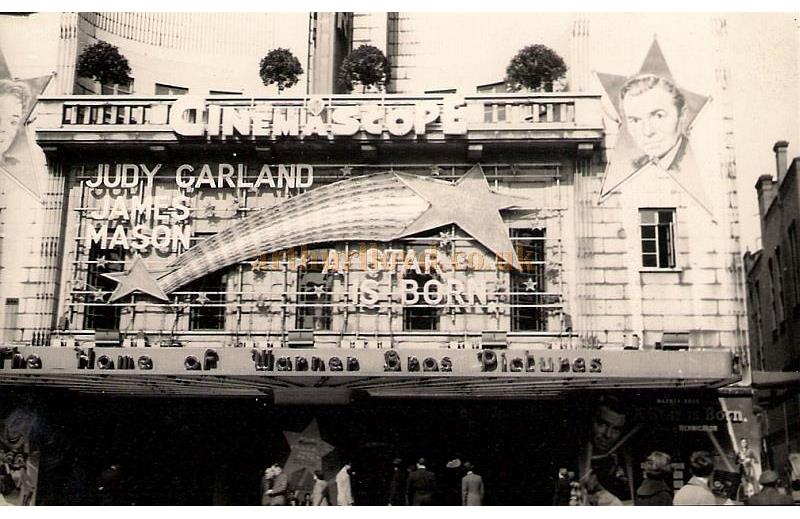 The Warner Theatre during the run of 'A Star is Born' with Judy Garland and James Mason in a photograph taken on the 11 April 1955 - Courtesy Allan Hailstone.
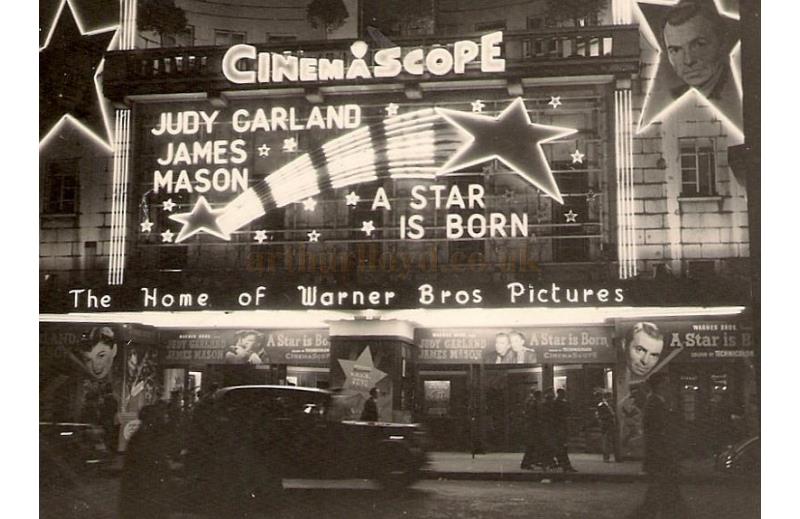 The Warner Theatre at night, during the run of 'A Star is Born' with Judy Garland and James Mason in 1955 - Courtesy Allan Hailstone.


Above - Photographs of the Warner Theatre in the 1950s - Courtesy Allan Hailstone.
 The Warner Theatre was demolished and reconstructed in the
early 1980s, although the Facade of the Theatre was retained. The new
building was a modern Warner Cinema complex known as the 'Warner Village'
which had 9 screens.
The Warner Theatre was demolished and reconstructed in the
early 1980s, although the Facade of the Theatre was retained. The new
building was a modern Warner Cinema complex known as the 'Warner Village'
which had 9 screens.
Right - A photograph taken in June 2003 showing the Warner Village, and the London Hippodrome - Photo M.L.
Warner Village was later taken over by what would become Vue International who were founded in 2003 when they took over the Warner Village.
The building was renamed for its reopening in 2003 as Vue West End who said at the time of its opening that the
complex housed "Nine state of the art auditoriums,  each with wall to ceiling
screens, air conditioning and Dolby surround sound."
each with wall to ceiling
screens, air conditioning and Dolby surround sound."
Left - Vue West End, Leicester Square in December 2006 - Photo M.L.
The Vue Cinema Complex was later revamped at a cost of £6.6 million and reopened on the 10th of July 2017, still housing 9 screens but now each auditorium has fully reclining leather seats, Sony Digital Cinema 4K projectors, and Dolby Atmos overhead and surround sound.
You may like to visit Vue's own Website for this Cinema Complex here.

Above - Vue West End, Leicester Square, and the Hippodrome Casino, formerly the London Hippodrome, whilst they were closed during the Coronavirus Pandemic in March 2020 - Photo M.L.